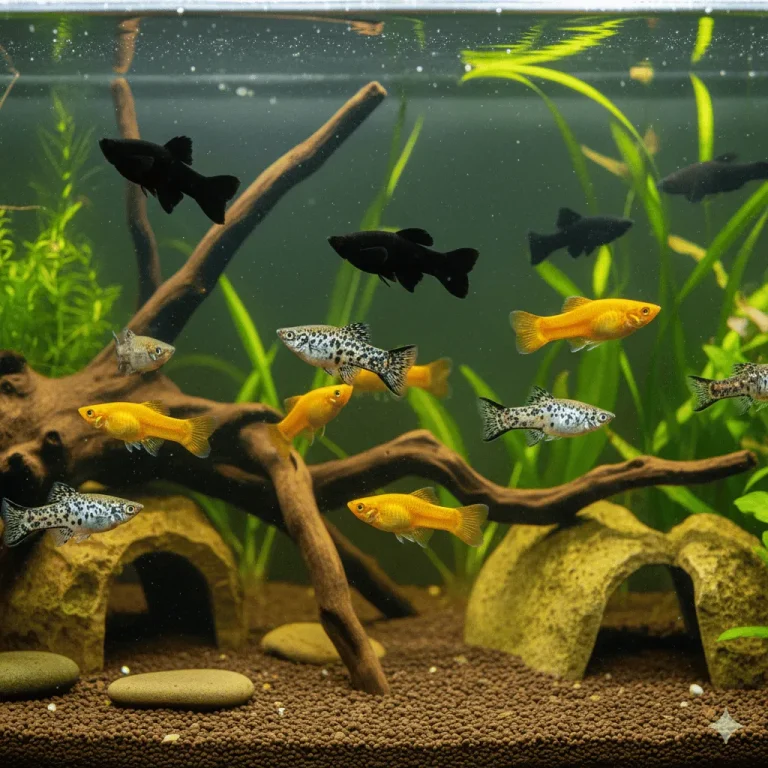
Guppies are one of the most popular ornamental fish in the world — small, hardy, incredibly colorful, and very easy to breed. Whether you’re setting up your very first aquarium or adding a splash of color to a community tank, the guppy is an ideal choice.
Common Name: Guppy, Millionfish
Scientific Name: Poecilia reticulata
Guppies are tropical freshwater fish known for their bright colors, flowing tails, and ability to give birth to live young (they are “livebearers”). They’re highly adaptable and thrive in small to medium tanks, which makes them perfect for beginners and experienced aquarists alike.
| Guppy Quick Facts | |
|---|---|
| Scientific Name | Poecilia reticulata |
| Care Level | Beginner |
| Temperament | Peaceful, social |
| Size at Maturity | Males: 1.2–1.6 in (3–4 cm) Females: 1.6–2.4 in (4–6 cm) |
| Minimum Tank Size | 10 gallons / 40 liters (small group) |
| Water Temperature | 72–82°F (22–28°C), ideal 75–79°F (24–26°C) |
| pH | 7.0–7.8 (slightly alkaline) |
| Water Hardness (GH) | 8–12 dGH (moderately hard) |
| Lifespan | 2–3 years (with good care) |
| Diet | Omnivore |
| Breeding | Livebearer (very easy to breed) |
02.Origin & Natural Habitat
Guppies are native to parts of northern South America and the Caribbean, including:
- Venezuela
- Guyana
- Trinidad and Tobago
- Barbados and nearby islands
They naturally inhabit:
- Slow-moving streams
- Small rivers and creeks
- Ditches and irrigation canals
- Ponds with plenty of vegetation
In the wild, guppies often live in warm, slightly alkaline, moderately hard water with lots of aquatic plants for cover. Today, they have been introduced to many countries across the world, often to control mosquito larvae.
Appearance & Color Variations
Guppies have been selectively bred for decades, resulting in a huge variety of colors, patterns, and tail shapes.
General Appearance
- Body size:
- Males: slimmer and smaller
- Females: larger and more rounded
- Males:
- Bright colors (red, blue, green, yellow, black, metallic, multi-color)
- Long, flowing tails and fins
- Females:
- Usually grayish or pale with subtle color
- Larger belly, visible gravid spot near the anal fin when pregnant
Popular Color & Tail Morphs
Some of the most popular guppy strains include:
- Moscow Guppy – solid deep blue, black, or green colors
- Cobra / Snakeskin – intricate, snake-like patterns on the body
- Tuxedo – dark rear half with a lighter front half
- Koi / Red Head – white body with red/orange head patches
- Leopard Tail / Grass Tail – spotted tails with leopard-like or grass-like patterns
- Delta / Halfmoon Tail – large, triangular fan-shaped tail
- Dumbo Ear Guppy – enlarged pectoral fins that look like “ears”
These color and tail variations make guppies one of the most visually diverse aquarium fish species.
3. Tank Requirements & Setup
Tank Size
While guppies can survive in small containers, they thrive in well-planned aquariums.
- Minimum:
- 10 gallons / 40 liters for a small group (e.g., 3 males + 3–6 females)
- Better:
- 20 gallons / 75 liters or more for a stable, breeding colony or community tank
Guppies are active swimmers and multiply quickly, so a larger tank is always better for long-term care.
Tip: Always use a secure lid or cover. Guppies can and do jump.
Filtration
Clean, stable water is essential. Choose gentle but effective filtration:
- Sponge Filter
- Ideal for breeding tanks and fry tanks
- Gentle flow, safe for baby fish
- Hang-On-Back (HOB) Filter
- Great for display/community tanks
- Add a sponge pre-filter on the intake to protect fry
- Canister Filter
- Best for larger tanks (20+ gallons)
- Offers excellent mechanical and biological filtration
Water flow: Moderate to gentle. Avoid overly strong currents that exhaust small fish.
Affiliate Tip (Filters):
Look for a HOB or canister filter with adjustable flow and plenty of room for biological media. Filters from Fluval, AquaClear, and Seachem Tidal are popular choices for guppy tanks.
Temperature & Heater
Guppies are tropical fish and need stable warm water:
- Ideal temperature: 75–79°F (24–26°C)
- Acceptable range: 72–82°F (22–28°C)
Use a reliable, adjustable heater:
- Rough guide: 3–5 watts per gallon (e.g., 50W heater for a 10–15 gallon tank)
- Choose a heater with a built-in thermostat for stable temperature control
Affiliate Tip (Heaters):
Consider brands like Eheim, Fluval, or Hygger for reliable glass or titanium heaters with accurate thermostats and safety features.
Lighting
Guppies do not have special lighting requirements, but good lighting:
- Enhances their colors
- Supports live plant growth
Use a simple LED aquarium light:
- 6–8 hours/day for low-light planted tanks
- 8–10 hours/day for more heavily planted aquariums
Use a timer to keep lighting consistent.
Decor: Hardscape & Plants
Guppies feel safest with plenty of cover but also need open space to swim.
Substrate:
- Fine gravel or sand
- Avoid sharp stones or rough decorations
Plants (highly recommended):
- Java Moss
- Guppy Grass (Najas guadalupensis)
- Hornwort
- Water Wisteria
- Anubias
- Java Fern
Plants offer:
- Hiding spots for fry
- Natural filtration (they absorb nitrates)
- A more natural, attractive look
Hardscape:
- Smooth rocks
- Driftwood pieces
- Small caves or hiding spots for shy fish and fry
Aim for a “soft” planted layout with:
- Open swimming space in the middle/front
- Dense plant growth at the back and sides
4. Water Quality
Good water quality is the single most important factor in keeping guppies healthy.
pH
- Ideal range: 7.0–7.8
- They tolerate slightly outside this, but avoid sudden changes
Hardness (GH/KH)
Guppies actually prefer moderately hard to hard water:
- GH (General Hardness): 8–12 dGH
- KH (Carbonate Hardness): 6–12 dKH
Adequate KH helps stabilize pH and prevents dangerous pH swings.
Ammonia, Nitrite, Nitrate
- Ammonia (NH₃): 0 ppm
- Nitrite (NO₂): 0 ppm
- Nitrate (NO₃): ideally < 20 ppm (try to stay under 40 ppm)
Perform 25–40% weekly water changes to keep nitrates low and minerals replenished.
Testing: Why It Matters
Regular testing lets you catch problems early, before fish show signs of stress.
Recommended test kits:
- Liquid test kits (e.g., API Freshwater Master Test Kit, JBL, etc.) for:
- pH
- Ammonia
- Nitrite
- Nitrate
Affiliate Tip (Test Kits):
A master test kit is one of the best long-term investments for any aquarist. Liquid kits are more accurate and cost-effective than dip strips.
5. Diet & Feeding
Guppies are omnivores. For best health and color, feed a varied diet.
Food Types
Staple Dry Foods:
- High-quality guppy or tropical flakes
- Small micro pellets suitable for tiny mouths
- Spirulina-based flakes or pellets for added plant matter
Live / Frozen Foods (highly beneficial):
- Baby brine shrimp
- Adult brine shrimp
- Daphnia
- Bloodworms (occasionally; not daily)
- Microworms (excellent for fry)
Vegetable Matter:
- Blanched spinach or zucchini (tiny portions)
- Algae-based foods
Feeding Amount & Frequency
- Adults:
- 1–2 small feedings per day
- Only what they can eat in 1–2 minutes
- Fry:
- 3–5 small meals per day
- Infusoria, baby brine shrimp, finely crushed flakes
Avoid overfeeding. Excess uneaten food quickly degrades water quality and causes health issues.
Best Food Brands (for Affiliate Links)
Some reputable, widely used brands:
- Hikari – Micro Pellets, Guppy food
- Tetra – TetraMin flakes, Tetra Guppy
- Fluval – Bug Bites (small fish formula)
- Omega One – High-quality flakes and frozen foods
Use your affiliate links around product mentions or alongside “Buy Now” buttons.
6. Temperament & Tank Mates
Temperament
- Peaceful and social
- Best kept in small groups or colonies
- Males can sometimes pester females, so keep more females than males
A recommended ratio:
- 1 male : 2–3 females
This reduces stress on females during breeding.
Suitable Tank Mates
Guppies mix very well with other small, peaceful community fish:
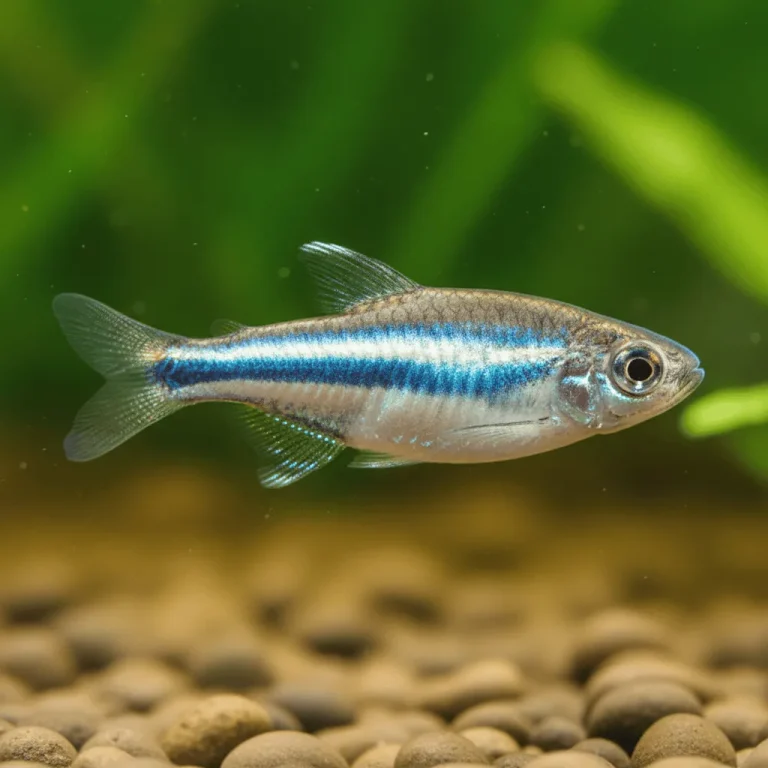
- Neon, Ember, and Glowlight Tetras
- Harlequin and Chili Rasboras
- Corydoras catfish
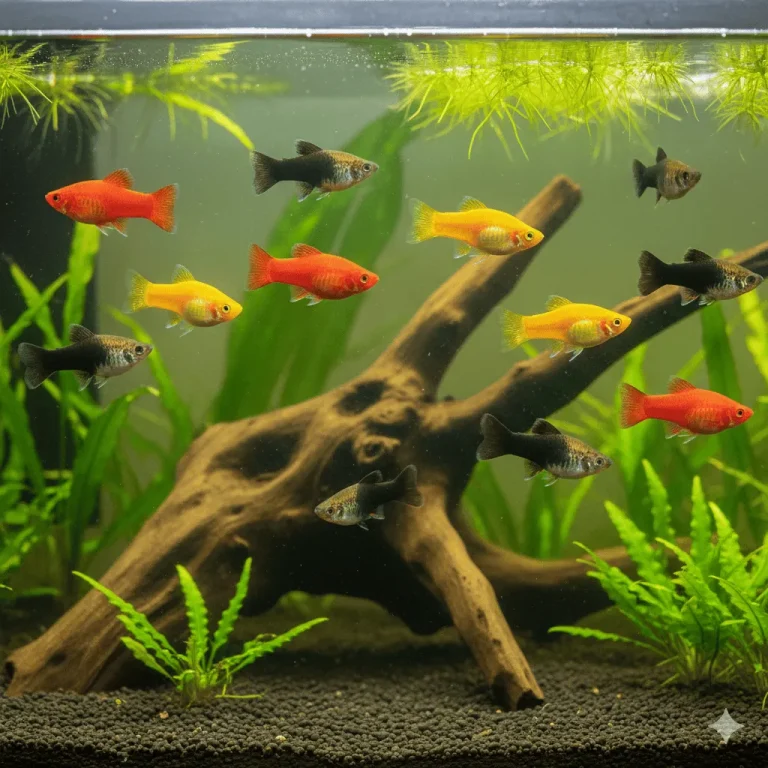
- Platies, Mollies, Swordtails (other livebearers)
- Otocinclus catfish (algae eaters)
- Peaceful shrimp (Amano, adult cherry shrimp – though some babies may be eaten)
Unsuitable Tank Mates
Avoid:
- Fin nippers:
- Tiger Barbs
- Serpae Tetras
- Large or aggressive cichlids:
- Oscars, Green Terror, Jack Dempsey, etc.
- Large predatory fish:
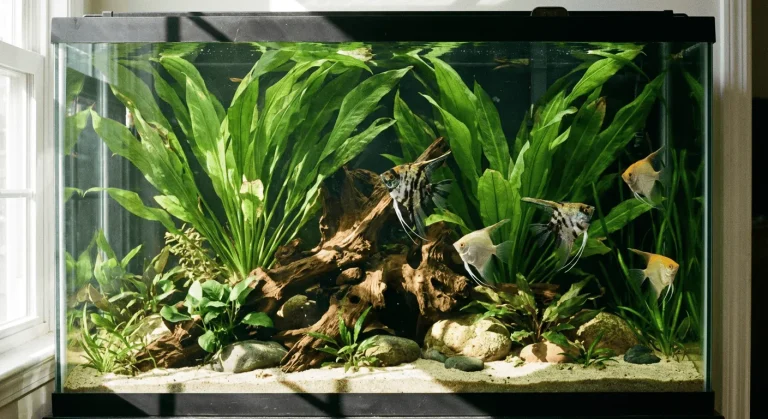
- Arowana, large Angelfish (may eat guppies)
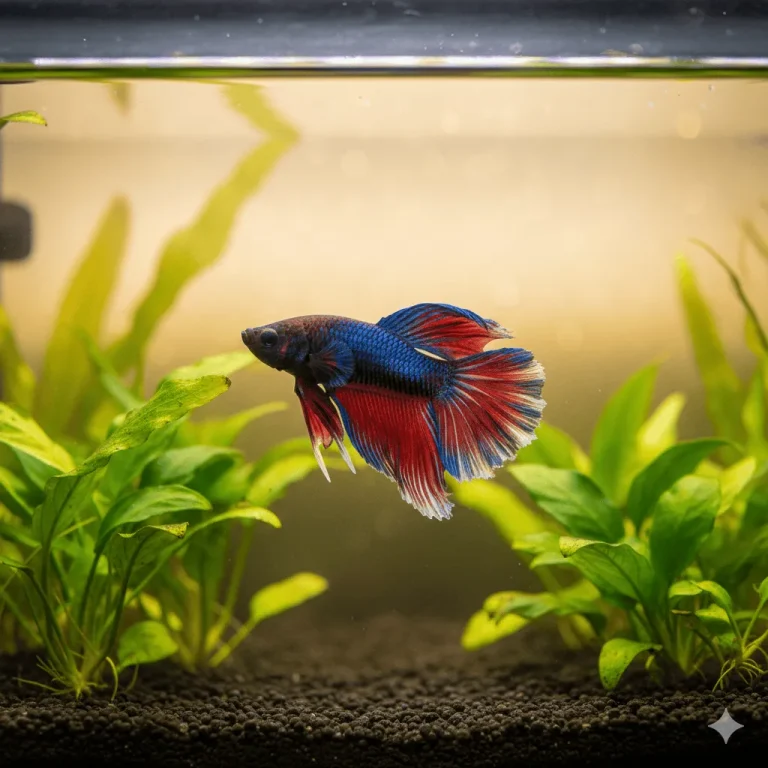
- Some Bettas (Siamese Fighting Fish):
- May mistake colorful male guppies for rivals and attack them
Choose tank mates that are similar in size, temperament, and water requirements.
7. Breeding
Guppies are one of the easiest fish to breed and are extremely popular among hobby breeders and small-scale sellers.
Sex Differences (How to Tell Males from Females)
Males:
- Smaller, slimmer body
- Bright colors and extended fins
- Modified anal fin called a gonopodium (thin, rod-like)
Females:
- Larger, more rounded body
- Duller coloration
- Anal fin is fan-shaped
- Gravid spot near the anal fin: dark patch that becomes more obvious when pregnant
Breeding Tank Requirements
While guppies will breed in a community tank, you’ll lose many fry to predation. For controlled breeding:
- Tank size: 5–10 gallons (20–40 liters) minimum
- Filtration: gentle sponge filter
- Decor:
- Dense plants (Java Moss, Guppy Grass)
- Floating plants for cover
- Water: clean, stable, slightly alkaline, 75–79°F (24–26°C)
Use one male with 2–3 females to reduce harassment.
Spawning & Fry Care
Guppies are livebearers:
- Gestation: about 25–30 days
- Females give birth to fully formed fry, not eggs
- One female can produce 20–100 fry depending on age and size
Process:
- Place a visibly pregnant female into the breeding tank a few days before birth.
- Once she gives birth, remove the mother to prevent her from eating the fry.
- Provide dense plants or spawning mops so fry can hide.
Feeding the Young:
- First foods:
- Infusoria (tiny microorganisms)
- Baby brine shrimp (ideal)
- Microworms
- Finely crushed high-quality flakes
- Feed small amounts 3–5 times per day.
Fry will grow rapidly and begin to show color within a few weeks. At 2–3 months, they are usually mature and ready to breed themselves.
8. Health & Disease
Guppies are generally hardy, but poor water quality, stress, and inbreeding can lead to disease.
Common Diseases in Guppies
- Ich (White Spot Disease)
- Caused by parasites
- Small white spots on body and fins
- Fish may scratch against objects
- Fin Rot
- Bacterial infection
- Frayed, ragged fins with discolored edges
- Velvet Disease
- Fine gold or rust-colored “dust” on the body
- Fish may clamp fins, breathe rapidly
- Fungal Infections
- Cotton-like white or gray patches on the body or fins
- Columnaris (Bacterial)
- White/gray patches, ulcers, fin erosion
- Internal Parasites / Wasting
- Sunken belly despite eating
- Stringy white feces
- Dropsy
- Swollen abdomen
- Scales sticking out (pinecone look)
- Usually severe, often fatal
Early Symptoms to Watch For
- Clamped fins (held close to the body)
- Lethargy or hovering near surface/bottom
- Loss of appetite
- Rapid gill movement or gasping at surface
- White spots, patches, or abnormal coloration
- Unsteady or erratic swimming
Treatment Recommendations
Important: Always diagnose carefully and follow medication instructions. Remove chemical filtration (e.g., carbon) during treatment.
General Steps:
- Quarantine Sick Fish
- Move affected fish to a separate hospital tank whenever possible.
- This protects healthy fish and allows targeted treatment.
- Improve Water Quality
- Test ammonia, nitrite, nitrate, pH.
- Perform partial water changes.
- Ensure adequate filtration and aeration.
- Disease-Specific Treatments (Examples):
- Ich:
- Gradually raise temperature to 78–80°F (25–27°C).
- Use commercial Ich treatments containing malachite green, formalin, or other approved ingredients.
- Fin Rot / Bacterial Infections:
- Improve water conditions.
- Use broad-spectrum antibacterial medications.
- Mild cases sometimes respond to clean water and aquarium salt (at appropriate dosage).
- Fungal Infections:
- Antifungal medications or combined bacterial/fungal treatments.
- Parasites (Velvet, Internal worms):
- Use appropriate anti-parasitic medications (follow product guidelines).
Affiliate Tip (Medications):
You can recommend broad-spectrum medications, Ich cures, and aquarium salt from trusted brands like API, Seachem, and others. These often have high CPC and good conversion potential.
This information is for educational purposes and is not a substitute for professional veterinary advice.
9. Where to Buy Guppies
Price Range
Prices vary depending on color strain, quality, and source:
- Common mixed guppies:
- Very affordable; often sold in groups
- Named strains (Moscow, Koi, Dumbo Ear, Tuxedo, etc.):
- Moderately priced per pair or trio
- Show-grade & rare strains:
- Higher prices, often from specialist breeders
Online shops frequently offer guppies in:
- Pairs (1 male + 1 female)
- Trios (1 male + 2 females)
- Groups or “starter colonies”
Trusted Sources
- Local Fish Stores (LFS):
- Inspect fish health and tank conditions before buying
- Look for active swimmers with clear eyes and intact fins
- Reputable Breeders / Fish Farms:
- Better strain quality and stronger genetics
- More consistent coloration and fin shapes
- Online Stores & Marketplaces:
- Check customer reviews and live-arrival guarantees
- Ensure proper shipping methods (insulated boxes, heat packs in cold weather)
When choosing guppies:
- Avoid fish in tanks with visible dead or sick fish
- Choose individuals with:
- Straight spines
- Full, undamaged fins
- Bright eyes and good activity level
You can place affiliate links to trusted online stores offering live guppies and starter guppy packs.
10. Summary & Final Verdict
Is the Guppy Suitable for Beginners?
Absolutely yes.
Why guppies are a great choice:
- Beginner-friendly: Tolerant of a range of water conditions when properly cycled and maintained.
- Colorful & Attractive: Huge variety of fin and color morphs.
- Small Tank Friendly: Can be kept in modest-sized aquariums.
- Breeding: Very easy to breed – perfect for hobby breeders and small businesses.
- Community-Friendly: Peaceful and compatible with many small community fish.
Main things to watch out for:
- Rapid breeding can lead to overstocking if not managed.
- Poor water quality quickly leads to disease.
- Inbred or low-quality stock may be less hardy.
If you’re looking for a hardy, colorful, active fish that’s fun to breed and watch, the guppy is one of the best possible choices.