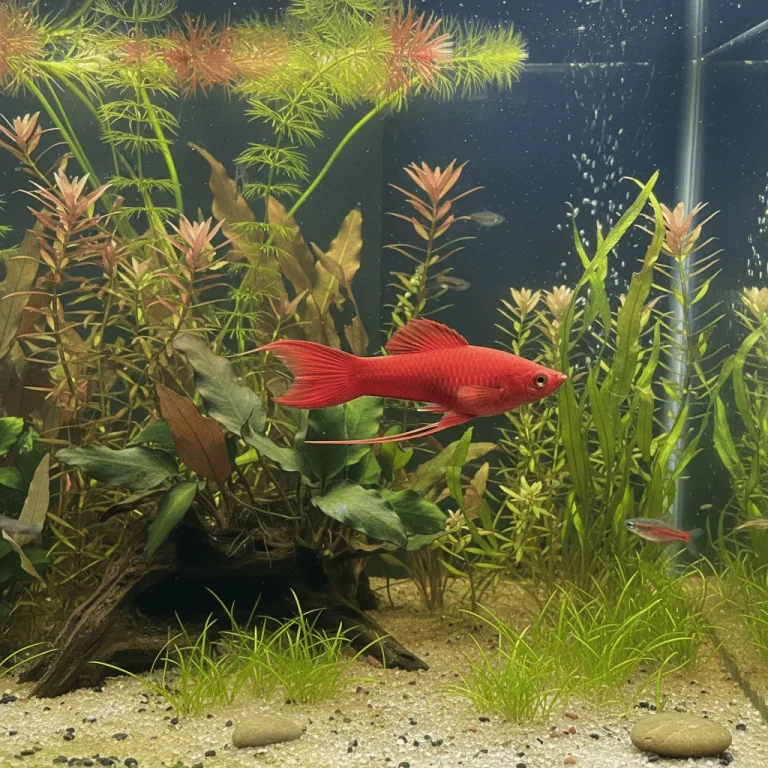
Betta fish (Siamese fighting fish) are small, brilliantly colored, and full of personality. When kept properly, they’re hardy, interactive pets that fit beautifully into a small, heated aquarium—not a bowl.
In one sentence: Betta fish (Betta splendens) are tropical, air‑breathing nano fish that thrive alone in a heated, filtered tank of at least 5 gallons, with warm, clean, gently moving water.
1. Introduction & Quick Facts
Scientific Name: Betta splendens
Common Names: Betta, Siamese fighting fish
Bettas are one of the world’s most popular aquarium fish because of their intense colors, dramatic fins, and almost “puppy‑like” behavior. Despite their reputation as bowl fish, they are tropical animals that need heat, filtration, and space.
Betta Fish Quick Stats
| Parameter | Recommended Value |
|---|---|
| Care Level | Beginner to Moderate |
| Temperament | Semi-aggressive; best kept singly (one male per tank) |
| Size at Maturity | ~2.25–2.75 in (5.5–7 cm) |
| Minimum Tank Size | 5 gal (19 L) per betta; larger strongly preferred |
| Water Temperature | 76–82°F (24–28°C), ideal ~78–80°F (25.5–26.5°C) |
2. Comprehensive Overview
Origin & Natural Habitat
- Native range: Thailand, Cambodia, Vietnam, Laos.
- Wild habitat:
- Slow-moving, shallow waters such as rice paddies, irrigation ditches, floodplains, and sluggish streams.
- Warm, often low-oxygen environments with dense vegetation and leaf litter.
- Labyrinth organ: Bettas can breathe atmospheric air using a specialized labyrinth organ, which allows them to survive in oxygen-poor water—but it does not mean they can live in dirty or unheated water.
Appearance & Color Variations
- Body size:
- 2–2.5 in (5–6.5 cm) body length, not counting fins.
- Body shape: Slender, torpedo-shaped body with an upturned mouth adapted for taking food from the surface.
- Fin types (common varieties):
- Veiltail
- Halfmoon
- Crowntail
- Plakat (short-fin)
- Double tail
- Rosetail, Dumbo/Elephant ear, etc. (specialty forms)
- Color morphs:
- Solid: red, blue, turquoise, black, white, yellow, orange.
- Bi-color, butterfly (two-tone fins), koi, marble, dragon scale, galaxy, grizzle, and metallic forms.
- Sexual dimorphism:
- Males: typically larger, brighter, and with longer fins (except plakats).
- Females: shorter fins, less dramatic color (though selectively bred lines can be very colorful).
3. Tank Requirements & Setup
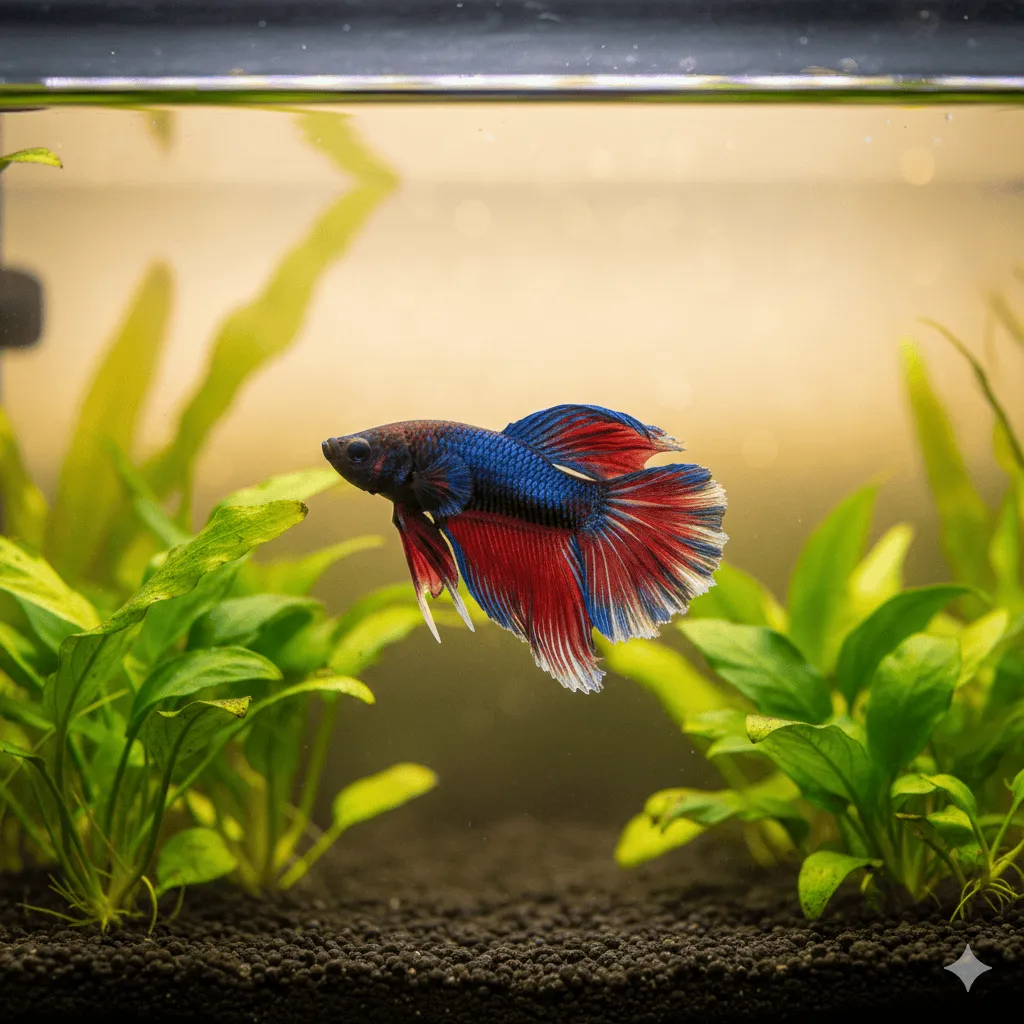
Tank Size
- Absolute minimum: 5 gallons (19 L) for a single betta.
- Better long-term size: 7.5–10 gallons (28–38 L) or more, especially with tank mates.
- Multiple bettas:
- One male per tank.
- Female sororities (groups) are for experienced keepers only and require 20+ gallons, heavy planting, and careful selection.
Filtration
Bettas dislike strong currents but still need filtration:
- Best filter choices:
- Sponge filter: Gentle flow, excellent biological filtration, cheap and beginner-friendly.
- Adjustable HOB (Hang-On-Back) filter: Use a pre-filter sponge and baffle or lowest flow setting.
- Water flow:
- Aim for gentle circulation—fins should not be whipped around.
- If your betta struggles to swim or is pushed around, reduce the flow.
(Affiliate-friendly note: sponge filters, adjustable HOB filters, and pre-filter sponges are easy upsell items.)
Temperature & Heater
Bettas are tropical fish, not cold-water fish.
- Ideal range: 78–80°F (25.5–26.5°C).
- Heater requirements:
- Use a reliable, adjustable aquarium heater sized appropriately for your tank (typically 25–50W for a 5–10 gal tank).
- Pair with a digital aquarium thermometer to verify accuracy.
- Avoid temperature swings greater than 2–3°F in a day.
(Great place for affiliate links to adjustable heaters and digital thermometers.)
Lighting
- Bettas don’t need intense light, but moderate lighting:
- Shows off their colors.
- Supports live plants (great for bettas).
- Use an LED aquarium light with:
- Adjustable intensity.
- Day/night schedule (8–10 hours of light per day).
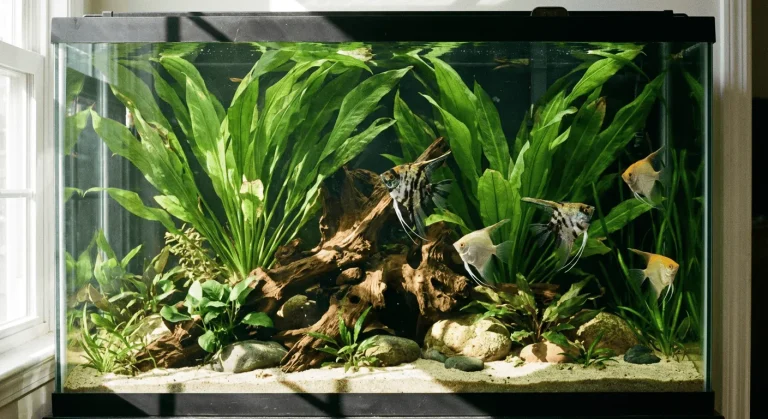
Decor & Aquascaping
Think “slow, warm jungle stream”:
- Substrate: Sand or small, smooth gravel.
- Plants:
- Live plants: Java fern, Anubias, Cryptocoryne, Amazon sword, Java moss, floating plants (frogbit, water lettuce, Salvinia).
- Silk plants are safer than plastic if you can’t use live.
- Hiding spots & structures:
- Driftwood, rock caves, betta logs, coconut caves.
- Ensure all decor has smooth edges to prevent fin tears.
- Other additions:
- Indian almond leaves (catappa): Slightly tannin-stain the water, provide cover, and may support health.
- Tight-fitting lid or cover: Bettas jump—every betta tank should be covered.
4. Water Quality
Healthy water equals a healthy betta.
Key Parameters
- pH: 6.5–7.5 (slightly acidic to neutral).
- GH (General Hardness): ~4–12 dGH (moderately soft to moderately hard).
- KH (Carbonate Hardness): ~3–8 dKH for stable pH.
- Ammonia & Nitrite: 0 ppm (always).
- Nitrate: Ideally under 20 ppm; under 40 ppm is acceptable with regular water changes.
Testing & Maintenance
- Use a liquid test kit (more accurate than strips) to monitor:
- Ammonia, nitrite, nitrate, pH.
- Water changes:
- Typically 25–40% weekly for a filtered, cycled tank.
- Vacuum the substrate lightly and remove uneaten food and waste.
- Always dechlorinate tap water with a quality water conditioner before adding it to the tank.
(Perfect section for promoting master test kits, dechlorinators, and gravel vacuums.)
5. Diet & Feeding
Food Type
Bettas are carnivorous / insectivorous:
- In the wild, they eat insect larvae, small crustaceans, and zooplankton.
- In captivity, they do best on high-protein betta-specific foods.
What to Feed
- Staple foods:
- High-quality betta pellets with fish or insect meal as the first ingredient.
- Supplemental foods (2–4x per week):
- Frozen or live foods: bloodworms, daphnia, brine shrimp, mosquito larvae (where legal).
- Occasional high-quality freeze-dried foods (soaked first to prevent bloating).
- Avoid:
- Mammalian meats, low-quality flakes, or foods high in fillers like wheat as primary ingredient.
Feeding Schedule
- Frequency: 1–2 small meals per day.
- Amount: Only what your betta can eat in about 1–2 minutes; commonly 3–6 small pellets per day depending on pellet size.
- Optional “fast day” once per week can help prevent constipation.
Recommended Food Brands (Examples)
(Always adjust for regional availability and your own preferred affiliate partners.)
- Pellets: betta-specific lines from reputable brands such as:
- Omega One, NorthFin, Fluval Bug Bites Betta, Hikari Betta Bio-Gold, Xtreme Nano/Betta formulas.
- Frozen foods:
- Brine shrimp, bloodworms, daphnia from trusted aquarium brands.
- Live foods:
- Brine shrimp hatcheries, blackworms, or microworm cultures for advanced keepers.
6. Temperament & Tank Mates
Temperament
- Semi-aggressive and territorial.
- Males are especially aggressive toward:
- Other male bettas.
- Often toward similarly shaped or brightly colored fish.
- Many bettas prefer to live alone and be the star of their own tank.
Suitable Tank Mates (With Caution)
For community setups (10+ gallons) with a relatively calm individual:
- Non-nippy, peaceful species:
- Small rasboras (e.g., chili, ember, harlequin).
- Small tetras that aren’t fin nippers (e.g., ember tetras).
- Pygmy corydoras, habrosus corydoras.
- Kuhli loaches.
- Invertebrates (if your betta tolerates them):
- Nerite snails, mystery snails.
- Shrimp (Amano, ghost, Neocaridina) – risk of being hunted or nipped.
Always provide lots of plants and hiding spots and be prepared to separate fish if aggression appears.
Unsuitable Tank Mates
Avoid:
- Other male bettas (never together in the same tank).
- Most female bettas with males in small tanks.
- Fin nippers:
- Tiger barbs, Serpae tetras, some danios.
- Large or aggressive fish:
- Cichlids (except some dwarf species in big tanks with careful planning), large gouramis.
- Other labyrinth fish and flashy, slow-swimming species that may trigger aggression:
- Gouramis, fancy guppies (often mistaken as rivals).
7. Breeding Betta Fish

Breeding bettas is fascinating but not recommended for beginners.
Sex Differences
- Males:
- Longer, flowing fins (except short-fin plakats).
- Brighter colors.
- Build bubble nests at the surface.
- Females:
- Shorter fins.
- Egg spot (small white dot between ventral fins and anal fin).
- More rounded abdomen when full of eggs.
Breeding Tank Requirements
- Separate breeding tank: 10+ gallons, shallow water (5–8 in / 12–20 cm).
- No strong filtration: Sponge filter or no filter during spawning; extremely gentle flow.
- Heater: 80–82°F (26.5–28°C).
- Setup:
- Minimal decor: some plants, a few hiding spots for the female.
- Floating object (Styrofoam cup half, almond leaf) for the male to build a bubble nest under.
- Condition both male and female for 1–2 weeks beforehand with high-quality live or frozen foods.
Spawning & Care of the Young
- Bubble nest:
- The male builds a bubble nest at the surface.
- Courtship & spawning:
- The male wraps around the female; eggs are released and fertilized.
- The male collects eggs in his mouth and places them in the bubble nest.
- Remove the female:
- After spawning, remove the female to avoid aggression.
- Male care:
- The male tends the nest and guards eggs until they hatch (24–48 hours).
- Hatching and fry care:
- Fry become free-swimming after ~3 days.
- At this stage, remove the male to prevent predation.
- First foods: infusoria, commercial liquid fry food, then microworms and baby brine shrimp as they grow.
- Daily small water changes and immaculate water quality are crucial.
Breeding results in large numbers of fry; have a plan for grow-out tanks and rehoming before starting.
8. Health & Disease
Maintaining stable, clean, warm water prevents most issues. Still, bettas are prone to a few common diseases.
Common Betta Diseases
- Fin Rot
- Cause: Poor water quality, bacterial infection.
- Symptoms: Ragged, fraying fins, dark or bloody edges.
- Ich (White Spot Disease)
- Cause: Parasite.
- Symptoms: White sugar-like spots, flashing (rubbing against decor), clamped fins.
- Velvet
- Cause: Parasite (Oodinium).
- Symptoms: Gold/brown dust on body, lethargy, clamped fins, rubbing.
- Columnaris / Bacterial infections
- Symptoms: White/gray patches, ulcers, fuzz-like growths, red streaks.
- Swim Bladder Issues
- Often related to: Overfeeding, constipation, poor diet, or internal infections.
- Symptoms: Difficulty swimming, floating, sinking, or swimming sideways.
Early Warning Signs
- Loss of appetite.
- Lethargy, staying at the bottom or top.
- Clamped fins.
- Color fading.
- Rapid gill movement, gasping at the surface (in combination with other symptoms).
Basic Treatment Recommendations
(Always follow product labels and consult aquatic professionals or vets where possible.)
- First step for almost any issue:
- Check ammonia, nitrite, nitrate, pH, and temperature.
- Fix water quality and perform partial water changes.
- Fin Rot & mild bacterial issues:
- Improve water quality, consider aquarium salt (not in planted/invertebrate tanks), and if needed a broad-spectrum antibacterial medication.
- Ich:
- Use an ich-specific medication and gradually raise temperature within safe limits.
- Velvet:
- Light-sensitive parasite; treat with appropriate anti-parasitic medication and dim the lights.
- Swim bladder problems:
- Fast the fish for 1–2 days, then offer small, high-quality meals; consider daphnia or pea (sparingly) to relieve constipation.
(This section is ideal for linking to medications, aquarium salt, quarantine tanks, and test kits.)
9. Where to Buy Betta Fish
Price Range
Pricing varies by color, fin type, and quality:
- Pet store standard bettas:
- Approx. $3–$10 USD.
- Premium lines (halfmoon, crowntail, koi, dragon scale, plakats):
- Typically $10–$30 USD.
- Show-quality or rare morphs:
- $40–$100+ USD, especially from specialty breeders.
Trusted Sources
- Local fish stores (LFS):
- Often better care and variety than chain pet stores.
- You can view fish in person and check for signs of disease.
- Reputable online breeders and farms:
- Specialized betta breeders and Asian farms (often in Thailand, Indonesia) offer high-quality stock.
- Look for:
- Customer reviews.
- Live arrival guarantee.
- Clear photos and descriptions.
- Aquarium clubs & shows:
- Local aquarium societies and International Betta Congress (IBC) events are excellent for high-quality fish and expert advice.
Avoid fish that:
- Have clamped fins, dull color, sunken bellies.
- Show white spots, torn fins, or labored breathing.
10. Summary & Final Verdict
Is the betta fish suitable for beginners?
Yes, bettas are beginner-friendly, provided you treat them as tropical fish that need:
- A heated, filtered tank of at least 5 gallons.
- Stable, clean water with regular testing and water changes.
- High-quality, protein-rich diet.
- Gentle flow and a well-decorated environment with plants and hiding places.
- Usually, a solitary lifestyle (especially for males).
They reward proper care with:
- Spectacular colors and fins.
- Interactive behavior—they often recognize and respond to their keepers.
- Long lifespans of 3–5 years, sometimes longer, in good conditions.
Related Articles (Internal Link Ideas)
You could link these to other pages on your site: