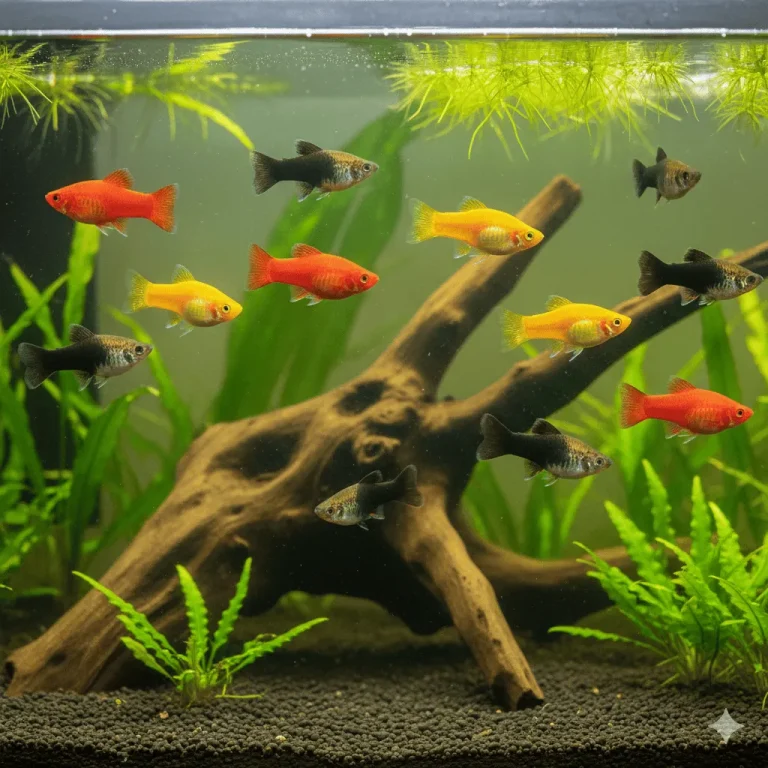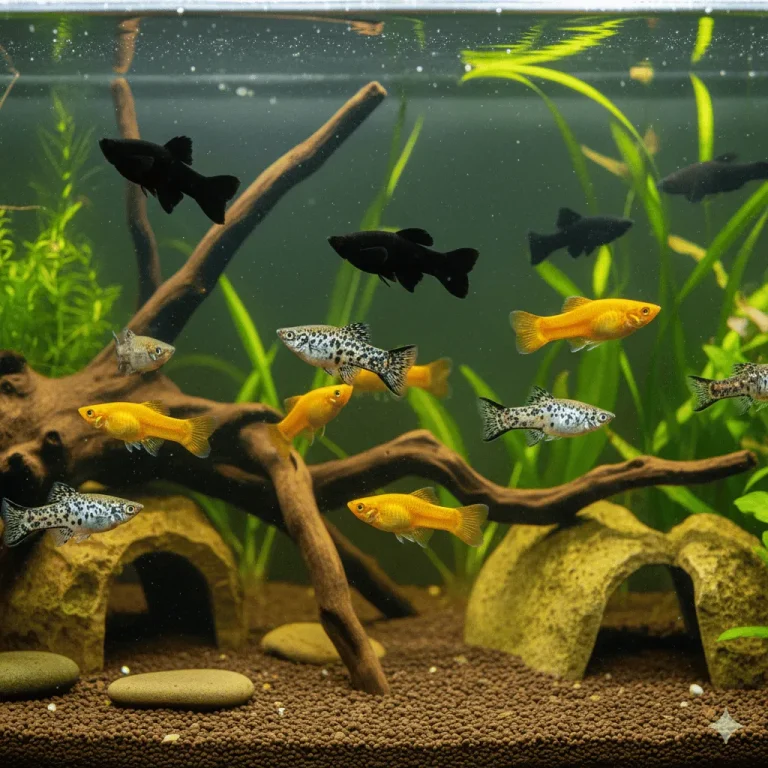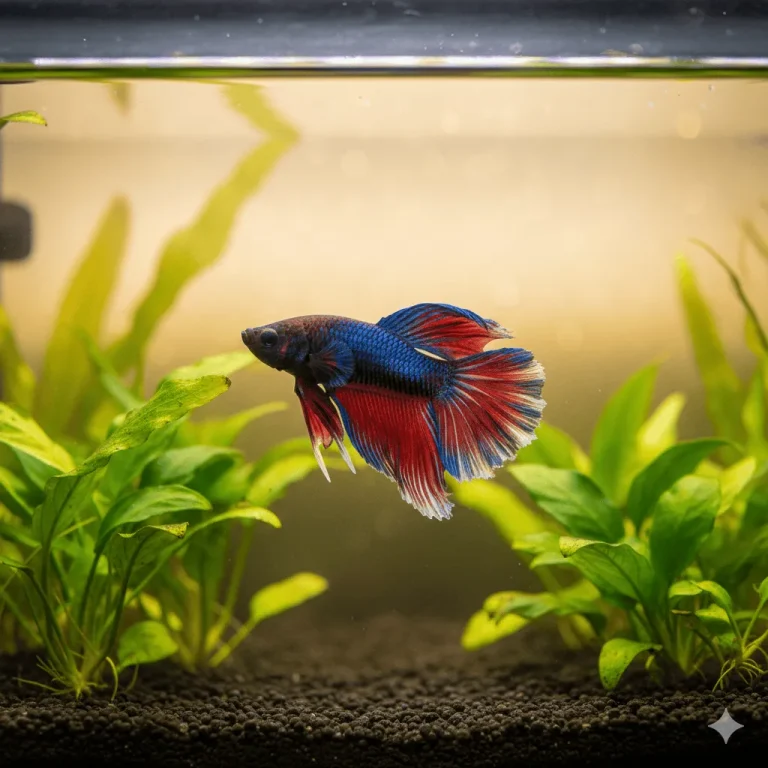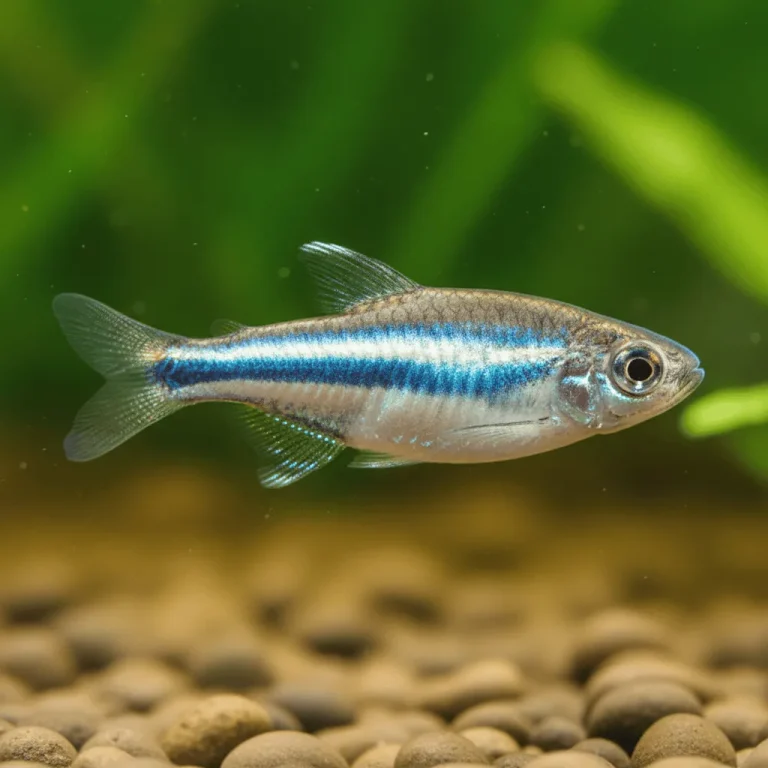
Swordtail fish are hardy, beautiful, and constantly active – a perfect choice if you want a lively, colorful community tank. Their distinctive “sword” tail on the males makes them stand out, and like guppies and platies, they are livebearers that are easy to breed.
This complete Swordtail care guide covers everything you need: setup, diet, tank mates, breeding, diseases, and buying tips – written with SEO and user intent in mind.
1. Introduction & Quick Facts
The Swordtail, with the scientific name Xiphophorus hellerii, gets its common name from the elongated lower lobe of the male’s tail fin, which resembles a sharp sword. They are close relatives of the Platy and Guppy and share their hardy, livebearing nature, making them a cornerstone of the freshwater aquarium world.
Swordtail Quick Stats
| Fact | Details |
|---|---|
| Scientific Name | Xiphophorus hellerii |
| Care Level | Beginner |
| Temperament | Peaceful (but males can be territorial with each other) |
| Adult Size | Up to 5 inches (12.5 cm), not including the male’s sword |
| Minimum Tank Size | 20 Gallons (75 Liters) |
| Water Temperature | 72°F – 82°F (22°C – 28°C) |
2. Comprehensive Overview
- Natural Habitat: Swordtails originate from the fast-flowing, vegetated rivers and streams of North and Central America, primarily in regions of Mexico, Guatemala, and Honduras. They are accustomed to clean water with a moderate current.
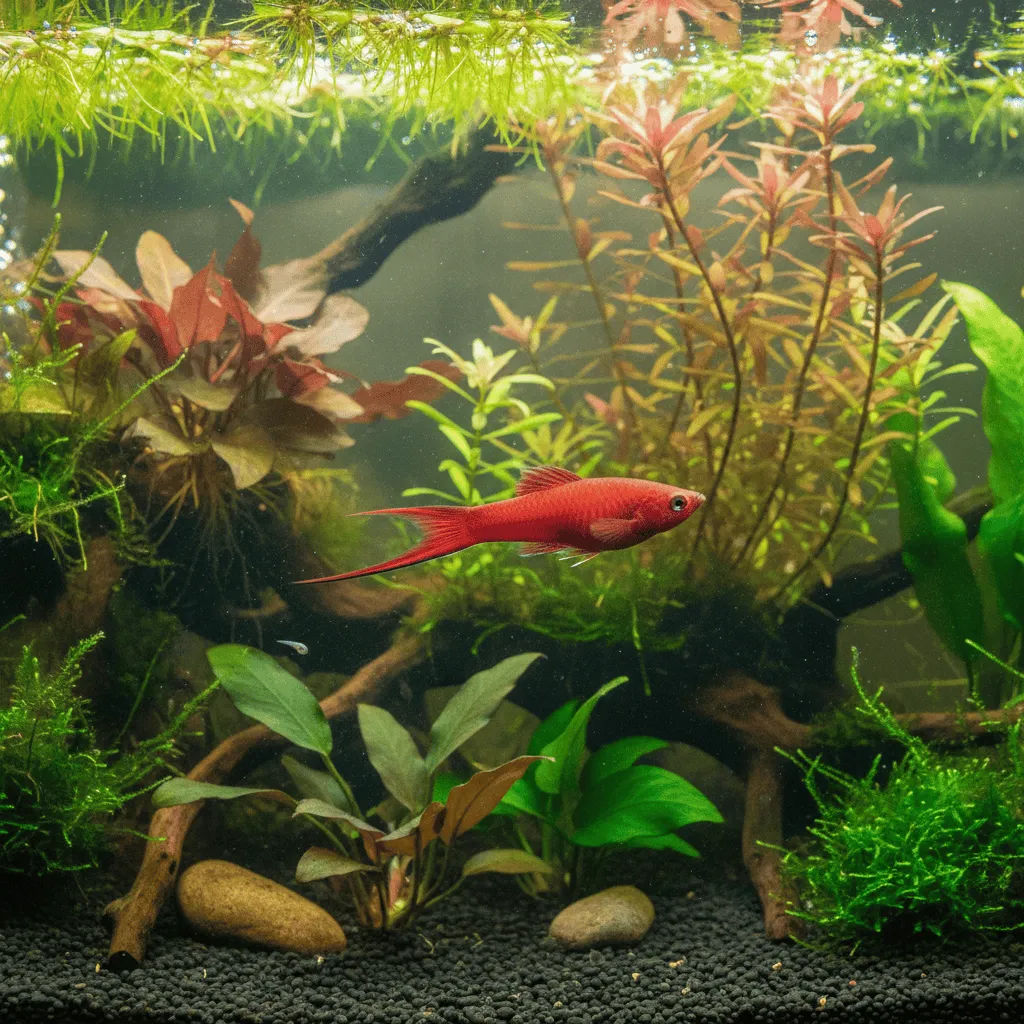
- Appearance and Color Variations: Swordtails have a streamlined, robust body built for active swimming. The most iconic feature is the male’s “sword,” which is a colorful extension of the caudal (tail) fin and is used for courtship displays, not for fighting. Females are typically larger and more rounded than males and lack the sword.Through decades of selective breeding, Swordtails are now available in a stunning variety of colors and fin types, including:
- Red / Red Velvet
- Pineapple
- Black
- Koi (Sanke)
- Neon
- Lyretail (a fin variation with extensions on both the top and bottom of the tail)
3. Tank Requirements & Setup
Creating the right environment is crucial for these active swimmers.
- Tank Size: Due to their active nature and size, a minimum tank size of 20 gallons (75 liters) is strongly recommended. For a group, a 29-gallon tank or larger is even better, as it gives them the horizontal swimming space they crave.
- Filtration: A good filter is essential to maintain clean water. A Hang-on-Back (HOB) filter is an excellent choice for most Swordtail tanks, as it provides both mechanical and biological filtration while creating a gentle current. For larger tanks, a canister filter is also a great option.
- Temperature and Heater: Swordtails are tropical fish and require a stable water temperature between 72°F and 82°F (22°C – 28°C). A reliable aquarium heater is a must-have piece of equipment to prevent temperature fluctuations that can cause stress and disease.
- Lighting: Standard LED aquarium lighting for 8-10 hours a day is sufficient. It will bring out their vibrant colors and support the growth of any live plants in the tank.
- Decor: The ideal setup balances open swimming space with densely planted areas. Live plants like Java Fern, Anubias, and Hornwort provide cover and security, which is especially important for newborn fry. Use smooth rocks and driftwood to create a natural-looking environment, avoiding any sharp objects that could tear their fins.
4. Water Quality (Water Parameters)
Swordtails are hardy, but they thrive in stable, clean water that mimics their natural habitat.
- pH Level: They prefer neutral to slightly alkaline water, with a pH range of 7.0 to 8.4.
- Hardness (GH/KH): Unlike many tropical fish, Swordtails appreciate hard water. A general hardness (GH) between 12-30 dGH is ideal.
- Testing: Regularly test your water for ammonia, nitrite, and nitrate using a liquid water test kit (like the API Freshwater Master Test Kit) for accurate results. Performing a 25% water change weekly is the best way to keep these parameters in check.
5. Diet & Feeding
Swordtails are omnivores and are not picky eaters, but a varied diet is key to their health and coloration.
- Food Type: Their diet should include both protein and vegetable matter.
- Feeding Frequency: Feed a small amount once or twice a day that they can eat within two minutes.
- Best Foods & Brands:
- Staple Diet: A high-quality flake or pellet food designed for tropical fish.
- Vegetable Matter: Offer spirulina flakes or blanched vegetables like zucchini and peas to aid digestion.
- Protein Boost: Supplement their diet 2-3 times a week with frozen or live foods like brine shrimp, daphnia, and bloodworms.
- Recommended Brands: Look for quality foods from brands like Hikari, New Life Spectrum (NLS), and Fluval Bug Bites.
6. Temperament & Tank Mates
- Temperament: Swordtails are generally peaceful and make excellent community fish. However, males can be territorial and aggressive towards each other. To manage this, either keep only one male per tank or keep a group of 3+ males in a larger tank (40+ gallons) to diffuse aggression. The ideal ratio is one male to every two or three females.
- Suitable Tank Mates:
- Platies and Mollies
- Larger Tetras (Black Skirt, Serpae)
- Rainbowfish
- Corydoras Catfish
- Bristlenose Plecos
- Gouramis (Pearl, Moonlight)
- Unsuitable Tank Mates:
- Aggressive Cichlids (Oscars, Jack Dempseys)
- Known fin-nippers like Tiger Barbs.
- Very small or slow-moving fish (like Fancy Guppies), as the Swordtail’s constant activity can be stressful for them.
7. Breeding Swordtails
Like guppies, Swordtails are prolific livebearers, and breeding them is very straightforward.
- Sexing Swordtails: This is very easy. Males have the signature “sword” on their tail and a modified anal fin called a gonopodium. Females are larger, have a more rounded body, and a standard, fan-shaped anal fin.
- Breeding Tank: While they will breed in a community tank, most fry will be eaten. To save the young, set up a separate 10-gallon breeding tank with a gentle sponge filter and plenty of floating plants like Java Moss or Hornwort for the fry to hide in.
- Birth and Fry Care: A female gives birth to 20-80 free-swimming fry approximately every 28 days. Once she gives birth, she should be removed from the breeding tank to prevent her from eating them. Feed the fry powdered fry food or freshly hatched baby brine shrimp for optimal growth.
8. Health and Disease
Swordtails are robust, but like all fish, they can fall ill, usually due to stress from poor water quality.
- Common Diseases:
- Ich (White Spot Disease): The most common aquarium disease, appearing as tiny white salt-like spots on the body and fins.
- Fin Rot: A bacterial infection causing the fins to appear ragged, discolored, or “melting” away.
- Fungal Infections: Often a secondary infection, appearing as white, cottony patches on the body.
- Symptoms: Watch for clamped fins, lethargy, flashing (rubbing against objects), loss of color, or refusal to eat.
- Treatment Recommendations: Isolate sick fish in a quarantine tank.
- For Ich, use commercial medications like Ich-X or a combination of aquarium salt and increased temperature (slowly raise to 82°F/28°C).
- For bacterial/fungal issues, improve water quality with extra water changes and use a broad-spectrum medication like Methylene Blue or other commercial remedies.
9. Where to Buy Swordtails
Price Range: Common varieties like Red or Tuxedo Swordtails are very affordable, typically costing $3 – $7. Fancier, selectively bred morphs like Koi or Lyretails can range from $15 to $30 or more per fish.
Trusted Sources: Your Local Fish Store (LFS) is an excellent place to start. For specific high-grade varieties, reputable online fish stores and local breeders are your best bet. Always choose active fish from clean tanks.
10. Summary & Final Verdict
The Swordtail is a rewarding, active, and beautiful fish that adds character and energy to any community aquarium. Their hardiness and simple care requirements make them a fantastic entry point into the hobby.
Is the Swordtail a good fish for beginners?
Yes, absolutely. The Swordtail is an excellent choice for a beginner who is starting with a tank of 20 gallons or more. They are forgiving, easy to feed, and their breeding habits provide an endlessly fascinating spectacle for the dedicated fishkeeper