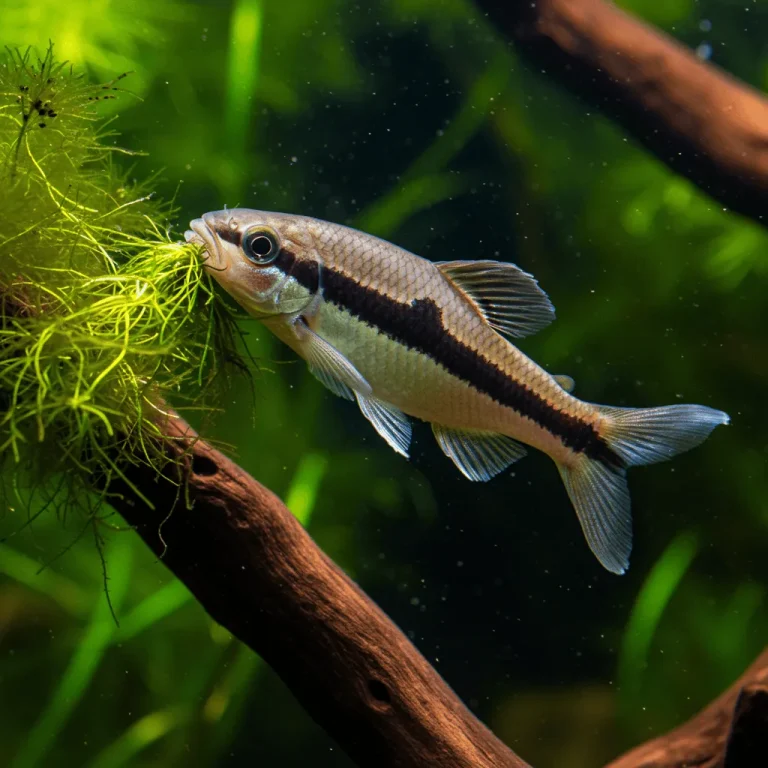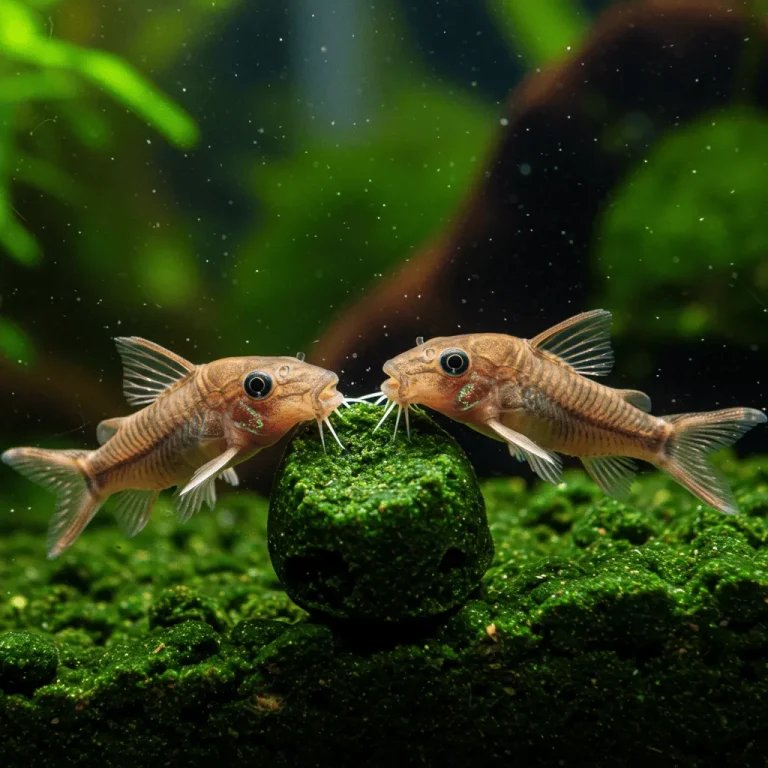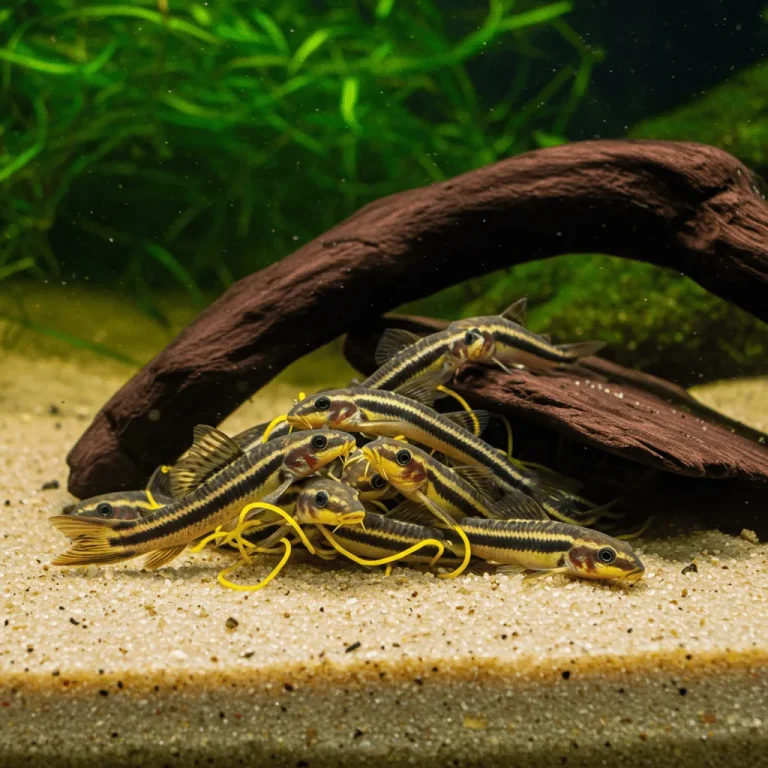
If you’ve ever battled algae in your aquarium, you’ve likely heard whispers of a legendary “cleanup crew” hero: the Pleco. But you may also have heard horror stories of the Common Pleco, a fish that starts small but grows into a two-foot-long tank-busting monster. What if you could have the algae-eating power without the terrifying size?
Look no further. Meet the Bristlenose Pleco (Ancistrus sp.), the undisputed champion for aquarists seeking a manageable, hardworking, and fascinating algae-eating catfish.
This is your ultimate guide to Bristlenose Pleco care. We will cover everything from their unique appearance and ideal diet to their surprisingly easy breeding habits, ensuring you have all the knowledge to help this incredible fish thrive.
1. Introduction & Quick Facts
Bristlenose Plecos are small, hardy catfish from the genus Ancistrus. They’re famous for:
- Their bristly “beard” (especially on males)
- Excellent algae-eating habits
- Peaceful, largely nocturnal nature
- Staying small enough for 20–30 gallon tanks
They’re perfect for beginner to intermediate fish keepers who want a reliable cleanup crew that also looks unique.
Quick Facts Table
| Attribute | Details |
|---|---|
| Common Name | Bristlenose Pleco, BN Pleco, Bristlenose Catfish |
| Scientific Genus | Ancistrus (most common is Ancistrus cf. cirrhosus) |
| Adult Size | 4–5 inches (10–13 cm) |
| Lifespan | 5–10 years with good care |
| Care Level | Easy to Moderate |
| Temperament | Peaceful, territorial toward other males of same species |
| Minimum Tank Size | 20 gallons (75 liters) for one adult |
| Temperature Range | 72–80°F (22–27°C), ideal 74–78°F (23–26°C) |
| pH Range | 6.5–7.8 (slightly acidic to slightly alkaline) |
| Hardness | Soft to moderately hard (3–15 dGH) |
| Diet Type | Primarily herbivorous omnivore (high fiber, lots of veggie matter) |
| Tank Zone | Bottom-dweller, clings to glass and decor |
| Best Kept As | 1 per tank, or a pair/trio in a larger tank with multiple caves |
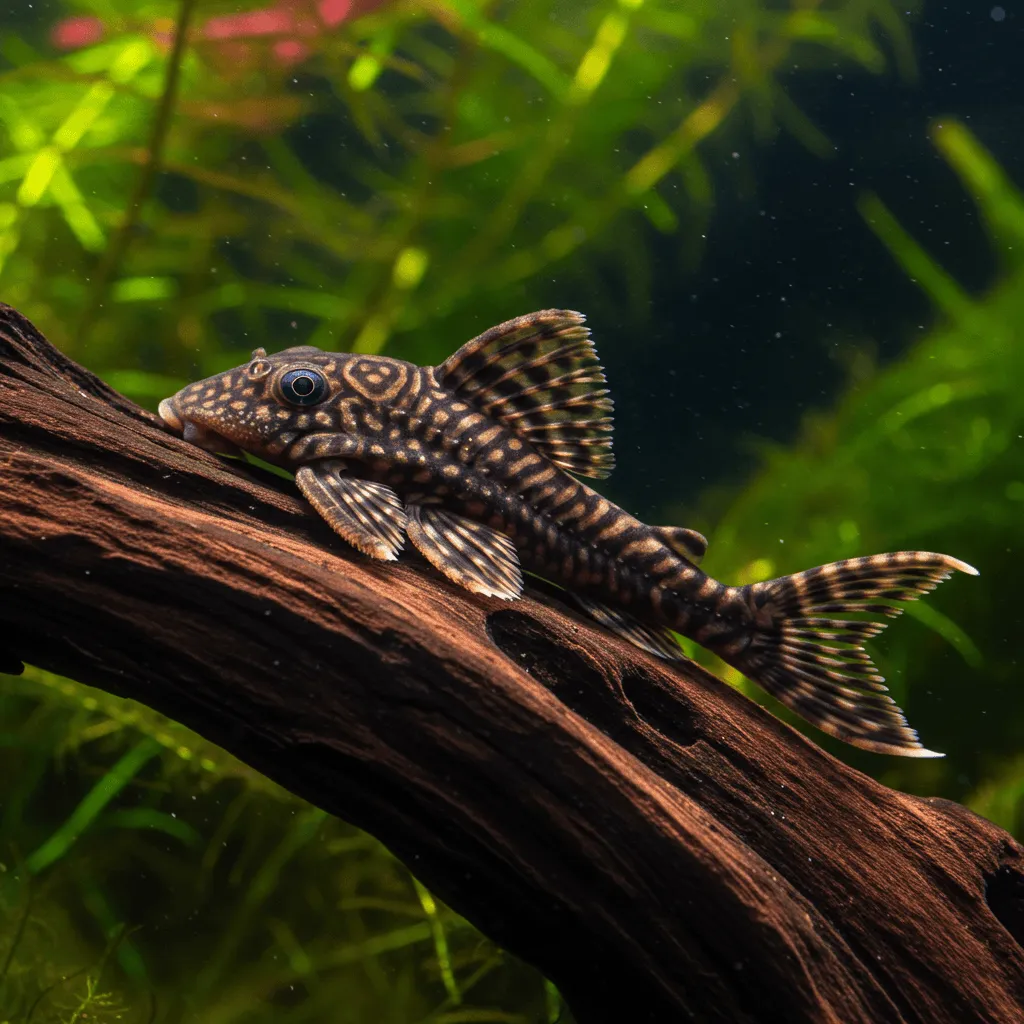
2. Species Profile & Varieties
What Is a Bristlenose Pleco?
“Bristlenose Pleco” refers to several closely related species within the genus Ancistrus, not just one exact fish. Most aquarium BN Plecos are:
- Captive-bred Ancistrus cf. cirrhosus or related forms
- Bred for different colors, patterns, and fin shapes
They’re distinct from:
- Common Pleco (Hypostomus or Pterygoplichthys species)
- Grow huge (18–24”)
- Quickly outgrow all but monster tanks
Bristlenose Plecos stay small, are much easier to house, and have a more manageable bioload.
Physical Characteristics
- Flattened, armored body
- Mouth shaped like a suction cup for rasping algae
- Males develop bushy bristles on the nose and head as they mature
- Females usually have fewer, shorter bristles concentrated around the snout
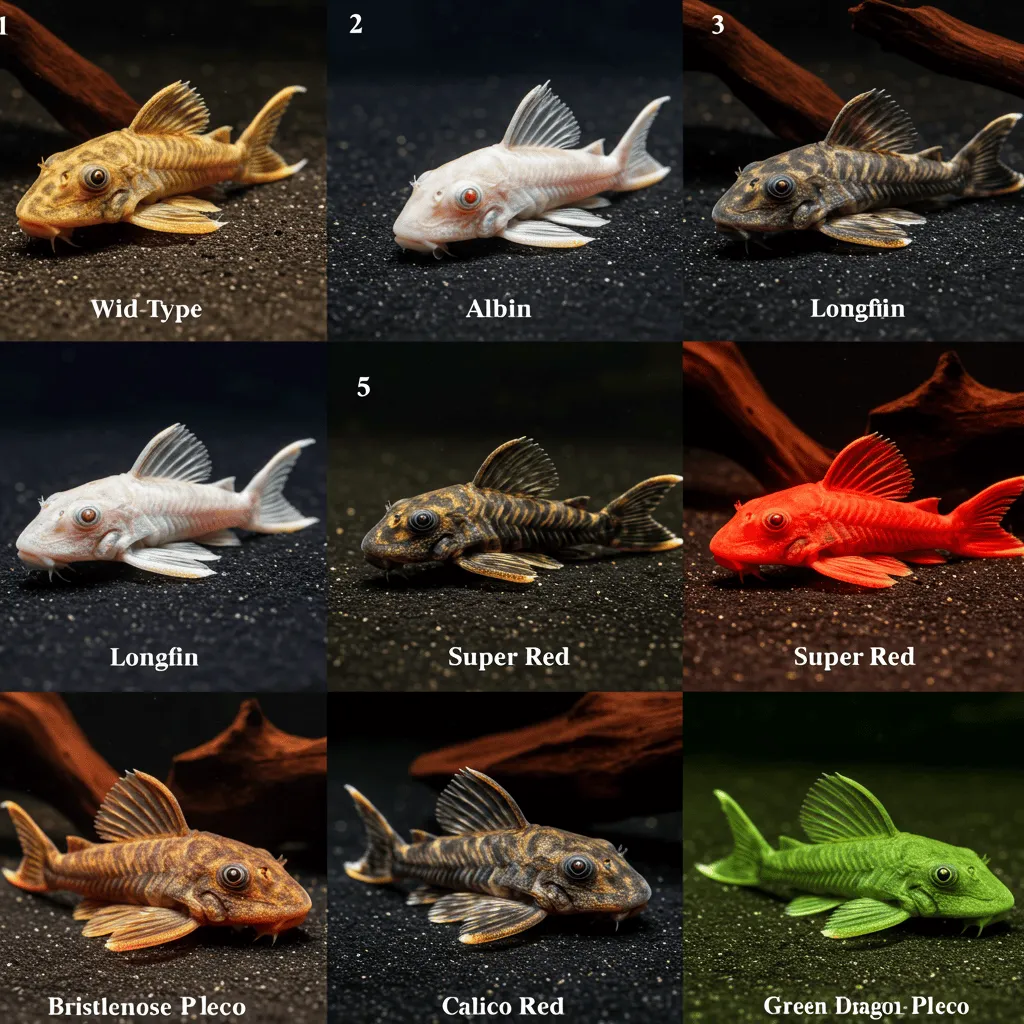
Popular Bristlenose Pleco Varieties
| Variety Name | Description | Notes |
|---|---|---|
| Standard / Wild-Type | Dark brown body with lighter spots and mottling | Very common and hardy |
| Albino Bristlenose | Light cream/gold body, red or pink eyes | Great contrast fish in planted tanks |
| Longfin Bristlenose | Extended, flowing fins in either normal or albino color | Slightly more delicate fins |
| Super Red Bristlenose | Bright orange-red to rust red body color | Highly sought-after, usually pricier |
| Calico / Marble | Mixed patches of brown, orange, cream | Varied patterns, increasingly popular |
| Green Dragon / Other Lines | Specialty strains with unique hues or scale textures | Often sold by breeders, may cost more |
3. Tank Requirements & Setup
Proper setup is the foundation of good Bristlenose Pleco care. They’re hardy, but only if their basic needs are met.
Minimum Tank Size & Stocking
- Single adult BN Pleco:
- Minimum 20 gallons / 75 liters
- Community tank with one BN Pleco + other fish:
- 20–30 gallons+ depending on total stocking
- Breeding pair / trio:
- 30 gallons+ recommended, with multiple caves
While you might see small juveniles sold as suitable for nano tanks, remember: they grow, and they produce a fair bit of waste.
Substrate
Bristlenose Plecos aren’t very picky about substrate, but they enjoy:
- Sand or fine smooth gravel
- Darker substrates show off their colors better
Avoid very sharp gravel that can damage barbels or fins.
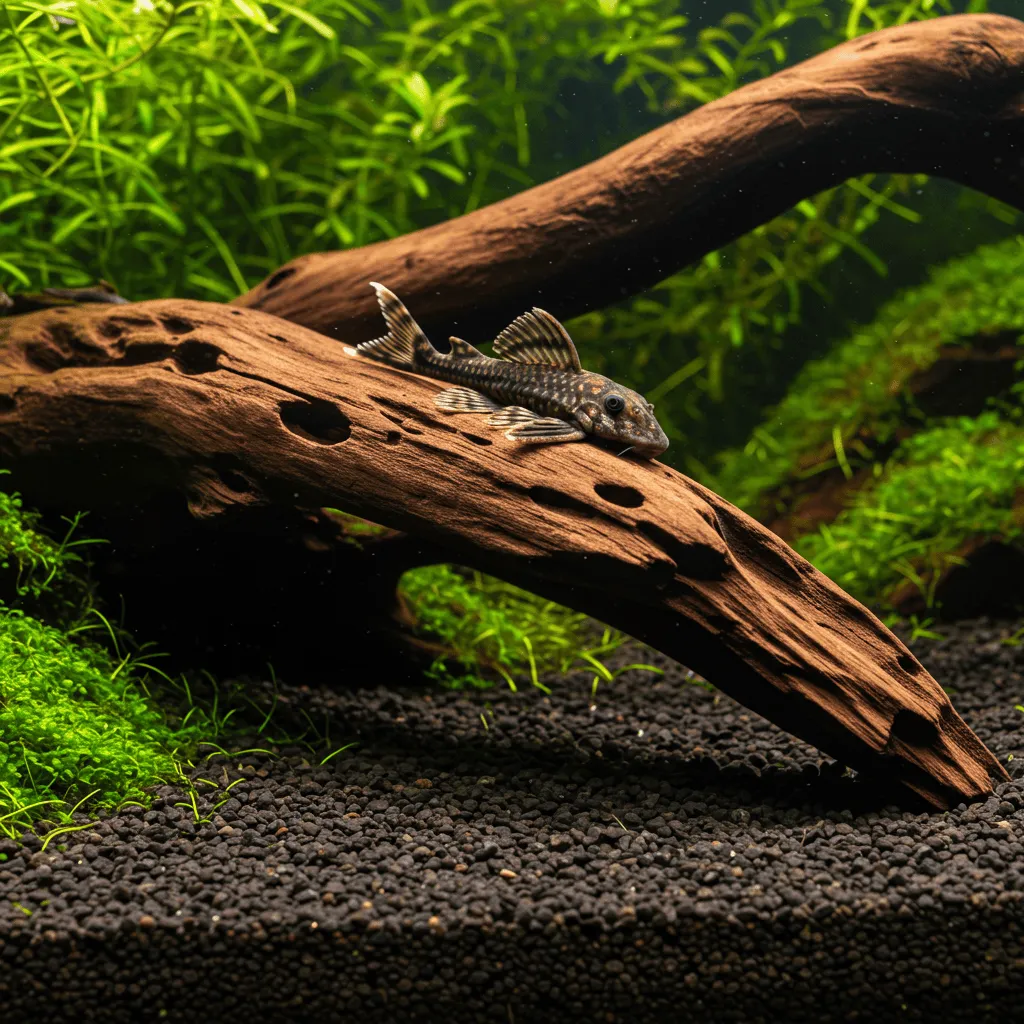
Essential Decor: Driftwood & Caves
If you only remember two decor items for Bristlenose Pleco care, remember these:
- Driftwood (Critical)
- They rasp on wood constantly
- Provides dietary fiber and a surface for biofilm and algae
- Mopani, Malaysian, and spider wood are all good choices
- Caves / Hiding Spots
- Provide security
- Essential if you want to breed them
- Use:
- Ceramic pleco caves
- PVC pipes (aquarium-safe)
- Rock caves
- Coconut huts
Aim for at least one cave per male (plus extras) to avoid territorial disputes.
Filtration & Flow
BN Plecos create a decent amount of waste and appreciate clean, well-oxygenated water:
- Filter type:
- HOB (Hang-On-Back) or canister filters are ideal
- Sponge filters are excellent supplements and good for fry tanks
- Flow:
- Moderate flow is fine; they come from rivers and streams
- Avoid blasting them directly; diffuse outlets with spray bars or baffles
Affiliate tip: For larger tanks with BN Plecos, recommend a reliable canister filter (e.g., Fluval, Eheim, or Oase) for strong mechanical and biological filtration.
Lighting
- Bristlenose Plecos are often more active at night or in low light.
- Use moderate lighting and provide shaded areas via hardscape and tall plants.
- They will adapt to normal aquarium lighting, especially with enough hiding spots.
Plants & Aquascape
They’re plant-safe in almost all cases (except very soft plants they might occasionally rasp):
- Good plants to pair with BN Plecos:
- Amazon Swords
- Java Fern
- Anubias
- Cryptocoryne species
- Vallisneria
- Floating plants (Frogbit, Salvinia)
A planted tank with wood is ideal for Bristlenose Pleco care.
4. Water Parameters & Maintenance Schedule
Bristlenose Plecos are tolerant of a range of conditions, but they thrive in clean, stable water.
Ideal Water Parameters
| Parameter | Recommended Range |
|---|---|
| Temperature | 72–80°F (22–27°C), ideal 74–78°F |
| pH | 6.5–7.8 |
| GH (General Hardness) | 3–15 dGH |
| KH (Carbonate Hardness) | 3–10 dKH |
| Ammonia | 0 ppm |
| Nitrite | 0 ppm |
| Nitrate | Ideally < 20 ppm, always < 40 ppm |
- Captive-bred BN Plecos are quite adaptable.
- Wild-caught or specialty lines may be more sensitive.
Maintenance Schedule
Daily
- Quick visual check:
- Are they breathing normally?
- Any clamped fins or flashing?
- Do they emerge and graze at least occasionally?
Weekly
- Test: ammonia, nitrite, nitrate, pH.
- Perform 25–40% water change (depending on bioload).
- Clean glass and remove excess algae (don’t expect the pleco to do all the work).
Monthly
- Rinse filter media in tank water (not tap water).
- Check impeller and hoses for blockages.
- Vacuum debris from hard-to-reach areas.
Consistent maintenance is more important than chasing “perfect” numbers. Stability is key in Bristlenose Pleco care.
5. Diet, Feeding Schedule & Nutrition Tips
Yes, BN Plecos eat algae—but no, algae alone is not enough for long-term health.
Natural Diet
In the wild, Ancistrus species eat:
- Algae and biofilm
- Detritus and decaying plant matter
- Small invertebrates picked off surfaces
- Wood fibers (for digestion)
Staple Foods in the Aquarium
For optimal Bristlenose Pleco care, provide:
- High-quality algae wafers / pleco wafers
- Sinking vegetable-based pellets
Look for ingredients like:
- Spirulina
- Kelp
- Whole fish/shrimp meal
- Minimal fillers (corn, wheat) as main ingredients
Fresh Veggies (Highly Recommended)
Offer 2–4 times per week:
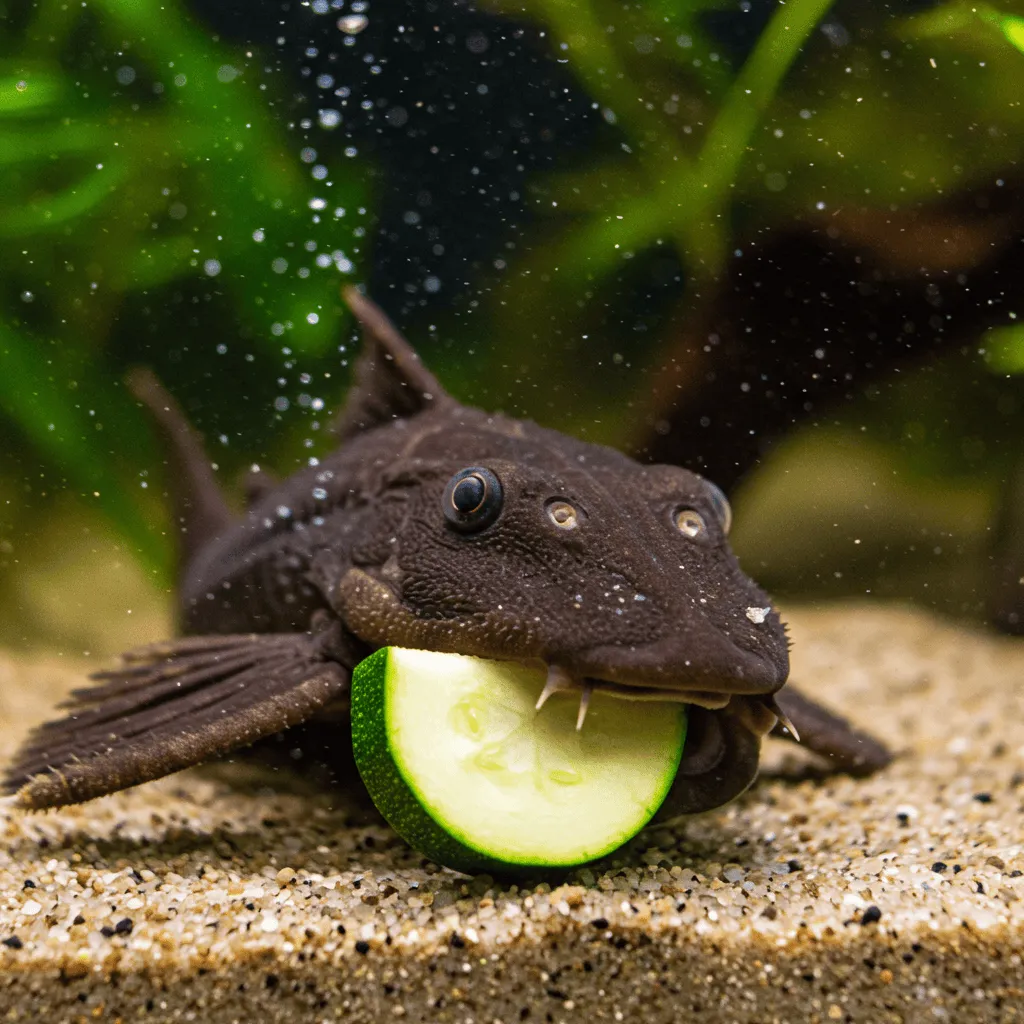
- Zucchini / courgette slices (blanched or weighed down)
- Cucumber slices
- Blanched spinach or kale (in moderation)
- Blanched green beans
- Pumpkin or sweet potato (small amounts)
Remove uneaten veggies after 12–24 hours to prevent water quality issues.
Proteins – Use in Moderation
They do appreciate:
- Occasional frozen foods like bloodworms, brine shrimp, daphnia
- A protein-rich pellet once in a while
But too much animal protein can cause:
- Bloating
- Fatty liver
- Shortened lifespan
Aim for a diet that’s 70–80% vegetable-based, 20–30% animal protein.
Feeding Schedule
- Once per day is usually enough for adults.
- Feed after lights-off or in the evening to ensure your BN Pleco gets its share (mid-water fish often eat everything during daytime).
- For heavily planted or algae-rich tanks, you can skip one day per week.
Recommended Brands (for Affiliate Links)
- Hikari Algae Wafers
- Fluval Bug Bites Pleco Formula
- Omega One Veggie Rounds
- Northfin Veggie Pellets
- Repashy “Soilent Green” gel food (excellent for plecos)
6. Temperament & Tank Mates
General Temperament
Bristlenose Plecos are:
- Peaceful with most community fish
- Mainly concerned with their own territory and food
- Slightly territorial, especially males, toward other plecos or similar bottom dwellers
You can usually keep:
- 1 BN Pleco per tank
- A breeding pair or trio in a larger tank with multiple caves
Ideal Tank Mates
Suitable tank mates include:
- Community fish:
- Tetras, rasboras, danios
- Guppies, platies, mollies, swordtails
- Gouramis (peaceful species like honey, pearl)
- Bottom dwellers:
- Corydoras catfish
- Small loaches (e.g., kuhli loaches)
- Otocinclus
- Invertebrates:
- Mystery snails, nerite snails
- Larger shrimp (Amano; adult cherry shrimp may be ok)
Tank Mates to Avoid
- Large, aggressive cichlids (Oscars, Green Terrors, etc.)
- Very territorial plecos (many Panaque or Hypostomus species)
- Keeping multiple BN males in a small tank without enough caves
- Fish that pick at fins or eyes (some barbs, large tinfoil barbs, etc.)
BN Plecos usually mind their own business, but two males in a small tank can fight over caves and territory.
7. Breeding Bristlenose Plecos (BN Plecos)
Despite the section title in your brief mentioning angelfish, the process here is specifically for breeding Bristlenose Plecos.
Breeding BN Plecos is one of the most achievable breeding projects in the hobby.
Sexing Bristlenose Plecos
Males:
- Larger, more numerous bristles on the nose and head
- Bristles can form a “crown” up the forehead
- Often slightly broader head
Females:
- Fewer, smaller bristles, usually limited to the edge of the snout
- More rounded body when viewed from above
Breeding Requirements
- Mature fish (around 1 year old, 3+ inches)
- One male with one or more females
- A tank of at least 20–30 gallons
- Excellent filtration and oxygenation
- Multiple caves – narrow and long enough for a male to fit snugly
Spawning Behavior
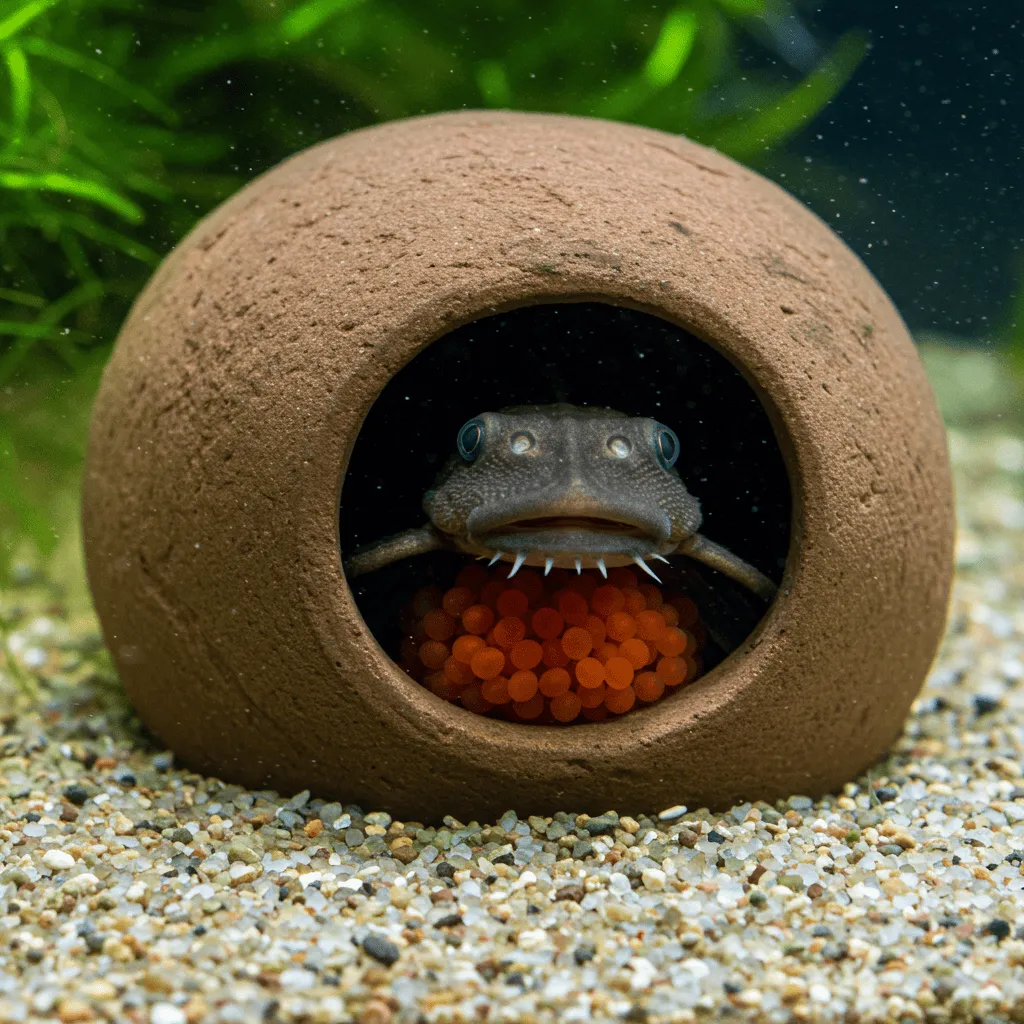
- Male chooses and cleans a cave.
- He lures a ripe female into the cave.
- Female lays a clutch of eggs on the cave wall or ceiling.
- Female usually leaves; male stays to fertilize and guard the eggs.
- Male fans the eggs with his fins to keep them oxygenated.
Egg & Fry Care
- Eggs are bright yellow to orange clusters.
- At 75–78°F (24–26°C), eggs hatch in about 4–7 days.
- Fry remain in the cave for a few days, absorbing their yolk sacs.
- Once free-swimming, they start grazing on surfaces and food.
You can:
- Leave fry with the father in the main tank (risk of predation by tank mates), or
- Move the cave with eggs/fry into a dedicated rearing tank with same water.
First foods for fry:
- Blanched zucchini or cucumber
- Crushed algae wafers or veggie pellets
- Biofilm on wood and decor
- Repashy gel food smeared on rocks
Keep water very clean but avoid drastic changes.
8. Common Diseases, Prevention & Treatment
Bristlenose Plecos are relatively tough, but poor water or diet can cause problems.
Common Health Issues
- Ich (White Spot Disease)
- Symptoms: Small white dots, flashing, rapid breathing.
- Note: Plecos are sensitive to some meds; always use scaleless fish-safe formulations or reduced doses.
- Fin Rot
- Symptoms: Frayed or ragged fins, often with white edges.
- Cause: Bacterial infection, often from poor water quality.
- Bloating / Constipation
- Cause: Too much protein, low fiber diet, or sudden diet changes.
- Symptoms: Swollen belly, lethargy, difficulty swimming.
- Prevention: High-fiber veggie diet, avoid overfeeding heavy protein.
- Hollow Belly / Starvation
- Symptoms: Sunken belly, visible concavity behind the head.
- Cause: Not enough food reaching the pleco, especially in busy community tanks where other fish outcompete it.
- Injuries from Sharp Decor
- Scrapes or missing eyes from sharp rocks or aggressive tank mates.
Prevention Tips
- Maintain zero ammonia and nitrite, low nitrates.
- Keep driftwood and hiding spots for security.
- Provide targeted feeding with algae wafers and veggies.
- Quarantine new fish where possible.
- Avoid rough handling and sharp decor.
Medication Caution
Plecos (and many catfish) are sensitive to:
- Copper-based meds
- Some formalin/malachite green combinations
When treating:
- Use medications explicitly labeled safe for scaleless or bottom-dwelling fish.
- Stick strictly to label instructions; when in doubt, start with a half-dose and observe.
Always consult a veterinarian or experienced aquarist when using medications. When in doubt, improving water quality is often the best “first treatment.”
9. Where to Buy & Price Guide
Where to Buy Bristlenose Plecos
- Local Fish Stores (LFS):
- Most carry standard, albino, and sometimes longfin BN Plecos.
- Check the health of their tanks and stock.
- Online Retailers:
- Good source for specialty varieties (Super Red, calico, Green Dragon, etc.).
- Look for live arrival guarantees and good reviews.
- Local Breeders / Clubs:
- Often best quality and price.
- Good opportunity to obtain healthy, locally acclimated stock.
Price Guide (Approximate)
| Variety | Typical Price Range (per fish) |
|---|---|
| Standard / Wild-Type | Very affordable |
| Albino | Slightly higher, still affordable |
| Longfin (standard/albino) | Moderate price |
| Super Red | Higher price, especially large adults |
| Specialty / Rare Lines | Can be significantly more expensive |
Pricing will vary by region and availability, but even the “fancy” BN Plecos are usually cheaper and easier to house than many other “fancy” fish.
10. Beginner Mistakes to Avoid
- Confusing BN Plecos with Common Plecos
- Common Plecos grow huge; BN Plecos stay small. Always verify the species/genus before buying.
- Assuming They Survive on Algae Alone
- BN Plecos need proper food: algae wafers, veggies, and a varied diet.
- Not Providing Driftwood
- Remember: Wood is essential—for grazing, fiber, and behavior.
- Underestimating Their Waste Production
- Plecos are messy. Make sure filtration and maintenance can keep up.
- Housing Multiple Males Without Enough Room
- Leads to territorial fights over caves.
- Using Strong Medications Without Research
- Some meds can harm catfish/plecos; always check “pleco-safe” or “scaleless-safe.”
- Neglecting Night Feeding
- In busy community tanks, feed BN Plecos after lights-out so they get their share.
11. Care Level & Difficulty Rating
For most captive-bred Bristlenose Plecos:
- Care Level: Easy to Moderate
- Best Suited For:
- Beginners who have a cycled tank and commit to basic maintenance
- Intermediate keepers who want a reliable algae eater and potential breeding project
Factors that make BN Pleco care easier:
- Hardy, adaptable fish
- Peaceful and compatible with many community setups
- Readily available, well-understood species
Factors that require some attention:
- Need a proper diet, not just algae
- Need driftwood and caves
- Sensitive to certain meds and poor water quality
12. Pros, Cons & Final Verdict
Pros
- Stays small compared to common plecos
- Excellent, natural algae eater
- Peaceful, community-friendly personality
- Many attractive color varieties (albino, super red, longfin, etc.)
- Readily breeds in home aquariums
- Great for planted tanks with wood
Cons
- Can be messy (produce a fair amount of waste)
- Still need regular feeding and maintenance (not a “set-and-forget” fish)
- Some meds can be risky due to sensitivity
- Males can be territorial in tight spaces
- Requires wood and hiding spots—bare tanks are not ideal
Final Verdict
If you want a hardy, peaceful, truly useful algae eater that won’t outgrow your tank, the Bristlenose Pleco is one of the best choices available.
With:
- A 20+ gallon cycled aquarium,
- Driftwood and caves,
- A varied vegetable-based diet, and
- Basic weekly maintenance,
your BN Pleco can thrive for many years and become a fascinating “character fish” in your community.
13. FAQ Section (Frequently Asked Questions)
1. How big do Bristlenose Plecos get?
Most Bristlenose Plecos reach 4–5 inches (10–13 cm) in length, making them perfect for 20–30 gallon tanks.
2. What is the minimum tank size for a Bristlenose Pleco?
A single BN Pleco needs at least a 20-gallon (75 liter) tank. In community setups or for breeding, bigger is better.
3. Are Bristlenose Plecos good algae eaters?
Yes. They are among the best algae eaters for home aquariums, especially for soft green and brown algae. They won’t usually handle hair algae or black beard algae alone, though.
4. Do Bristlenose Plecos need wood?
Yes. While they can survive without it, driftwood is highly recommended. They rasp wood for fiber and biofilm, which supports digestion and overall health.
5. Can I keep more than one Bristlenose Pleco in the same tank?
Yes, in a larger tank with multiple caves and good filtration. Typically:
- 1 BN Pleco in a 20-gallon
- A pair or trio in 30+ gallons
- Avoid multiple males in small tanks without many hiding spots.
6. Do Bristlenose Plecos uproot plants?
No. They are generally plant-safe and won’t uproot or eat healthy plants, though they may occasionally rasp on soft leaves.
7. Are Bristlenose Plecos nocturnal?
They’re more active at night, but in a safe, comfy tank, they’ll also be seen grazing during the day, especially if tank mates aren’t too boisterous.
8. How often should I feed my Bristlenose Pleco?
Once per day is usually enough, plus fresh veggies a few times a week. In tanks with abundant natural algae and biofilm, you may skip feeding one day per week.
9. Can Bristlenose Plecos live with shrimp?
Yes, they usually don’t bother adult shrimp, especially Amano or adult Neocaridina. Tiny shrimplets might occasionally be eaten if they’re in the wrong place at the wrong time.
10. How long do Bristlenose Plecos live?
With good care, a BN Pleco can live 5–10 years, sometimes longer.