In the world of freshwater aquariums, few fish command as much personality and presence as the Clown Loach. With their brilliant orange bodies, bold black stripes, and incredibly social, playful nature, they are the charismatic giants of the loach family. From their famous “loachy dance” to their quirky habit of “playing dead,” Clown Loaches are a source of endless entertainment and joy.
But there’s a critical truth every potential owner must understand: the tiny, adorable 2-inch Clown Loach you see in the store is a baby. A baby that grows into a foot-long, social, and long-lived fish requiring a very large tank. This is not a fish for a small community setup.
This is your definitive guide to Clown Loach care. We will cover everything you must know to raise these gentle giants properly, from their demanding tank size requirements and specific dietary needs to understanding their unique social structure and keeping them healthy for decades to come.
1. Introduction & Quick Facts
Clown Loaches are peaceful, social bottom-dwelling fish native to Indonesia. In the wild, they can reach 12 inches (30 cm) or more and live in large shoals. In home aquariums, they are often stunted due to inadequate space, but with proper care they can grow large and live well over a decade.
Quick Facts Table
| Attribute | Details |
|---|---|
| Common Name | Clown Loach |
| Scientific Name | Chromobotia macracanthus |
| Adult Size | Commonly 8–10 in (20–25 cm) in aquariums; up to 12 in+ (30 cm) wild |
| Lifespan | 15–25+ years with proper care |
| Care Level | Moderate to Difficult (due to size & tank requirements) |
| Temperament | Peaceful, social, playful; can be boisterous |
| Minimum Group Size | 5–6 (the more, the better) |
| Minimum Tank Size | 75–125 gallons (280–475 L) for a small group, larger ideal |
| Temperature Range | 78–86°F (25–30°C) |
| pH Range | 6.0–7.5 (slightly acidic preferred) |
| Hardness Range | Soft to moderately soft (2–12 dGH) |
| Tank Level | Bottom to mid-level |
| Diet Type | Omnivore (insects, worms, snails, prepared foods) |
2. Species Profile & Varieties
Origin & Natural Habitat
Clown Loaches are native to:
- Sumatra and Borneo (Indonesia)
- Primarily in the river systems of the Mahakam, Kapuas, and Batang Hari
Their natural habitat includes:
- Slow to moderately flowing rivers and tributaries
- Flooded forest areas during rainy season
- Soft, slightly acidic water
- Sandy or muddy substrates with leaf litter, roots, and submerged wood
Seasonal migrations are thought to occur, with fish moving into flooded forests for feeding and possibly spawning.
Taxonomy & Classification
- Family: Botiidae
- Genus: Chromobotia (monotypic – Clown Loach is the only species)
- They were previously placed in Botia, but reclassified as Chromobotia macracanthus.
Appearance & Lifespan
Key features:
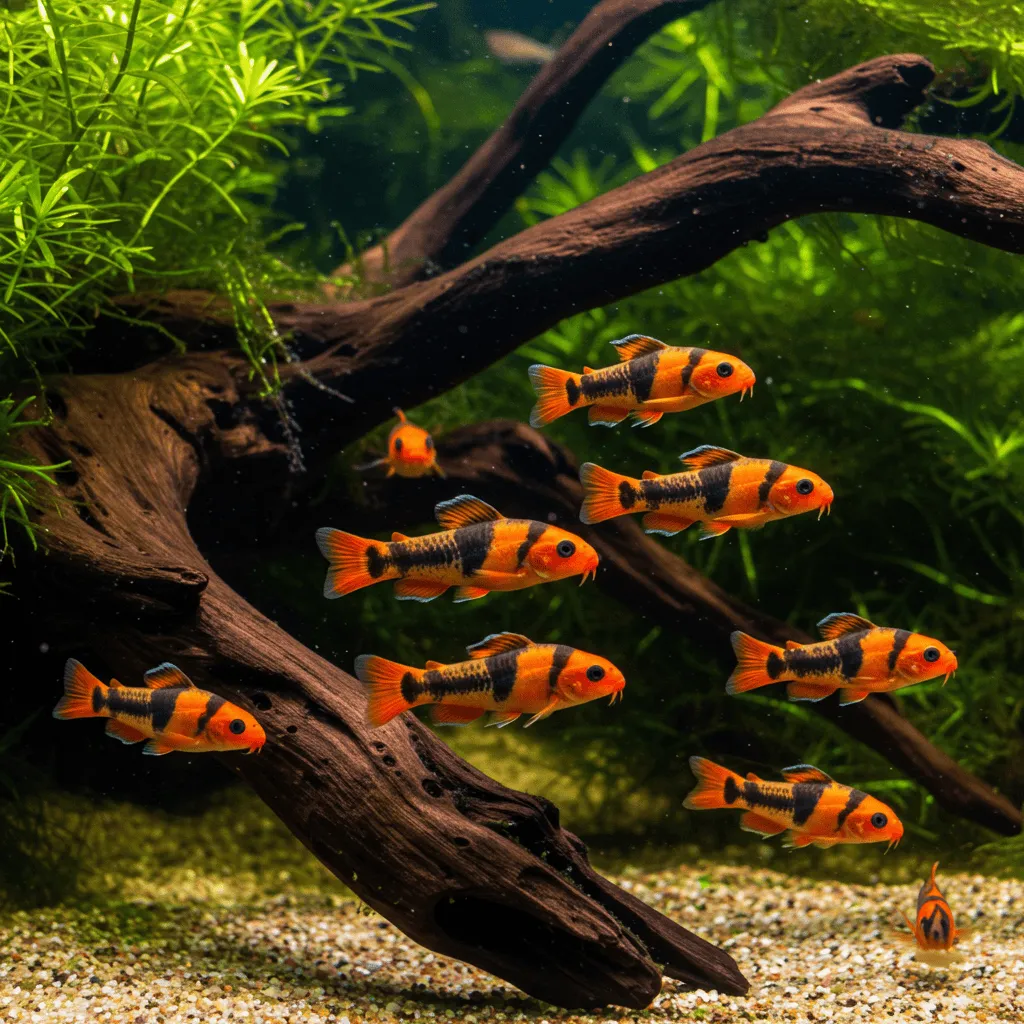
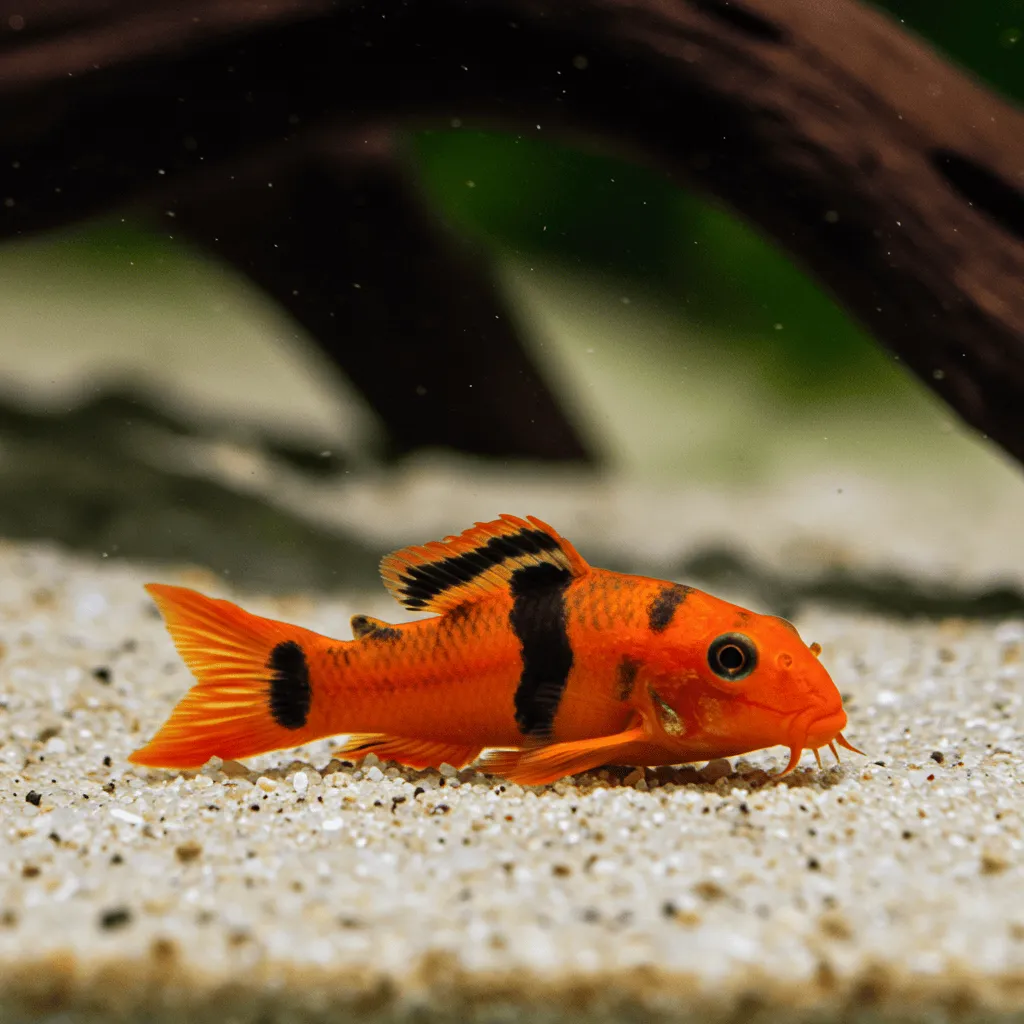
- Bright orange to yellow body with three bold black bands
- High, arched back with a slightly flattened underside
- Short, downward-facing mouth with barbels for detecting food
- Suborbital “spines” under eyes, used defensively (handle gently when netting)
Lifespan:
- Commonly 15–20+ years in properly maintained large aquariums
- There are reports of Clown Loaches living 25+ years
Growth & Size Reality Check
Clown Loaches are slow growers but keep growing for many years.
Approximate growth (with good care):
- 1–2 years: 3–4 inches (7.5–10 cm)
- 3–5 years: 5–7 inches (12–18 cm)
- 5–10+ years: 8–10+ inches (20–25+ cm)
They’re often sold as 1–2 inch juveniles, which misleads new fish keepers into thinking they’re suitable for 20–30 gallon tanks long-term. They are not.
Varieties & Regional Forms
There are subtle geographic variations:
- Sumatran vs Bornean forms: slight differences in band thickness, color intensity, or body shape
- Golden/Leucistic Clown Loach: very rare pale morphs sometimes seen, usually from specialty breeders or farms
However, in the hobby, they’re almost always just sold as Clown Loach with the typical orange-and-black pattern.
3. Tank Requirements & Setup
Because of their eventual size and social needs, Clown Loach care requires planning for the long term.
3.1 Minimum Tank Size & Footprint
For juveniles, many keepers temporarily house them in 55–75 gallon tanks, but adult groups need much more.
- Small group (5–6 juveniles):
- 75 gallons (280 L) as a short-term grow-out
- Long-term group (5–6 adults):
- 125 gallons (475 L) minimum
- Larger (180–240+ gallons) is strongly preferred
Important: Choose tanks with large footprint (length and width) over extra height. Clown Loaches love to roam and need swimming room.
3.2 Substrate
Use a soft, fine substrate, because Clown Loaches:
- Frequently dig and sift through substrate
- Rest on the bottom for naps
Best choices:
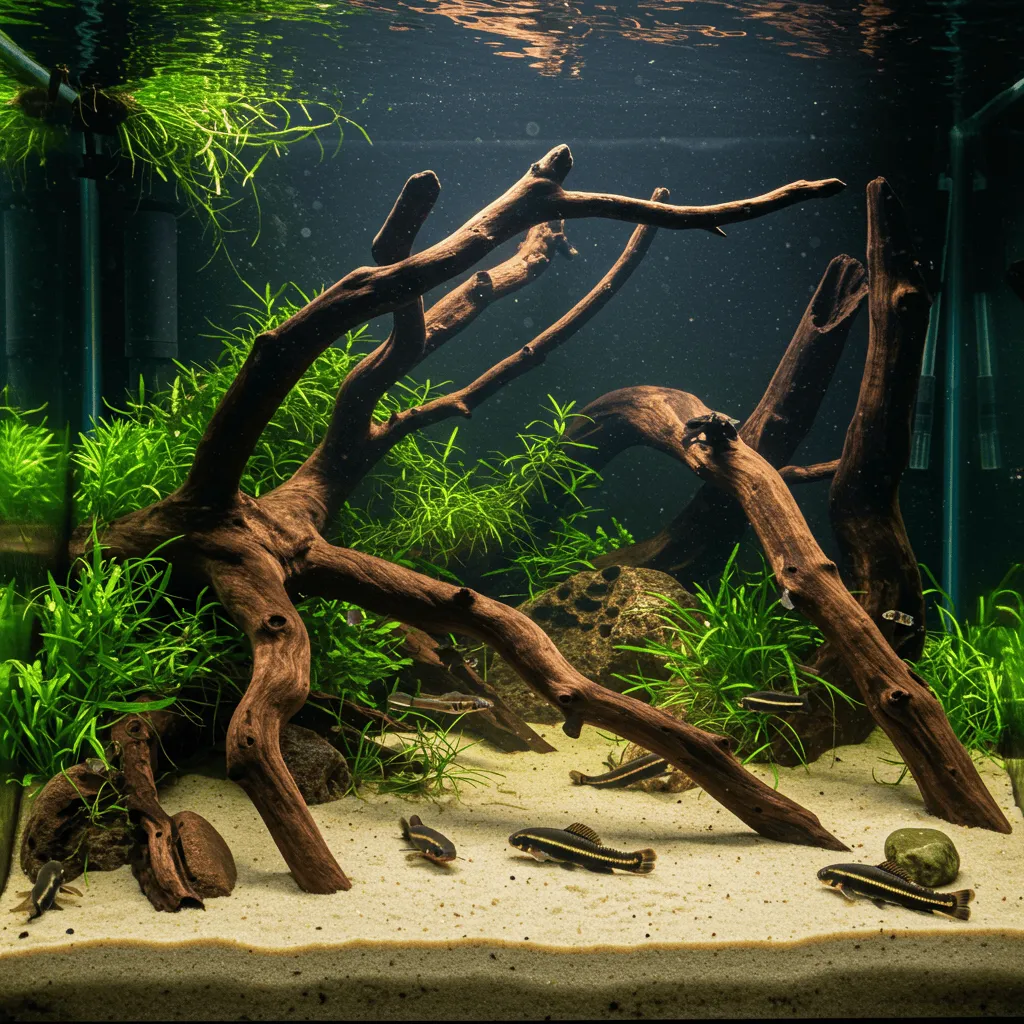
- Fine sand (pool filter sand, aquarium sand)
- Very smooth, fine gravel
Avoid:
- Sharp, rough gravel
- Crushed coral (affects pH and hardness)
3.3 Decor & Hiding Places
Clown Loaches are social but shy. They feel safest with lots of cover:
- Large pieces of driftwood creating caves and tunnels
- Rock caves and ceramic tubes (routes large enough for groups to cram into)
- Piles of smooth stones with gaps
- Leaf litter or botanicals (optional but natural)
They love to:
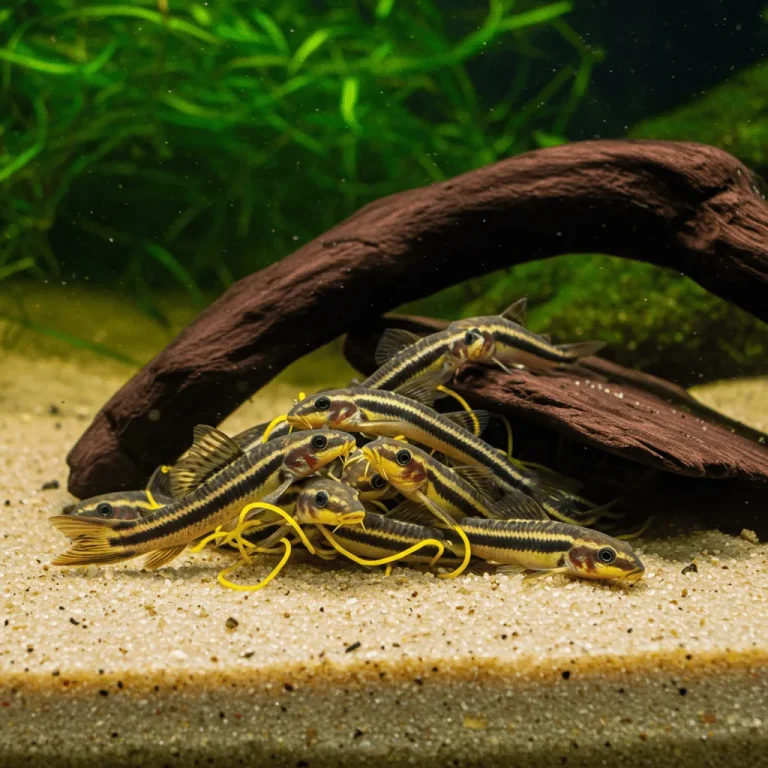
- “Pile up” in hiding spots
- Sleep in weird positions (even on their sides – don’t panic if they look “dead” but swim normally when disturbed)
The more hiding places, the bolder they will be in open water.
3.4 Plants
Despite their size and activity, Clown Loaches can work in planted tanks:
- Generally safe with hardy plants like:
- Java Fern
- Anubias
- Bolbitis
- Amazon Swords
- Cryptocoryne
- They may nibble or uproot very delicate plants when digging. Plant in pots or use heavy substrates around roots to prevent uprooting.
3.5 Filtration & Flow
Clown Loaches are:
- Heavy feeders
- Active fish with significant bioload
Use strong and redundant filtration:
- Oversized canister filters or multiple canisters
- Good water circulation to avoid dead spots
- Additional aeration (air stones, powerheads) is beneficial
Flow:
- Moderate to strong, mimicking riverine conditions
- Ensure there are calmer areas and hiding spots out of the current
3.6 Lighting
Clown Loaches dislike very bright, bare environments.
- Use moderate lighting
- Provide shaded areas using plants and driftwood
- Dim lighting encourages more natural, daytime activity
3.7 Lid & Escape Prevention
Though not the worst jumpers, large active fish can jump if startled:
- Use a secure, tight-fitting lid
- Cover all gaps around equipment
4. Water Parameters & Maintenance Schedule
Clown Loaches are sensitive to poor water quality and particularly prone to Ich, so stable, clean water is critical.
4.1 Ideal Water Parameters
| Parameter | Recommended Range |
|---|---|
| Temperature | 78–86°F (25–30°C), ideal around 80–82°F |
| pH | 6.0–7.5 |
| GH (Hardness) | 2–12 dGH (soft to moderately soft) |
| KH | 1–6 dKH |
| Ammonia | 0 ppm |
| Nitrite | 0 ppm |
| Nitrate | Ideally < 20 ppm (always < 40 ppm) |
Captive-bred specimens can adapt to moderate parameters, but avoid extremes and sudden changes.
4.2 Maintenance Schedule
Daily:
- Observe behavior:
- Are they active, schooling, and curious?
- Any signs of heavy breathing, clamped fins, or flashing (scratching)?
- Ensure temperature and filtration are stable.
Weekly:
- Test water: ammonia, nitrite, nitrate, pH.
- Perform 30–50% water change (depending on stocking).
- Siphon surface debris from sand (don’t dig too deep).
- Wipe glass and check for algae.
Monthly:
- Rinse filter media gently in tank water (never tap water).
- Inspect hoses and impellers.
- Thin plants, re-secure decorations if loaches have rearranged things.
Good Clown Loach care means treating them like large, long-lived fish with consistent maintenance—similar to discus or large cichlids.
5. Diet, Feeding Schedule & Nutrition Tips
In the wild, Clown Loaches eat:
- Worms
- Insect larvae
- Crustaceans
- Snails
- Plant material and detritus
They are opportunistic omnivores with a strong preference for meaty foods.
5.1 Staple Foods
Use a varied diet of:
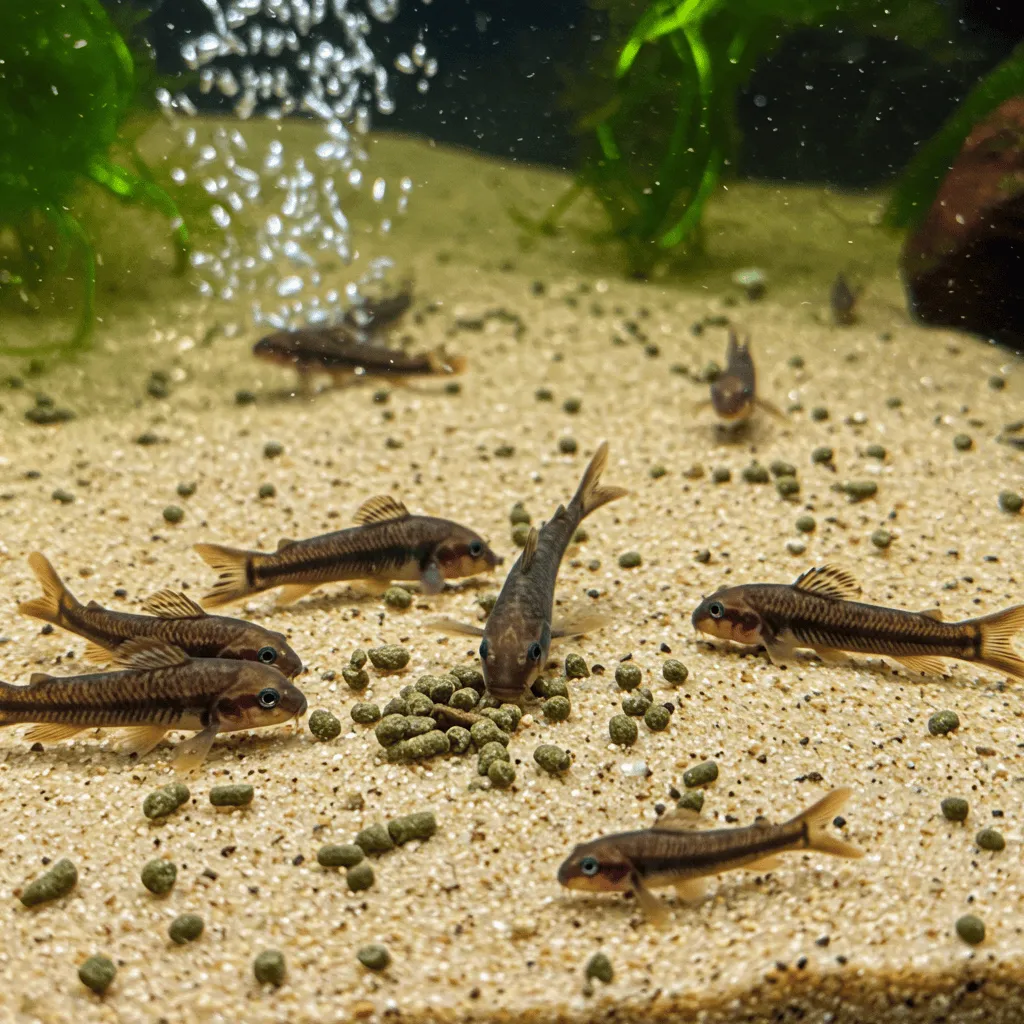
- High-quality sinking pellets (loach, cichlid, or bottom-feeder formulations)
- Sinking wafers (shrimp, algae mix)
- Soft granules designed for medium-large fish
Look for:
- Whole fish, shrimp, krill as primary proteins
- Added vitamins and minerals
- Minimal cheap fillers and low ash content
5.2 Treats & Variety (2–4 times/week)
- Frozen or live foods:
- Bloodworms
- Blackworms (clean source)
- Brine shrimp
- Daphnia
- Chopped earthworms (excellent for conditioning)
- Soft blanched vegetables:
- Zucchini
- Cucumber
- Shelled peas (helpful for digestion)
Clown Loaches are also famous for eating pest snails. They will enthusiastically eat small snails and snail eggs, though don’t rely on them as your sole snail control.
5.3 Feeding Schedule
- Juveniles:
- 2–3 small feedings per day
- Adults:
- 1–2 feedings per day
- Only what they can consume in a few minutes
Feed mainly in the evening when they are more active. Use sinking foods so mid-water fish don’t steal everything.
5.4 Nutrition Tips
- Avoid a diet of only bloodworms or one type of food—variety prevents deficiencies.
- Overfeeding leads to obesity and poor water quality in large fish.
- Watch body condition:
- Healthy loaches are full-bodied but not bloated.
- Sunken bellies can indicate parasites or malnutrition.
Recommended Brands (for Affiliate Links)
- Hikari Sinking Carnivore Pellets
- Northfin Kelp & Krill formulas (sinking)
- Omega One Sinking Shrimp Pellets
- Fluval Bug Bites (Bottom Feeder / Cichlid formulations)
- Repashy (Bottom Scratcher, Community Plus)
6. Temperament & Tank Mates
6.1 Temperament & Social Behavior
Clown Loaches are:
- Highly social – must be kept in groups of 5–6+
- Active, playful, and curious
- Known for “clicking” sounds (audible with quiet room) during interactions and feeding
- Often form hierarchies with a “leader” or dominant individual
They are generally peaceful, but:
- Their size and high activity can stress very small or delicate fish.
- May chase smaller tank mates playfully (usually not harmful, but monitor).
6.2 Ideal Tank Mates
Choose tank mates that:
- Appreciate similar warm, soft conditions
- Are large/robust enough not to be intimidated
- Are not aggressive fin-nippers
Good options:
- Medium to large peaceful tetras (Congo Tetra, Bleeding Heart, Rummy-nose in large tanks)
- Rainbowfish (Melanotaenia species)
- Larger rasboras (Scissortail, Brilliant rasboras)
- Gouramis (Pearl, Three-spot variants in larger setups)
- Angelfish in big tanks (watch temperament)
- Other loaches (Yo-yo, Zebra loach) in very large tanks
- Plecos (Bristlenose, some Hypancistrus)
- Silver Dollars (plant-safe tanks only, as they eat plants)
6.3 Tank Mates to Avoid
- Very small fish that could be eaten or heavily stressed (tiny rasboras, small shrimp)
- Aggressive cichlids (Oscars, large Central/South American cichlids)
- Fin-nipping barbs in cramped conditions (Tiger Barbs in undersized tanks)
- Coldwater species (goldfish) – incompatible temperature and bioload
In huge, well-planned tanks, more combinations become possible, but for most aquarists, peaceful, medium-sized community fish are ideal partners.
7. Breeding Clown Loach
(Template heading adjusted from “Breeding Angelfish” to Breeding Clown Loach.)
7.1 Difficulty Level
Breeding Clown Loaches in home aquariums is considered extremely difficult and almost never occurs spontaneously.
Most commercial Clown Loach production uses:
- Large, pond-sized facilities
- Hormonal induction to trigger spawning
- Carefully controlled environmental cues
7.2 Sexual Dimorphism
Sexing mature Clown Loaches is subtle:
- Females:
- Slightly plumper, especially when full of eggs
- Slightly larger body size in very mature specimens
- Males:
- May have slightly more pointed pectoral fin rays
- Often just a bit slimmer
These differences are easier to see in large, old fish, and even then are not always obvious.
7.3 Spawning Behavior (What’s Known)
- Clown Loaches are thought to be egg scatterers, like many riverine fish.
- Spawning likely occurs in flooded forests or specific seasonal habitats.
- Captive spawning without hormones is extremely rare and poorly documented.
7.4 Practical Advice
For the vast majority of hobbyists:
- Treat Clown Loaches as non-breeding display fish.
- Do not expect to breed them at home, even in large tanks.
- Focus on providing optimal long-term care rather than breeding.
If breeding is a priority, select easier species like:
- Corydoras catfish
- Livebearers (guppies, platies)
- Bristlenose Plecos
- Many dwarf cichlids
8. Common Diseases, Prevention & Treatment
Clown Loaches are somewhat delicate when it comes to disease, especially Ich (white spot disease), and are sensitive to many medications.
8.1 Common Health Issues
- Ich (White Spot Disease)
- Very common in Clown Loaches (“Ich magnets”).
- Symptoms: white spots, flashing, clamped fins, heavy breathing.
- Skinny Disease (Internal Parasites)
- Loach eats but remains thin or loses weight.
- Often due to internal nematodes or other parasites.
- Bacterial Infections & Fin Rot
- Red patches, ulcers, frayed fins.
- Often secondary to stress or injury.
- Stress-Related Problems
- Shyness, loss of color, hiding constantly.
- Poor group size, too small tank, or aggressive tank mates.
8.2 Disease Prevention
- Always quarantine new fish for 3–4 weeks.
- Never add Clown Loaches to an uncycled or unstable tank.
- Maintain excellent water quality and stable parameters.
- Avoid overcrowding and poor diet.
- Use soft substrate to prevent barbel and skin damage.
8.3 Treatment Considerations
Clown Loaches are scaleless/very thin-scaled, so they’re more sensitive to many medications:
- When treating Ich:
- Use meds specifically marked as safe for loaches/scaleless fish.
- Often, a half-dose of standard medication is recommended (follow label).
- Gradually raising temperature (within safe range) can speed the parasite life cycle.
- For Skinny Disease (internal parasites):
- Use internal dewormers (e.g., praziquantel, levamisole) as recommended.
- Multiple treatments may be needed.
Always:
- Remove activated carbon from filters while medicating.
- Increase aeration with air stones during treatment.
- Monitor fish closely for adverse reactions.
When in doubt, consult with an experienced aquarist or aquatic veterinarian. Improving water quality and diet should always accompany any treatment plan.
9. Where to Buy & Price Guide
9.1 Where to Buy Clown Loaches
- Local Fish Stores (LFS):
- Most common source, usually selling 1–2 inch juveniles.
- Online Fish Retailers:
- Can provide different sizes (small juveniles to subadults).
- Check for overnight shipping and live-arrival guarantees.
- Hobbyist Clubs / Forums:
- Occasionally rehoming larger specimens from other aquarists.
9.2 Price Guide (Approximate)
Prices vary by region, size, and supply:
- Small juveniles (~1–2 inches):
- Relatively low cost per fish
- Medium subadults (~3–4 inches):
- Moderately more expensive
- Large/near-adult specimens:
- Significantly more expensive and harder to find
Remember: you must buy a group (5–6+ fish), not just one—factor that into cost and tank capacity.
10. Beginner Mistakes to Avoid
- Underestimating Adult Size
- Buying Clown Loaches for a 20–30 gallon tank and never upgrading.
- These fish grow slowly, but they do grow—and deserve proper space.
- Keeping Them Alone or in Pairs
- Clown Loaches are shoaling fish and need a group (5–6 minimum).
- Small groups or singles become shy, stressed, and unhealthy.
- Ignoring Water Quality
- Clown Loaches are sensitive to ammonia, nitrite, and high nitrates.
- Poor water quality leads to Ich and Skinny Disease.
- Using Sharp Gravel or Bare Bottom
- Rough substrate damages barbels and skin.
- Bare tanks deprive them of natural digging behavior.
- Mixing with Aggressive Tank Mates
- Large aggressive cichlids can bully or injure them.
- Constant stress undermines health and behavior.
- Improper Medication Use
- Full doses of harsh meds can harm or kill loaches.
- Always confirm loach/scaleless safety and follow directions carefully.
- Assuming They’re “Cleaner Fish” Only
- They need a proper, varied diet, not just leftover scraps.
- Treat them as centerpiece fish, not janitors.
11. Care Level & Difficulty Rating
For most home aquarists:
- Care Level: Moderate to Difficult
- Difficulty Rating: 7–8 / 10
Why?
- They require large tanks, strong filtration, and group dynamics.
- Sensitive to water quality and disease.
- Long-lived and slow-growing, so it’s a long-term commitment.
They are best for:
- Intermediate to advanced aquarists
- Beginners who already have experience with stable, larger community tanks and are ready to upgrade to big setups
12. Pros, Cons & Final Verdict
Pros
- Stunning coloration and pattern; real “showpiece” fish
- Highly social and entertaining group behavior
- Generally peaceful and compatible with many large community fish
- Will eat pest snails and scavenge leftovers
- Long lifespan for a rewarding, long-term pet
Cons
- Need large tanks (125+ gallons) and large groups
- Sensitive to water quality and Ich
- Hard to medicate safely
- Expensive to keep properly (tank size, filtration, food)
- Breeding at home is virtually impossible
Final Verdict
Clown Loaches are amazing fish—but they are not suited to small aquariums or casual setups.
If you:
- Can provide a large, warm, well-filtered tank (125+ gallons),
- Are willing to buy and care for a group of 5–6+, and
- Commit to long-term, high-quality Clown Loach care,
then they can easily become the stars of your freshwater aquarium and beloved pets for 20 years or more.
For smaller tanks or newer hobbyists, consider alternative loaches like Kuhli Loach or Zebra Loach instead.
13. FAQ Section (Frequently Asked Questions)
1. How big do Clown Loaches really get?
In home aquariums, they commonly reach 8–10 inches (20–25 cm). In the wild (and in exceptional tanks), they can exceed 12 inches (30+ cm).
2. What is the minimum tank size for Clown Loaches?
For a small group of juveniles, 75 gallons is a starting point—but for long-term housing of adults, 125 gallons or larger is recommended.
3. How many Clown Loaches should be kept together?
At least 5–6. They are highly social and form complex group interactions. More (in large tanks) is even better.
4. Can I keep Clown Loaches with shrimp?
Not recommended if you value your shrimp colony. While they may ignore larger adults at first, they will opportunistically eat small shrimp and shrimplets.
5. Are Clown Loaches good for beginners?
Not typically. They are best for aquarists who already understand cycling, water chemistry, and maintaining large aquariums.
6. Do Clown Loaches eat algae?
They may nibble some soft algae, but they are not primary algae eaters. Think of them as omnivorous scavengers, not clean-up crews.
7. Why do my Clown Loaches sometimes lie on their side?
Clown Loaches are notorious for resting in strange positions, even on their sides. If they swim and feed normally when disturbed and show no other signs of distress, this behavior is usually normal.
8. How long do Clown Loaches live?
With excellent care, they can live 15–25+ years.
9. Do Clown Loaches need a heater?
Yes. They are tropical fish that prefer 78–86°F (25–30°C). Room-temperature tanks are usually too cold.
10. Can Clown Loaches live with discus?
Yes, in very large, well-managed tanks, because they share similar warm, soft water requirements. Ensure plenty of space, hiding spots, and careful feeding so both species thrive.