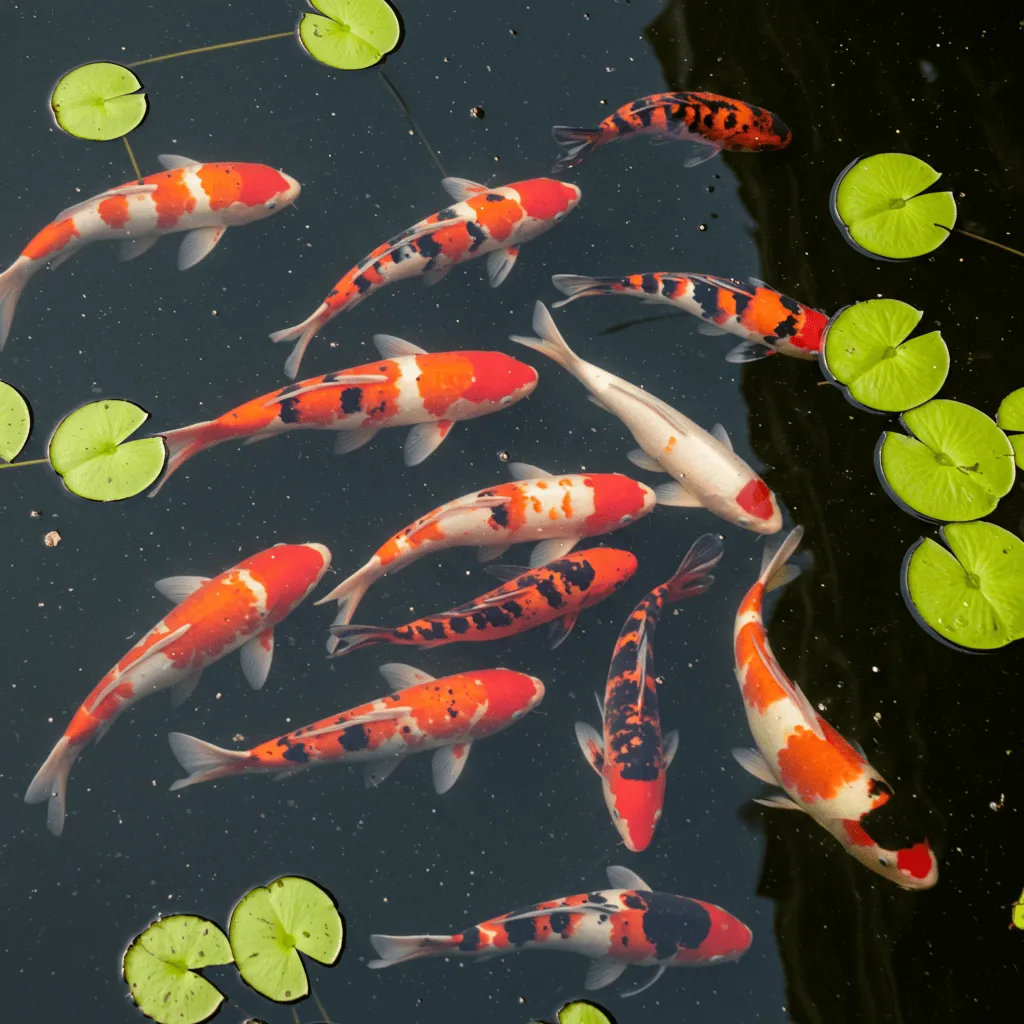
For centuries, the Koi fish has been more than just a pet; it’s been a symbol of strength, luck, love, and good fortune. These “living jewels” transform a simple garden pond into a dynamic work of art, bringing a sense of tranquility and vibrant life. With their majestic size, brilliant colors, and surprisingly personable nature, Koi are one of the most prestigious and rewarding fish a person can keep.
But this prestige comes with a profound responsibility. The single most important thing to understand is that Koi are not aquarium fish. The tiny, colorful fish at the store is a baby that will grow into a large, powerful animal requiring thousands of gallons of water and a lifelong commitment.
This is your definitive guide to the world of Koi fish. We will explore what it truly takes to provide a proper home for these magnificent creatures, from building the right pond and understanding their complex needs to keeping them healthy for decades.
1. Introduction & Quick Facts
Koi (properly called Nishikigoi in Japan) are selectively bred forms of the common carp (Cyprinus rubrofuscus). Over centuries, breeders have produced dozens of color and pattern varieties—many worth thousands of dollars each.
They are hardy and adaptable, but only when their basic needs are met: space, clean water, and oxygen.
Quick Facts Table
| Attribute | Details |
|---|---|
| Common Name | Koi, Koi Carp, Nishikigoi |
| Scientific Name | Cyprinus rubrofuscus (ornamental form of carp) |
| Adult Size | 24–36 in (60–90 cm) in large ponds; 18+ in (45+ cm) is common |
| Lifespan | 20–30+ years; some over 50 years with excellent care |
| Care Level | Moderate (easy once pond is stable; setup can be advanced) |
| Temperament | Peaceful, social, very interactive |
| Minimum Pond Volume | 1,000 gallons (3,800 L) for a small group; bigger is better |
| Temperature Range | 59–77°F (15–25°C) ideal; can tolerate colder with proper depth |
| pH Range | 7.0–8.5 (slightly alkaline preferred, stable) |
| Hardness Range | Moderately hard water generally best |
| Tank/Pond Level | Mid to bottom, but will surface to feed |
| Diet Type | Omnivore (pellets, plants, insects, crustaceans) |
2. Species Profile & Varieties
2.1 Origin & History
Koi originated from domesticated carp in East Asia:
- Carp were first kept as a food fish in China and later Japan.
- In the 1800s, farmers in the Niigata region of Japan noticed color mutations.
- Through selective breeding, these “colored carp” became Nishikigoi—koi as ornamental fish.
- Today, koi are bred worldwide, but Japan remains the spiritual and genetic “home” of high-end koi.
2.2 Physical Characteristics
- Deep, torpedo-shaped body built for slow, powerful swimming
- Two pairs of barbels (whiskers) around the mouth
- Wide, fan-like fins and tail
- Size: commonly 18–24″ in hobbyist ponds; can reach 36″+ in large, well-maintained ponds
Koi colors come from combinations of white, red, black, yellow, blue, and cream.
2.3 Major Koi Varieties (Koi Types)
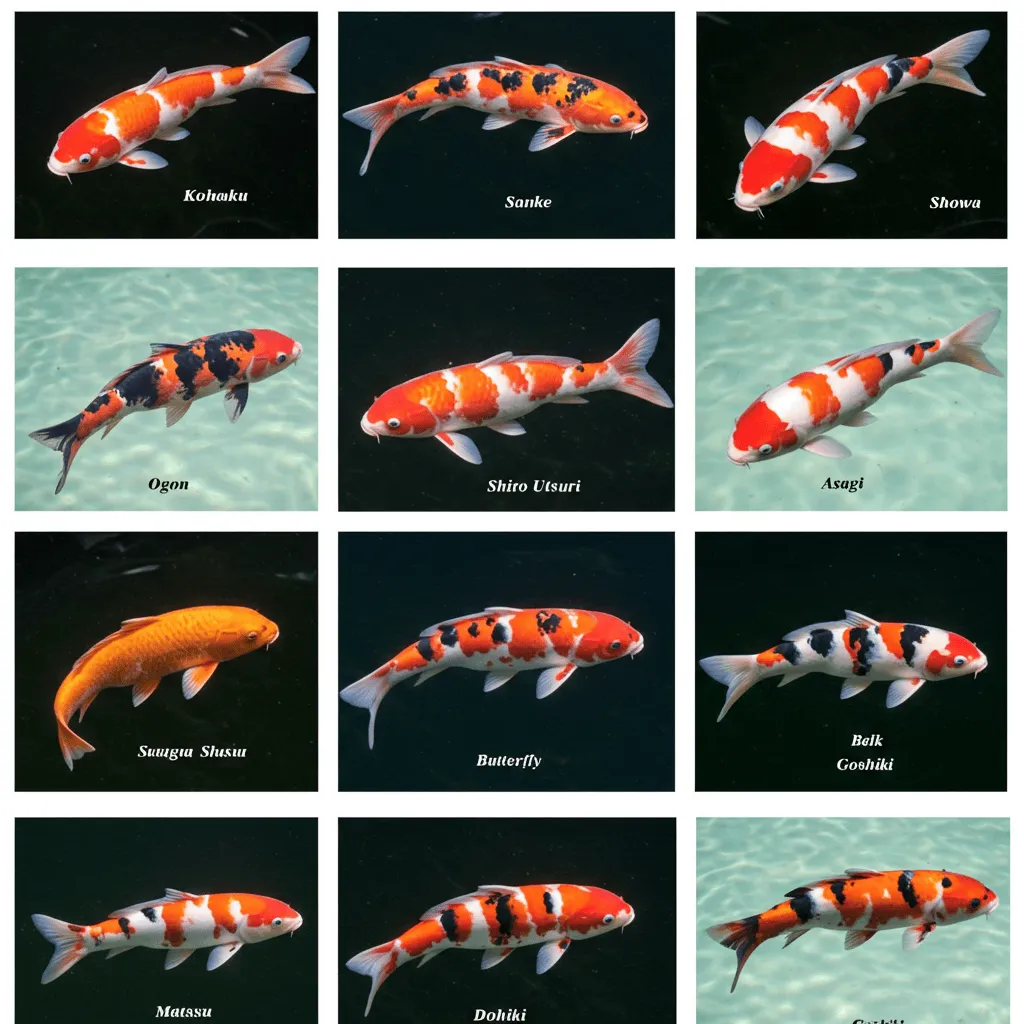
There are dozens of varieties, but here are some of the most popular (Gosanke and beyond):
| Variety Name | Japanese Name | Description |
|---|---|---|
| Kohaku | 紅白 | White body with red (hi) patches; one of the classic Gosanke |
| Taisho Sanke | 大正三色 | White body with red patches and small black spots (sumi) |
| Showa Sanshoku | 昭和三色 | Black-based koi with red and white patterns |
| Shiro Utsuri | 白写り | Black koi with white patterns |
| Bekko | べっ甲 | Solid white, red, or yellow base with black spots |
| Asagi | 浅黄 | Blue-grey netted pattern on back, red/orange on belly & fins |
| Shusui | 秋翠 | Doitsu (scaleless) version of Asagi, with a line of scales |
| Ogon | 黄金 | Solid metallic gold, platinum, or other single metallic colors |
| Matsuba | 松葉 | Metallic koi with darker “pinecone” pattern on each scale |
| Doitsu Koi | ドイツ鯉 | Koi with few or no scales (leather or mirror-scaled) |
| Butterfly Koi | (Longfin) | Koi with extended flowing fins (not a traditional Japanese type) |
For beginners, Kohaku, Sanke, Showa, and Ogon are great starting points: beautiful, recognizable, and widely available.
3. Tank Requirements & Setup
3.1 Pond vs Aquarium: Where Should Koi Live?
Koi fish care is pond care.
While small koi can be housed in large indoor tanks temporarily, adult koi require ponds, not aquariums.
- Short-term tank (quarantine, hospital, temporary winter setup):
- 100–300+ gallons, heavy filtration
- Long-term pond (recommended):
- 1,000+ gallons for a small group
- 3–4+ feet (90–120 cm) deep in climates with cold winters
Keeping koi long-term in indoor aquariums almost always leads to stunting, stress, and health problems.
3.2 Pond Size & Stocking Guidelines
Rules of thumb:
- Absolute minimum: 250 gallons (950 L) per koi for long-term health
- Better: 300–500 gallons per koi, especially for larger fish
Example stocking:
| Pond Volume | Recommended Koi Count (Adult) |
|---|---|
| 1,000 gallons | 4–6 koi |
| 2,000 gallons | 8–12 koi |
| 3,000 gallons | 12–18 koi (with strong filtration) |
3.3 Pond Depth & Shape
- Depth:
- Minimum 3 feet (90 cm); 4–6 feet (120–180 cm) ideal in cold climates
- Avoid very shallow, wide ponds only 18–24″ deep—poor thermal stability and more predator risk.
- Use rounded shapes or slight curves (racetrack shape) to prevent dead corners and promote circulation.
3.4 Filtration & Aeration
Koi are big, messy fish:
- Use oversized filtration — aim for:
- 100% pond volume turnover at least once per hour
- Filtration types:
- Bottom drain to settlement chamber or sieve
- Mechanical filter (brushes, matting)
- Biological filter (moving bed, static media, shower filters, bog filters)
Aeration:
- Air stones and/or air diffusers in pond and filter
- Waterfalls or surface returns that cause agitation
- Extra aeration is crucial in summer and during medication
3.5 Liner, Edging & Safety
- Pond construction options:
- EPDM rubber liner
- Preformed pond shells (often too small for serious koi)
- Concrete or fiberglass ponds
Include:
- Gently sloped or stepped sides (but not ledges predators can use easily)
- Secure edging to prevent liner slipping
- Netting or covers if herons, raccoons, or cats are common
3.6 Plants, Shade & Hiding
Koi will:
- Uproot or eat many tender plants (think “gentle bulldozers”).
- Some plants can be protected in baskets or separated in a planted zone.
Good options:
- Water lilies (larger varieties) in baskets
- Marginal plants in plant shelves or separate bog area
- Floating plants (water lettuce, hyacinth) in protected bays
Shade:
- Plants, pergolas, shade sails, or floating islands
- Prevents overheating and reduces algae growth
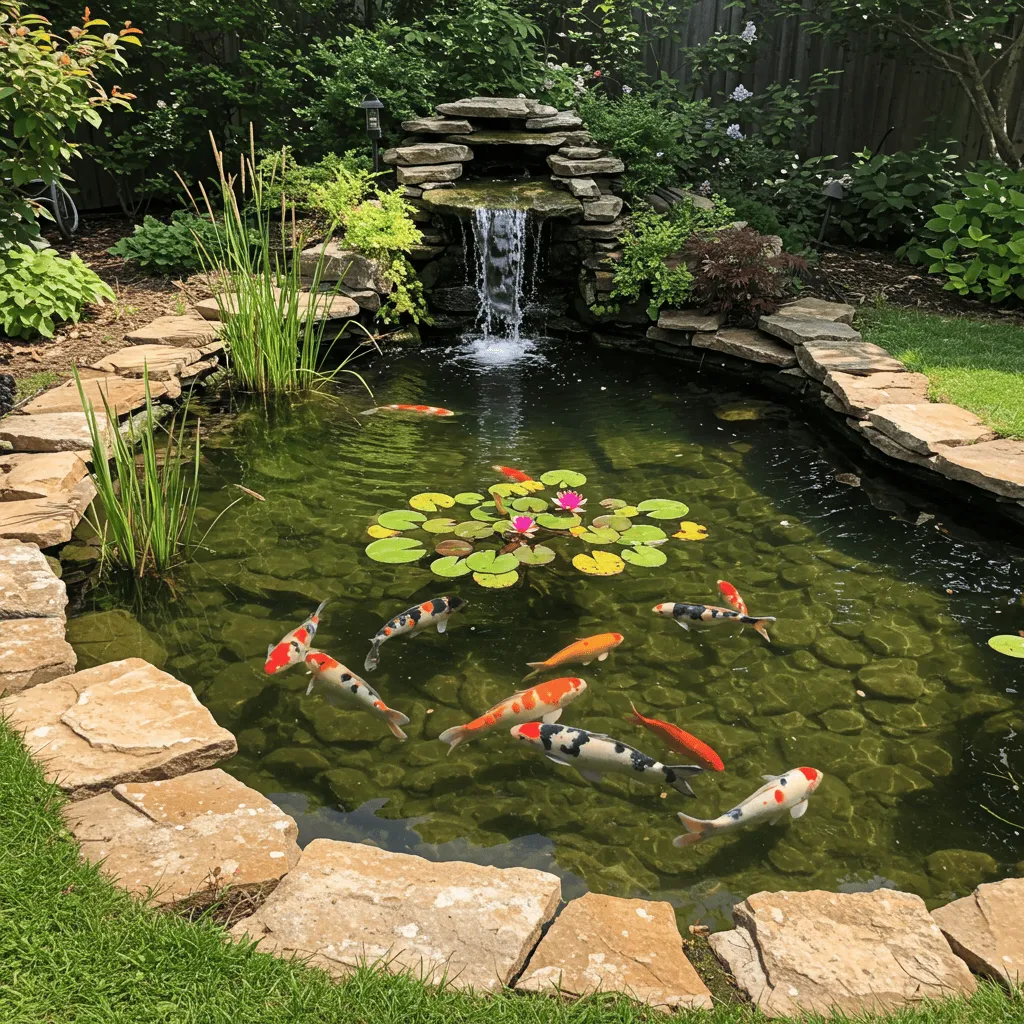
4. Water Parameters & Maintenance Schedule
Healthy koi depend on clean, stable water more than any other factor.
4.1 Ideal Water Parameters
| Parameter | Recommended Range |
|---|---|
| Temperature | Ideal 59–77°F (15–25°C); tolerates 39–86°F (4–30°C) seasonally |
| pH | 7.0–8.5 (slightly alkaline is fine; keep stable) |
| KH (Carbonate Hardness) | 4–10 dKH (provides pH stability) |
| GH (General Hardness) | 5–12 dGH (moderately hard) |
| Ammonia (NH₃) | 0 ppm |
| Nitrite (NO₂⁻) | 0 ppm |
| Nitrate (NO₃⁻) | Ideally < 40 ppm; < 20 ppm is even better |
4.2 Testing & Monitoring
Use pond test kits (liquid preferred) to measure:
- Ammonia, nitrite, nitrate
- pH and KH
- Temperature (with a reliable pond thermometer)
Test:
- Weekly in established ponds
- Daily/Every other day in new ponds or after major changes
4.3 Water Changes & Filter Maintenance
Even in large ponds, partial water changes are helpful:
- Routine water change: 10–20% weekly or bi-weekly
- Remove debris using pond vacuums or manual netting
- Clean mechanical filter components regularly; rinse in pond water, not tap, to preserve beneficial bacteria
Avoid:
- Large sudden water changes (>40%) unless treating emergencies
- Spraying untreated chlorinated water directly into the pond at high volumes
4.4 Seasonal Maintenance
Spring:
- Deep clean filters and bottom debris (without removing all biofilm)
- Check pumps, airlines, and leaks
- Slowly ramp up feeding as temperatures rise above ~50°F (10°C)
Summer:
- Watch oxygen levels (especially during heat waves)
- Increase aeration as needed
- Control algae (shade, plants, UV clarifier where appropriate)
Autumn:
- Net the pond to keep leaves out
- Gradually switch to wheat germ / cold-weather food as temperatures drop
- Reduce feeding as water cools
Winter (temperate climates):
- Koi become dormant in cold water (<50°F / 10°C)
- Do not feed below 48–50°F (9–10°C)
- Maintain a hole in the ice (pond heater or air stone) for gas exchange
- Do not break ice violently—shock waves can stress or injure koi
5. Diet, Feeding Schedule & Nutrition Tips
5.1 Koi Diet Basics
Koi are omnivorous:
- Commercial koi pellets (primary diet)
- Insects, worms, crustaceans
- Algae, plant material
- Occasional fruits and vegetables
Choose high-quality koi-specific food:
- Appropriate pellet size for fish size
- Balanced protein, fat, and fiber
- Added vitamins and color enhancers (spirulina, astaxanthin)
5.2 Seasonal Feeding
Koi metabolism is temperature-dependent:
- Above 68°F (20°C):
- Growth and color foods, higher protein (30–40%)
- Feed 2–4 times per day in small amounts
- Between 59–68°F (15–20°C):
- Moderate feeding, 1–2 times per day
- Blend of growth and wheat germ diets
- Below 50°F (10°C):
- Switch to easily digestible wheat germ or cold-weather food
- Feed sparingly, only on warmer days, and stop altogether once consistently under ~48–50°F
- Below 48–50°F (9–10°C):
- No feeding – koi are in a semi-dormant state and cannot digest food well
5.3 Treats & Supplemental Foods
In warm months, occasionally offer:
- Fresh/frozen:
- Bloodworms
- Earthworms
- Brine shrimp (for smaller koi)
- Fruits:
- Watermelon, oranges, peeled grapes (small pieces)
- Vegetables:
- Peas (shelled), lettuce, spinach (briefly blanched)
Avoid:
- Bread and doughy foods (cause digestive issues and poor water quality)
- Junk “people food” (chips, meat scraps, etc.)
5.4 Feeding Tips
- Feed only what koi can finish in 5 minutes.
- Multiple small feedings are better than one large feeding.
- Observe koi at feeding time to check for:
- Appetite
- Behavior issues (lethargy, gasping, isolation)
- Physical problems (injuries, ulcers, bloating)
5.5 Recommended Brands (Affiliate-Friendly)
Some respected koi food brands:
- Hikari (e.g., Hikari Gold, Hikari Wheat-Germ)
- Tetra Pond Koi Vibrance
- Blue Ridge Koi & Goldfish Food
- Aquascape koi foods
- Northfin Koi
6. Temperament & Tank Mates
6.1 Temperament
Koi are:
- Peaceful, social fish
- Often recognize and interact with their owners
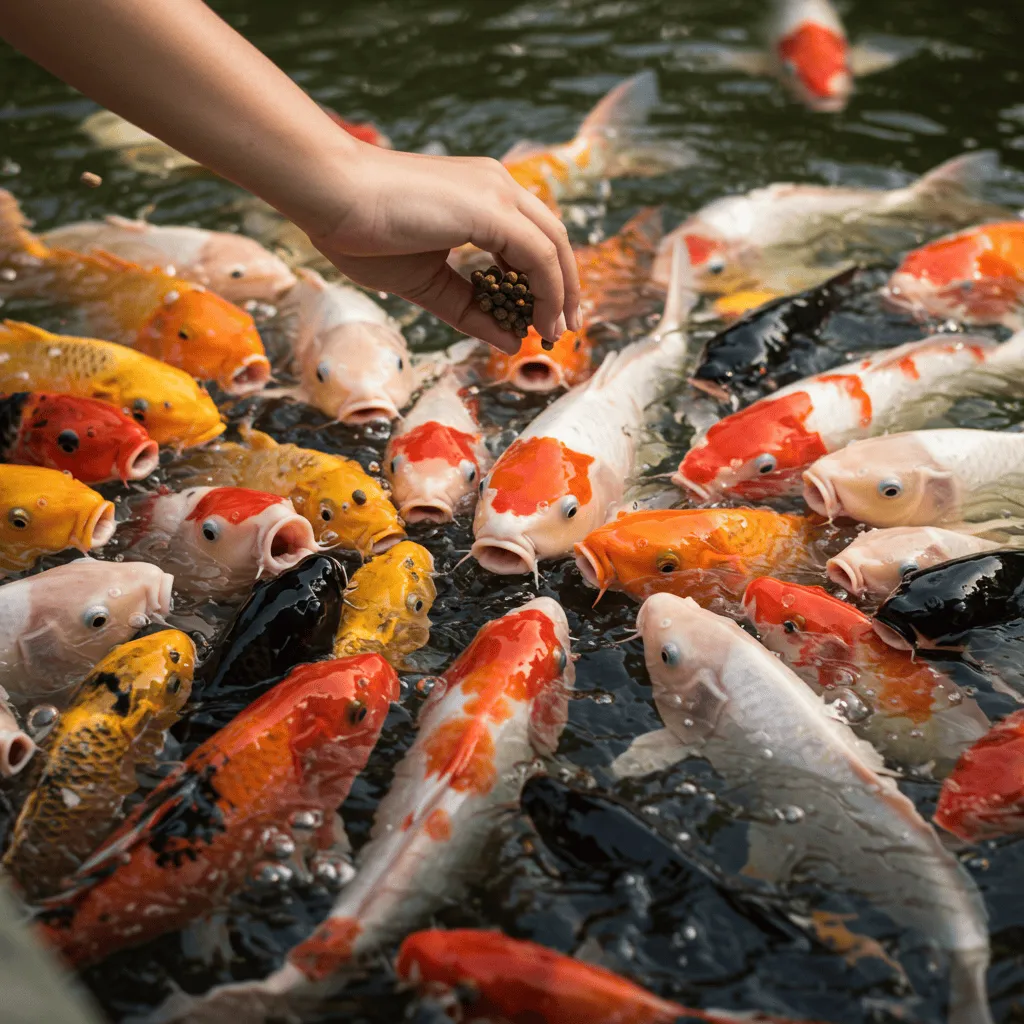
- Can be trained to hand-feed
They prefer to be kept in groups and will often swim together or cluster during feeding.
6.2 Suitable Pond Mates
Compatible fish for koi ponds:
- Goldfish (larger varieties):
- Comets, Shubunkins, Sarasa
- Orfe (Golden Orfe) in large ponds with lots of oxygen
- Tench or other regional pond fish (where legal and appropriate)
Ensure tank mates:
- Are large enough not to be eaten
- Can tolerate similar temperatures and water parameters
6.3 Unsuitable Tank Mates
Avoid:
- Small fish (e.g., minnows, guppies) – koi may eat them
- Aggressive or predatory fish (pike, bass, some catfish)
- Tropical fish needing warm, stable indoor temperatures year-round
Also consider:
- Predators (not tank mates but relevant): herons, raccoons, cats, otters.
- Use pond netting, decoys, deep pond areas, and architectural design to protect koi.
7. Breeding Koi Fish
(Adjusting the template from “Breeding Angelfish” to Breeding Koi Fish.)
7.1 Natural Breeding Behavior
Koi normally spawn in late spring to early summer when:
- Water warms to around 68–75°F (20–24°C)
- Day length increases
- They are well-fed and healthy
During spawning:
- Males chase females, nudging their sides
- Eggs are scattered onto plants, spawning mops, or pond edges
- Eggs are sticky and adhere to surfaces
- Adults often eat eggs and fry if not separated
7.2 Sexing Koi
Sexing mature koi:
- Males:
- May develop small white tubercles (breeding stars) on pectoral fins and gill covers in breeding season
- Slimmer, more torpedo-shaped
- Females:
- Fuller, rounder bodies when filled with eggs
- Wider in the belly area
Sexing can be difficult in young or non-breeding-season koi.
7.3 Controlled Breeding Setup
For intentional breeding:
- Spawning Pond/Tank:
- Separate, shallow pond or large tank (500–1,000+ gallons ideal)
- Good filtration and aeration
- Spawning media (nylon mops, brushes, or fine-leaved plants)
- Broodstock:
- 1–2 females with 2–3 males of desired varieties
- Condition with high-quality, protein-rich foods for several weeks
- Spawning Process:
- Introduce broodstock to spawning pond
- Spawning usually occurs in early morning
- After spawning, remove adults to prevent egg predation
7.4 Raising Fry
- Eggs hatch in ~3–5 days depending on temperature
- Newly hatched fry absorb yolk sacs for 1–2 days
- Begin feeding:
- Infusoria or specialized liquid fry foods
- Then micro-worms, powdered fry food, newly hatched brine shrimp
Koi breeding typically produces thousands of fry. Most will not have desirable coloration; breeders often cull heavily to select the best prospects.
Koi breeding is a major undertaking best suited to advanced hobbyists or professionals.
8. Common Diseases, Prevention & Treatment
Koi are hardy, but poor water quality, overcrowding, and lack of quarantine invite disease.
8.1 Common Koi Diseases
| Disease / Issue | Symptoms |
|---|---|
| Ich (White Spot Disease) | White grains on body/fins, flashing, clamped fins |
| Flukes (Gill/Body) | Gasping, scratching, excess mucus, lethargy |
| Koi Herpes Virus (KHV) | High mortality, gill necrosis, sunken eyes |
| Bacterial Ulcers | Red sores, lesions, fin erosion |
| Fin Rot | Frayed fins, redness at fin base |
| Dropsy | Swollen body, raised scales (“pineconing”) |
| Costia/Trichodina | Increased mucus, lethargy, grey patches |
| Anchor Worm / Fish Lice | Visible parasites attached to body |
8.2 Prevention
- Quarantine all new koi for at least 3–4 weeks in a separate system
- Maintain excellent water quality and avoid overcrowding
- Do not mix koi from unknown or multiple untrusted sources
- Disinfect nets and tools between ponds
- Buy from reputable dealers who test for KHV
8.3 Treatment Basics
Important: Always correctly diagnose and, where possible, consult a vet or qualified koi professional before medicating.
- Ich & External Parasites:
- Formalin-malachite green treatments (pond-safe)
- Salt (where appropriate, following dosage guidelines)
- Flukes:
- Praziquantel or flubendazole-based medications
- Bacterial Infections:
- Improve water quality
- Topical treatments on ulcers (under sedation, by experienced keepers)
- Antibiotics (often vet-prescribed, especially for serious infections)
- KHV:
- No reliable cure; affected fish and possibly all contacts may need to be euthanized.
- Prevention and quarantine are critical.
Always:
- Remove carbon/chemical filter media during medication
- Maintain high aeration
- Follow label directions closely
9. Where to Buy & Price Guide
9.1 Where to Buy Koi
- Garden Centers & Pond Shops:
- Convenient, good for beginners
- Quality can vary—observe fish carefully
- Koi Specialty Dealers:
- Better selection and higher-quality stock
- Often provide better advice and after-sales support
- Online Koi Retailers:
- Ship koi via overnight service
- Look for sellers with strong reputations and live-arrival guarantees
- Koi Shows & Clubs:
- Meet serious breeders and collectors
- Learn more and buy carefully selected fish
9.2 Price Guide
Koi prices can range from a few dollars to thousands per fish.
General categories:
| Quality / Type | Typical Price Range (per fish) |
|---|---|
| Small “pond-grade” | Low to moderate (affordable multipacks) |
| Larger pond-grade | Moderate; depends on size and pattern |
| High-quality hobby grade | Moderate to high |
| Show grade / Japanese imports | High to very high; hundreds–thousands |
For a beginner pond:
- Start with good-quality pond-grade koi, not the cheapest possible, but not show-grade either.
- Focus on health and body shape before extreme patterns or rare varieties.
10. Beginner Mistakes to Avoid
- Pond Too Small
- Underestimating adult koi size and bioload—common and costly.
- Overstocking
- Too many fish in too little water with insufficient filtration.
- No Quarantine
- Adding new koi directly to the main pond risking KHV, parasites, or bacteria.
- Poor Filtration or Aeration
- Small “decorative” filters are not enough for koi.
- Irregular Maintenance
- Skipping water changes, ignoring debris and sludge buildup.
- Wrong Feeding Practices
- Overfeeding, feeding in cold water, or using low-quality foods.
- Neglecting Predators
- Losing koi to herons, raccoons, or cats due to lack of protection.
- Using Chemicals Recklessly
- Overdosing algaecides or medications; harming fish and beneficial bacteria.
- Treating Koi Like Goldfish in a Bowl
- Koi are large carp that need ponds, not bowls or tiny tanks.
11. Care Level & Difficulty Rating
- Care Level: Moderate
- Difficulty Rating: 5–7 / 10
Once a properly sized pond with good filtration is established, day-to-day Koi fish care is not difficult. The main challenges are:
- Designing/building an appropriate pond
- Understanding filtration and water quality
- Committing to long-term maintenance and koi health
12. Pros, Cons & Final Verdict
Pros
- Stunning, colorful fish that enhance any garden
- Long-lived companions (can be “family pets” for decades)
- Highly interactive—many hand-feed and recognize their owners
- Outdoor enjoyment and a relaxing, living water feature
- Wide variety of patterns and types to collect and appreciate
Cons
- Require large ponds and strong filtration = higher initial cost
- Long-term responsibility (decades)
- Susceptible to serious diseases if quarantine and biosecurity are ignored
- Vulnerable to predators if not protected
- Not suitable for people without outdoor space or commitment to pond maintenance
Final Verdict
For homeowners with the space and budget for a properly designed pond, koi are one of the most rewarding ornamental fish species you can keep. If you can:
- Provide adequate pond size and filtration,
- Maintain good water quality and quarantine new fish, and
- Feed them a balanced, seasonal diet,
then your Koi fish care journey can be a beautiful, lifelong hobby.
13. FAQ Section (Frequently Asked Questions)
1. How big do Koi fish get?
In spacious, well-maintained ponds, koi commonly reach 18–24 inches (45–60 cm), and some can grow 30–36 inches (75–90 cm) or more.
2. How long do Koi live?
With proper care, many koi live 20–30 years. Some famous koi have reached 50+ years.
3. Can Koi live in an aquarium?
Only temporarily (for quarantine, hospital, or overwintering). Long-term, koi should be kept in large ponds, not aquariums.
4. How many Koi can I keep in a 1,000-gallon pond?
A reasonable guideline is 4–6 adult koi in 1,000 gallons with strong filtration. More fish = more filtration and maintenance.
5. Can Koi and goldfish live together?
Yes, in large ponds. They share similar water needs. Just ensure goldfish are large enough not to be swallowed, and account for combined bioload.
6. Do Koi eat algae?
Koi may nibble on string algae and biofilm but are not primary algae eaters. Do not rely on them as your only algae control method.
7. Do Koi need a heater?
In most temperate climates, koi don’t need heaters, just sufficient pond depth to overwinter. In very cold or very shallow ponds, heaters or indoor overwintering may be necessary.
8. How often should I feed my Koi?
In warm weather (above ~68°F / 20°C), feed 2–4 small meals per day. In cooler weather, reduce frequency, and stop feeding entirely below ~48–50°F (9–10°C).
9. Why are my Koi staying at the bottom and not eating?
Possible causes include:
- Cold water (normal winter behavior)
- Poor water quality
- Disease or parasites
- Recent stress or changes
Test water parameters first, then observe for other symptoms and consult a koi specialist or vet if needed.
10. How do I keep my Koi safe from predators?
Use:
- Pond netting or covers
- Deeper pond areas (4–6 feet)
- Steep sides rather than gentle beach-like entries
- Heron decoys or motion-activated sprinklers in problem areas