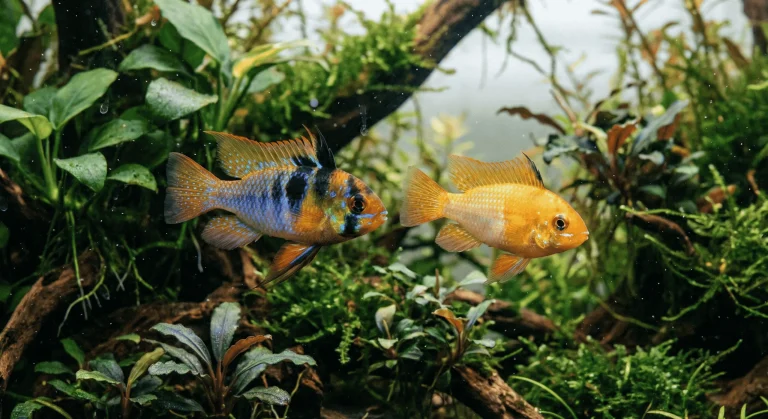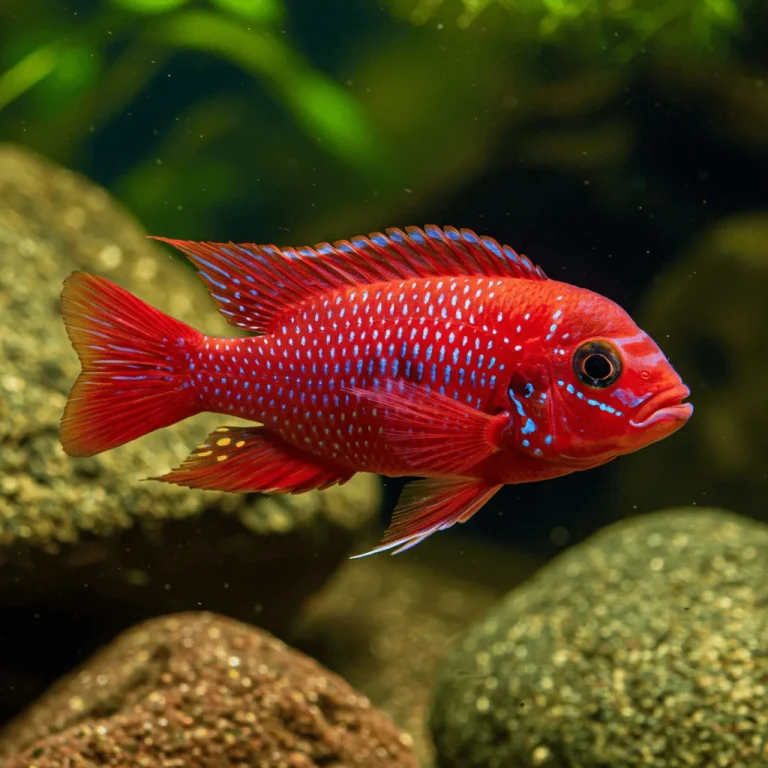
If you’ve ever gazed at a saltwater reef tank, mesmerized by the explosion of color and activity, but were intimidated by the complexity, there is a freshwater alternative that offers the same visual punch: the African Cichlid tank. Hailing from the Great Rift Valley lakes of Africa, these fish are renowned for their electric colors, complex social behaviors, and relentless energy.
But this vibrancy comes with a unique set of rules. African Cichlids are nothing like peaceful community tetras. They are intelligent, aggressive, and highly territorial fish that require a specific, rock-filled environment and hard, alkaline water. Understanding their territorial nature is the key to creating a stunning display of controlled chaos rather than a bloodbath.
This is your definitive guide to keeping African Cichlids, focusing on the popular groups from Lake Malawi and Lake Tanganyika. We will explore how to set up the perfect rockscape, manage their aggression, and provide the specific water chemistry they need to unlock their most brilliant colors and fascinating behaviors.
1. Introduction & Quick Facts
African Cichlids from the East African Rift Lakes (mainly Lake Malawi and Lake Tanganyika) are:
- Highly colorful
- Active and aggressive/territorial
- Suited to hard, alkaline water, high pH
- Best for species-only or lake-specific setups, not general community aquariums
If you love rock aquascapes, active behavior, and breeding projects, African Cichlids can be a fantastic choice.
Quick Facts Table
| Attribute | Details |
|---|---|
| Common Name | African Cichlids |
| Scientific Families | Primarily Cichlidae (various genera: Mbuna, Aulonocara, Haplochromis, Neolamprologus, Julidochromis, etc.) |
| Main Lakes | Lake Malawi, Lake Tanganyika (also Lake Victoria, not covered here) |
| Adult Size | 2–14 in (5–35 cm) depending on species |
| Lifespan | 5–10+ years (some Tanganyikans live longer) |
| Care Level | Moderate (aggression & water chemistry are key challenges) |
| Temperament | Territorial, semi-aggressive to aggressive |
| Minimum Tank Size | 30–40 gallons for small groups; 55–75+ gallons strongly recommended |
| Temperature Range | 75–82°F (24–28°C) |
| pH Range | 7.8–8.6 (alkaline) |
| Hardness Range | 8–20 dGH (hard) |
| Tank Level | Mostly mid- and bottom-dwellers, interacting heavily with rockwork |
| Diet Type | Species-dependent: herbivore, omnivore, or carnivore |
2. Species Profile & Varieties
“African Cichlids” is a broad term. For aquarium purposes, when people say African Cichlids, they usually mean Malawi Cichlids and Tanganyika Cichlids from the two huge rift lakes.
2.1 Lake Malawi Cichlids
Lake Malawi is home to hundreds of species, roughly grouped into:
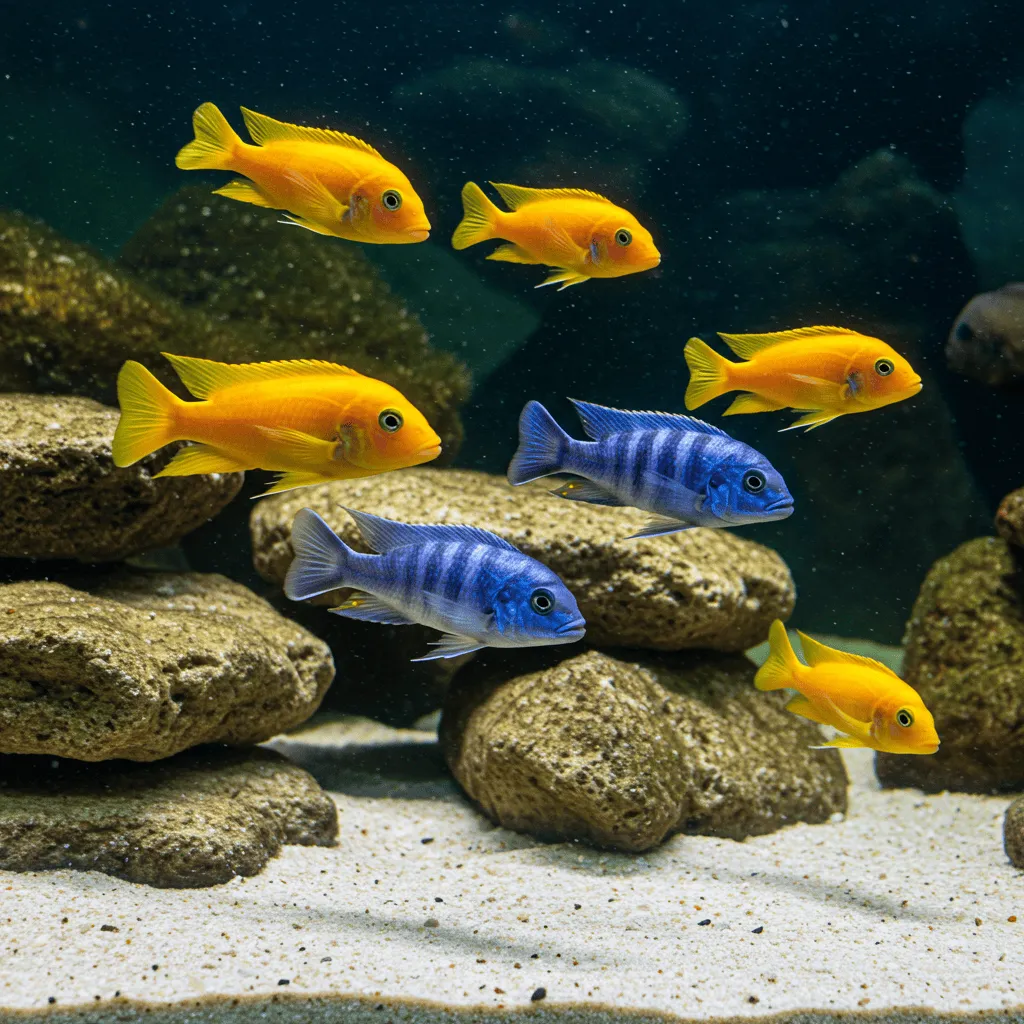
Mbuna (Rock-Dwellers)
- Small to medium-sized (3–5 in / 7.5–13 cm)
- Extremely colorful (electric yellows, blues, oranges)
- Highly territorial, especially males
- Primarily herbivores/algae grazers
Common mbuna genera:
- Labidochromis (e.g., Yellow Lab, L. caeruleus)
- Pseudotropheus (e.g., Acei)
- Chindongo (e.g., demasoni)
- Labeotropheus
Haps & Peacocks (Open-Water & Sand-Dwellers)
- Often grouped as “haps” (Haplochromine cichlids) and Peacocks (Aulonocara spp.)
- Larger than mbuna (4–8 in / 10–20 cm)
- Often less aggressive than mbuna but still territorial
- Diet: omnivore/carnivore (invertebrates, small fish)
Common examples:
- Aulonocara (Peacock Cichlids – many color morphs)
- Copadichromis
- Sciaenochromis (e.g., Electric Blue Hap)
2.2 Lake Tanganyika Cichlids
Lake Tanganyika is older and even more diverse in certain behaviors. Key groups include:
Rock-Dwellers
- Julidochromis (Julies): elongated, striped, rock crevice dwellers
- Altolamprologus: thick-bodied, ambush predators among rocks
- Cyprichromis (sardine cichlids): mid-water schooling species
Shell-Dwellers
- Neolamprologus multifasciatus (“multis”)
- Neolamprologus similis
- Tiny cichlids (1.5–2 in / 4–5 cm) that live and breed in empty snail shells
Larger Species
- Cyphotilapia frontosa – Frontosa cichlids, large and majestic (12+ in / 30+ cm)
- Tropheus – algae-grazing, active rock-dwellers (sensitive diet-wise)
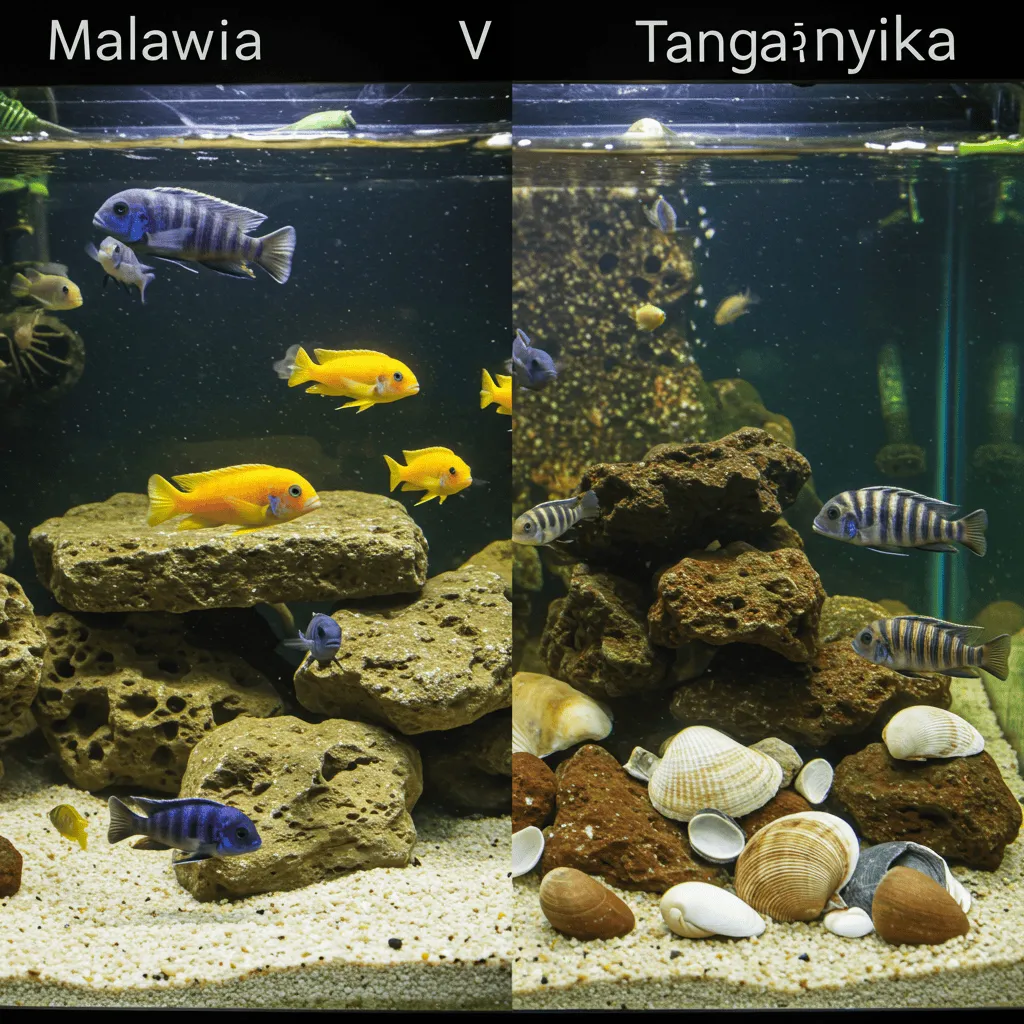
2.3 Malawi vs Tanganyika: Key Differences
| Feature | Lake Malawi Cichlids | Lake Tanganyika Cichlids |
|---|---|---|
| Water pH | 7.8–8.6 | 8.0–9.0 |
| Typical Behavior | Very active, often more aggressive | Complex behaviors, varied aggression levels |
| Common Size Range | 3–8 in (7.5–20 cm) | 2–12 in (5–30+ cm) depending on species |
| Main Diet Types | Mbuna (herbivore), Haps/Peacocks (omnivore/carnivore) | Many insectivores, algae-grazers, shell specialists |
| Aesthetic Theme | “Color explosion” rock reefs | Rock + shell biotopes, more subtle but unique behaviors |
3. Tank Requirements & Setup
African Cichlids are all about space, rockwork, and water movement.
3.1 Minimum Tank Sizes
General guidelines:
- Small Malawi mbuna group:
- 40–55 gallons (150–200 L) minimum
- Mixed Malawi community (mbuna + peacocks/hap – with care):
- 55–75+ gallons (200–280+ L)
- Tanganyika shell dweller colony:
- 20–30 gallons (75–115 L)
- Tanganyika rock dwellers (Julies, Altolamprologus):
- 30–40+ gallons (115–150 L)
- Large species (Frontosa, big haps):
- 90–125+ gallons (340–475+ L)
Bigger is always better with African Cichlids—more water volume = more stable and easier to manage aggression.
3.2 Aquascape: Rocks, Sand, and Caves
African Cichlids are rock-based fish:
- Use plenty of limestone, holey rock, or inert rocks stacked to create caves and crevices.
- Build secure rock piles on the tank bottom (place rocks first, then substrate) to prevent collapses.
Substrate:
- Fine sand or small rounded gravel works best.
- Aragonite or crushed coral substrate helps maintain high pH and hardness.
Special note for shell dwellers (Tanganyika):
- Provide a sand substrate with numerous empty snail shells (e.g., Neothauma shells, escargot shells).
3.3 Filtration & Flow
African Cichlids are:
- Active and often heavily stocked
- Produce significant waste
Use:
- Over-filtered systems:
- Large canister filters
- OR HOB filters + sponge filters combo
- Aim for 6–10x tank volume turnover per hour.
Water Movement:
- Moderate to strong flow helps:
- Oxygenation
- Waste suspension to filters
- Use powerheads or wavemakers for additional circulation if needed.
3.4 Lighting
- Standard aquarium LED lighting is usually sufficient.
- Malawi tanks often look best with bright lighting to show off colors.
- Provide some shaded areas using rock structures so fish can retreat if stressed.
3.5 “Overstocking” Strategy
For many Malawi mbuna setups:
- Hobbyists deliberately slightly overstock the tank with cichlids to spread aggression.
- This reduces the chances of a single fish being bullied to death.
However:
- Overstocking requires very strong filtration and frequent water changes.
- Do not overstock without planning for maintenance.

4. Water Parameters & Maintenance Schedule
African Cichlids thrive in hard, alkaline water that mimics their native lakes.
4.1 Ideal Water Parameters
General African Cichlids (Malawi & Tanganyika):
| Parameter | Malawi Range | Tanganyika Range |
|---|---|---|
| Temperature | 76–80°F (24–27°C) | 75–79°F (24–26°C) |
| pH | 7.8–8.4 | 8.0–9.0 |
| GH (Hardness) | 8–16 dGH | 10–20 dGH |
| KH | 8–12 dKH | 10–18 dKH |
| Ammonia | 0 ppm | 0 ppm |
| Nitrite | 0 ppm | 0 ppm |
| Nitrate | < 30–40 ppm (ideally <20 ppm) | < 30–40 ppm (ideally <20 ppm) |
You can raise hardness and pH using:
- Crushed coral or aragonite substrate
- Limestone or Texas holey rock
- Commercial Rift Lake buffers (use carefully; stability is more important than perfection)
4.2 Water Changes
African Cichlid tanks should get:
- 25–50% water change weekly, depending on stocking and bioload
- In heavily stocked Malawi mbuna tanks, aim closer to 40–50%
Always:
- Match temperature
- Dechlorinate tap water
- Avoid large, sudden pH swings
4.3 Testing & Routine
Weekly tests:
- Ammonia, nitrite, nitrate
- pH, KH, GH (especially when adjusting hardness)
Monthly (or as needed):
- Deep-clean filter sponges and mechanical media (in tank water)
- Rinse biological media lightly; don’t over-clean
- Check rocks and decor for stability
5. Diet, Feeding Schedule & Nutrition Tips
Diet is critical for African Cichlid health—especially for herbivorous mbuna prone to “Malawi Bloat” if fed incorrectly.
5.1 Diet Types by Group
Mbuna (Malawi rock-dwellers):
- Primarily herbivores / algal grazers
- Need high-fiber, low-animal-protein diets
Peacocks & Haps (Malawi non-mbuna):
- Omnivores/carnivores
- Eat invertebrates and small fish in the wild
Tanganyika Species:
- Vary widely: algae-grazers (Tropheus), insectivores (Julies), scale-eaters, shellfish eaters
- Research your specific species
5.2 Recommended Foods
For most African Cichlids:
- High-quality cichlid pellets (floating or sinking as needed)
- Spirulina-based flakes or pellets for herbivores
- Occasional frozen foods (brine shrimp, mysis) for omnivores/carnivores
Avoid:
- Too much high-fat, high-protein food for herbivores (e.g., bloodworms, beef heart).
- This can cause Malawi Bloat and other digestive issues.
5.3 Feeding Frequency
- Feed 1–2 times per day, small portions
- Only what they can eat in 1–2 minutes
- A weekly “fasting day” (no food) can help prevent bloating in mbuna.
5.4 Signs of Good vs Poor Diet
Healthy:
- Bright, intense coloration
- Active swimming and normal aggression
- Full but not swollen bellies
- Regular, solid feces
Unhealthy / At Risk of Bloat:
- Swollen abdomen
- Stringy white feces
- Lethargy, hiding, or gasping
- Loss of appetite
Recommended Brands (for Affiliate Links)
- Hikari Cichlid Excel (herbivorous mbuna)
- Northfin Veggie & Cichlid formulas
- New Life Spectrum Cichlid & AlgaeMax
- Omega One Super Veggie Flakes / Pellets

6. Temperament & Tank Mates
African Cichlids are beautiful but aggressive and territorial.
6.1 General Temperament
- Establish territories among rockwork
- Males often dominate and chase rivals
- Hierarchies form; aggression is normal but must be managed
6.2 Best Tank Mates: Other African Cichlids
In most cases, the best tank mates for African Cichlids are other African Cichlids with:
- Similar size
- Similar aggression level
- Similar dietary needs
- From the same lake (Malawi with Malawi, Tanganyika with Tanganyika)
Avoid mixing:
- Malawi mbuna with peaceful Tanganyikans like shell dwellers
- Aggressive mbuna with delicate peacocks in small tanks
- Africans with South American cichlids (very different water needs and temperaments)
6.3 Strategies to Reduce Aggression
- Overstock slightly (for mbuna) to diffuse aggression
- Provide lots of rockwork and line-of-sight breaks
- Use 1 male to several females per species (avoid multiple males in small tanks)
- Add new fish in groups, rearranging rocks to disrupt established territories
6.4 Non-Cichlid Tank Mates?
Generally not recommended, but in large tanks some people keep:
- Robust catfish (Synodontis species)
- Certain plecos (if compatible with hard, alkaline water)
Even then, monitor for harassment.
7. Breeding African Cichlids (Malawi & Tanganyika)
(Template section adapted from “Breeding Angelfish” to Breeding African Cichlids.)
Breeding African Cichlids is one of the most rewarding aspects of keeping them—many are mouthbrooders, making the process fascinating and often easy.
7.1 Mouthbrooders vs Substrate Spawners
Mouthbrooders (many Malawi mbuna & haps, some Tanganyikans):
- Females (sometimes males) carry fertilized eggs and fry in their mouths.
Substrate Spawners (many Tanganyika rock/shell dwellers):
- Lay eggs on rocks, in caves, or inside shells and guard them there.
7.2 Malawi Mouthbrooders (Mbuna & Peacocks)
Basic steps:
- Keep a harem (1 male, 3–4+ females) in a properly sized tank.
- Well-conditioned females (good diet and health) spawn with males on flat rocks or sand patches.
- Female scoops up eggs and fertilizes them with sperm released by the male, then holds eggs in her mouth.
- Incubation lasts about 21–28 days, during which the female may eat very little.
- Once fry are ready, she releases them; some species continue to “shelter” fry temporarily.
You can:
- Let nature run its course in a community tank (some fry may survive).
- Move holding females to a separate maternity tank just before fry release.
- Carefully “strip” fry (advanced technique) into a fry tank if needed.
7.3 Tanganyika Breeders (Shell Dwellers & Rock Dwellers)
Shell dwellers:
- Maintain colonies with multiple shells per fish.
- Females lay eggs inside shells; males guard territories.
- Fry emerge and stay near shells, feeding on fine foods and algae.
Rock dwellers (Julies, Altolamprologus):
- Pair up and defend caves or rock crevices.
- Lay eggs inside, then care for fry.
7.4 Fry Care
Feeding:
- Newly hatched fry: powdered fry food, crushed high-quality flakes, or baby brine shrimp.
- Provide excellent water quality with sponge filters and regular small water changes.
Breeding African Cichlids is often easier than stopping them once you have stable, well-fed communities.
8. Common Diseases, Prevention & Treatment
African Cichlids are generally hardy, but certain issues are common.
8.1 Common Diseases
- Malawi Bloat:
- Swollen belly, labored breathing, loss of appetite.
- Often linked to high-protein diets in herbivores or poor water quality.
- Ich (White Spot Disease):
- White cysts on fins/body, scratching, rapid breathing.
- Fin Rot & Bacterial Infections:
- Ragged fins, red streaks, ulcers.
- Often due to injuries + poor water quality.
- External Parasites (Flukes, Costia, Trichodina):
- Excess mucus, clamped fins, flashing, lethargy.
8.2 Prevention
- Keep water parameters stable and within recommended ranges.
- Use proper diets for herbivores vs carnivores.
- Avoid overfeeding and keep up with weekly water changes.
- Quarantine new fish for 2–4 weeks before adding to main tank.
- Maintain good filtration and oxygenation.
8.3 Treatment (General Guidelines)
Always follow medication instructions and consider consulting an aquatic vet for serious cases.
- Malawi Bloat:
- Improve water quality; fast fish for a few days.
- Use medications containing metronidazole (if indicated) and Epsom salt baths with care.
- Ich:
- Slight temperature increase (if safe), Ich-specific meds.
- Remove carbon from filter during treatment.
- Bacterial infections:
- Broad-spectrum antibiotics (where legal/appropriate).
- Clean water and reduce stress.
- Parasites:
- Appropriate antiparasitic meds (e.g., praziquantel-based for flukes).
Monitoring behavior and stopping issues early is key to successful African Cichlid care.
9. Where to Buy & Price Guide
9.1 Where to Buy African Cichlids
- Local Fish Stores (LFS):
- Many stock Malawi mbuna and peacocks.
- Some carry Tanganyikans like shell dwellers and Julies.
- Specialty Cichlid Shops & Breeders:
- Better species selection and accurate identification.
- Higher-quality stock, sometimes locally bred.
- Online Retailers:
- Can ship rare species and specific morphs.
- Look for solid reviews and DOA policies.
9.2 Price Range
Prices vary by species, size, and rarity:
- Common Malawi mbuna (e.g., Yellow Lab):
- Very affordable per fish.
- Peacocks & Haps (common color morphs):
- Low to moderate.
- Rare morphs and wild-caught Tanganyikans (e.g., Frontosa, Tropheus, rare shell dwellers):
- Moderate to high per fish.
Buying groups (e.g., 6–10 juveniles) is common and often cheaper per fish.
10. Beginner Mistakes to Avoid
- Mixing Incompatible Species
- Combining peaceful Tanganyikans with very aggressive mbuna, or mixing Africans with South Americans.
- Wrong Water Parameters
- Keeping African Cichlids in soft, acidic water meant for tetras and discus.
- Under-Decorating the Tank
- Not enough rocks/caves = constant chasing and high stress.
- Feeding Mbuna Too Much Protein
- Leads to Malawi Bloat and early deaths.
- Too Few Fish
- Small group of aggressive fish = one or two bullied to death; better-designed larger group spreads aggression.
- Insufficient Filtration
- Underestimating the waste load in an active, crowded African Cichlid tank.
- Not Researching Species Size & Aggression
- Combining species that grow too big for the tank or are overly aggressive.
11. Care Level & Difficulty Rating
African Cichlids (Malawi/Tanganyika) are:
- Care Level: Moderate
- Difficulty Rating: 5–7 / 10 (depending on species and setup)
They’re a good fit for:
- Beginners who have already kept basic community fish successfully.
- Intermediate fish keepers who enjoy aquascaping and behavior observation.
- People willing to learn about water chemistry and aggression management.
12. Pros, Cons & Final Verdict
Pros
- Incredibly colorful and active
- Fascinating behaviors and complex social dynamics
- Many species breed readily in home aquariums
- Hardy once properly set up in correct water conditions
- Rock scapes can be easier to maintain than heavily planted tanks
Cons
- Aggression and territorial behavior must be managed
- Require hard, alkaline water, not ideal for everyone’s tap
- Not community fish; tank mates must be chosen carefully
- Some species are sensitive to diet (e.g., Tropheus, mbuna)
- Misidentification and hybridization from some sellers can be confusing
Final Verdict
If you’re ready for:
- A dedicated African Cichlid tank (Malawi or Tanganyika only),
- Rocky aquascapes instead of heavily planted layouts, and
- Learning how to manage aggression and water chemistry,
then African Cichlids can be one of the most rewarding freshwater fish groups you’ll ever keep.
Their color, activity, and breeding behavior turn your aquarium into a vibrant, constantly changing rift-lake ecosystem.
13. FAQ Section (Frequently Asked Questions)
1. Can I mix Malawi and Tanganyika Cichlids?
It’s not recommended for most hobbyists. They have slightly different water preferences, diets, and behavior. Mixing can lead to stress and mismatched aggression.
2. Are African Cichlids good for beginners?
They can be, for beginners willing to research and set up a proper hard, alkaline tank. They’re more demanding than simple community fish but not as delicate as discus.
3. Can I keep African Cichlids with community fish?
Generally no. African Cichlids are too aggressive and territorial and require different water chemistry.
4. Do African Cichlids need a heater?
Yes, in most homes. They prefer 75–82°F (24–28°C).
5. How many African Cichlids can I keep in a 55-gallon tank?
Depends on species and filtration, but a common Malawi mbuna setup might include 15–20 small mbuna with strong filtration and rockwork. Always research adult sizes and stocking guidelines carefully.
6. Can I keep plants with African Cichlids?
Some hardy plants (Anubias, Java Fern, Vallisneria) can work, especially in Tanganyika tanks. Malawi mbuna often dig or eat many plants.
7. Why do my African Cichlids fight so much?
Aggression is normal. Reduce problems by:
- Adding more rocks and caves
- Balancing stocking & gender ratios
- Keeping compatible species only
8. How often should I feed African Cichlids?
Feed 1–2 times per day, only what they consume in a couple of minutes. Include a weekly fasting day for herbivores.
9. What is Malawi Bloat?
A serious condition involving swollen belly, lethargy, and loss of appetite, often linked to high-protein diets in herbivorous cichlids and/or poor water quality.
10. How long do African Cichlids live?
Most live 5–10 years, with some Tanganyikans living even longer under excellent care.