
In the aquarium world, few fish can match the fiery, incandescent beauty of a Jewel Cichlid in full breeding dress. These stunning African riverine cichlids transform from a handsome fish into a living gem, boasting a blood-red body adorned with shimmering, electric-blue spangles. They are hardy, relatively small, and one of the most visually spectacular cichlids you can keep.
But this dazzling beauty hides a notoriously feisty and aggressive personality, especially when breeding. A pair of Jewel Cichlids can, and will, terrorize a peaceful community tank. They are the beautiful bullies of the cichlid world.
This is your definitive guide to the Jewel Cichlid (Hemichromis guttatus and related species). We will explore how to manage their aggression, provide the ideal environment to unlock their most stunning colors, and witness their fascinating, dedicated parenting skills. Understanding their temperament is the absolute key to successfully keeping this fiery jewel.
1. Introduction & Quick Facts
Jewel Cichlids belong to the genus Hemichromis, native to rivers and streams across West and Central Africa. They’re most famous for their intense breeding colors and ferocious parental care.
If you’re looking for a medium-sized cichlid with huge personality and don’t mind a bit of drama, the Jewel Cichlid may be perfect—as long as you plan the tank correctly.
Quick Facts Table
| Attribute | Details |
|---|---|
| Common Name | Jewel Cichlid |
| Scientific Name | Commonly Hemichromis bimaculatus, H. lifalili, H. guttatus (trade is often mixed) |
| Family | Cichlidae |
| Origin | West & Central Africa (Nile basin, Nigeria, Cameroon, etc.) |
| Adult Size | 4–6 in (10–15 cm) |
| Lifespan | 5–7+ years with good care |
| Care Level | Moderate (due to aggression) |
| Temperament | Semi-aggressive to aggressive, very aggressive when breeding |
| Minimum Tank Size | 30 gallons (115 L) for a single or bonded pair; 40–55+ gallons for multiple cichlids |
| Temperature Range | 75–82°F (24–28°C) |
| pH Range | 6.5–7.5 (tolerates up to ~8.0 if acclimated) |
| Hardness Range | 5–15 dGH (slightly soft to moderately hard) |
| Tank Level | Mostly mid- and bottom-dweller |
| Diet Type | Omnivore / insectivore-leaning |
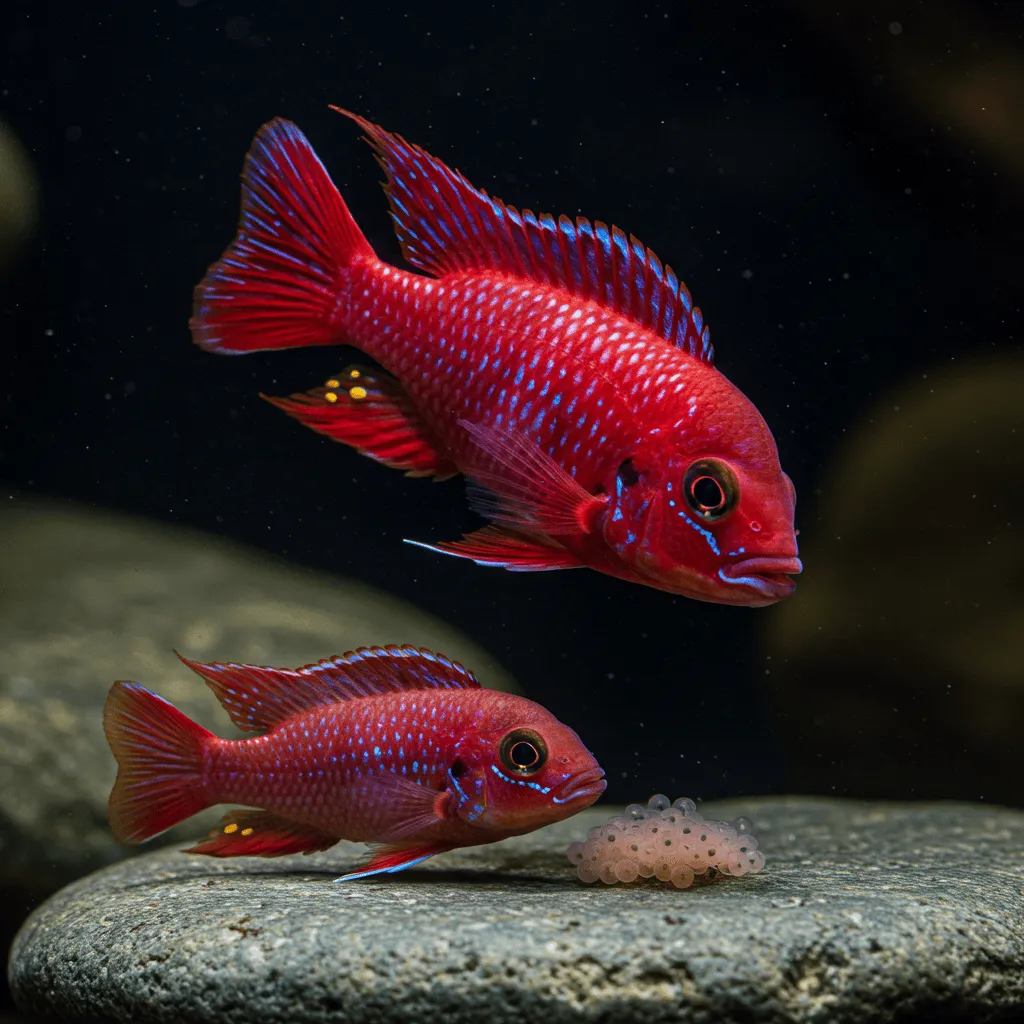
2. Species Profile & Varieties
2.1 Species Confusion in the Trade
In the aquarium hobby, many fish are sold simply as “Jewel Cichlid”, but there are several closely related species:
- Hemichromis bimaculatus – Two-spot Jewel Cichlid
- Hemichromis lifalili – Blood-red Jewel Cichlid
- Hemichromis guttatus – Spotted Jewel Cichlid
To make things more confusing:
- Many “Jewel Cichlids” in stores are hybrids or misidentified.
- Care requirements are very similar across Hemichromis species, so most keepers treat them under the same general Jewel Cichlid care guidelines.
2.2 Appearance
Key features:
- Oval, laterally compressed body
- Base color ranges from orange to deep blood-red (especially in breeding condition)
- Covered in glittering blue-green iridescent spots (“jewels”)
- Dark vertical bars or blotches along the body, depending on species and mood
- Fins often edged in blue or turquoise
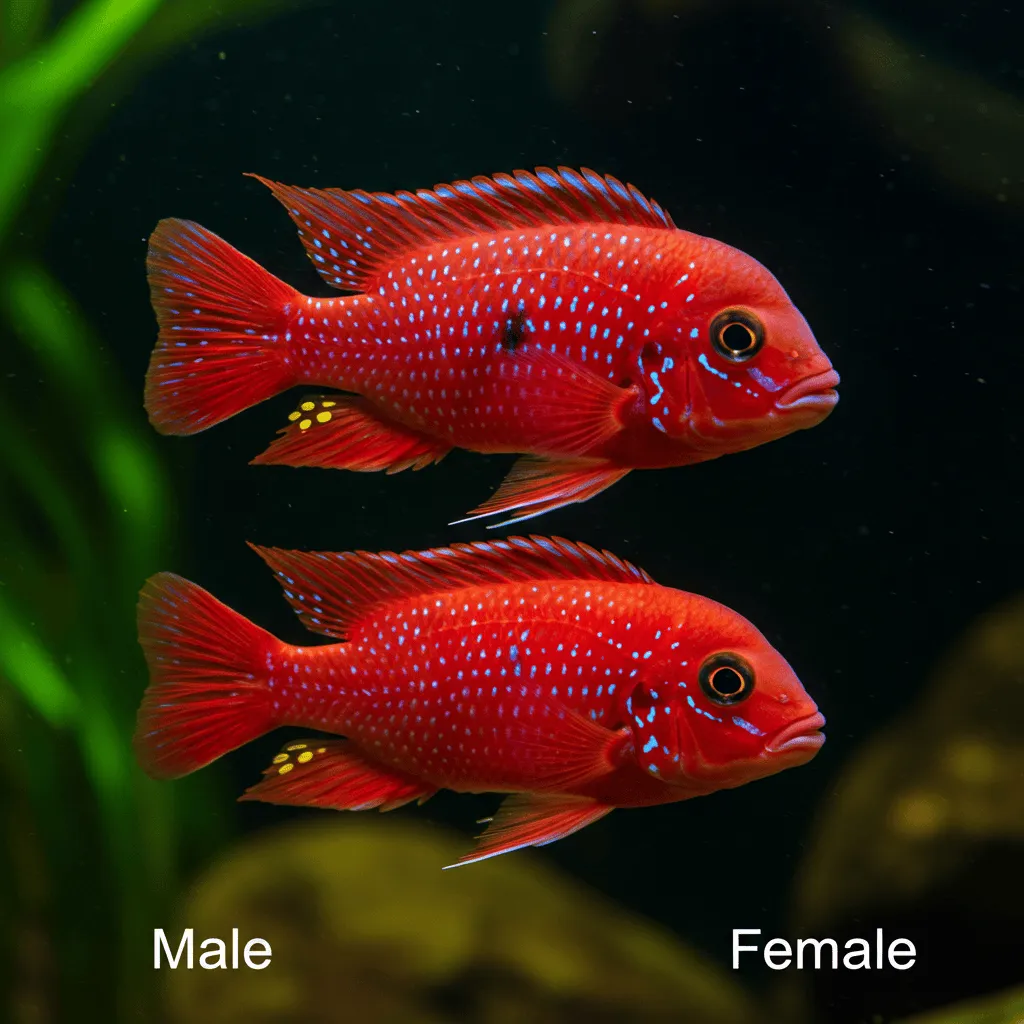
Males vs Females:
- Males:
- Slightly larger and more elongated
- May have more extended dorsal and anal fins
- Females:
- Often rounder body
- In breeding colors, females may be just as or even more intensely red than males
2.3 Common Varieties / Color Forms
You may see:
- Standard Jewel Cichlid:
- Red/orange body with fine blue spots and 1–3 dark spots along the flank
- Blood Red Jewel Cichlid:
- Intensely red body, heavy spotting
- Green Jewel Cichlid:
- More olive/greenish base color with bright iridescent spots
Regardless of exact species/variety, behavior, aggression level, and care are very similar.
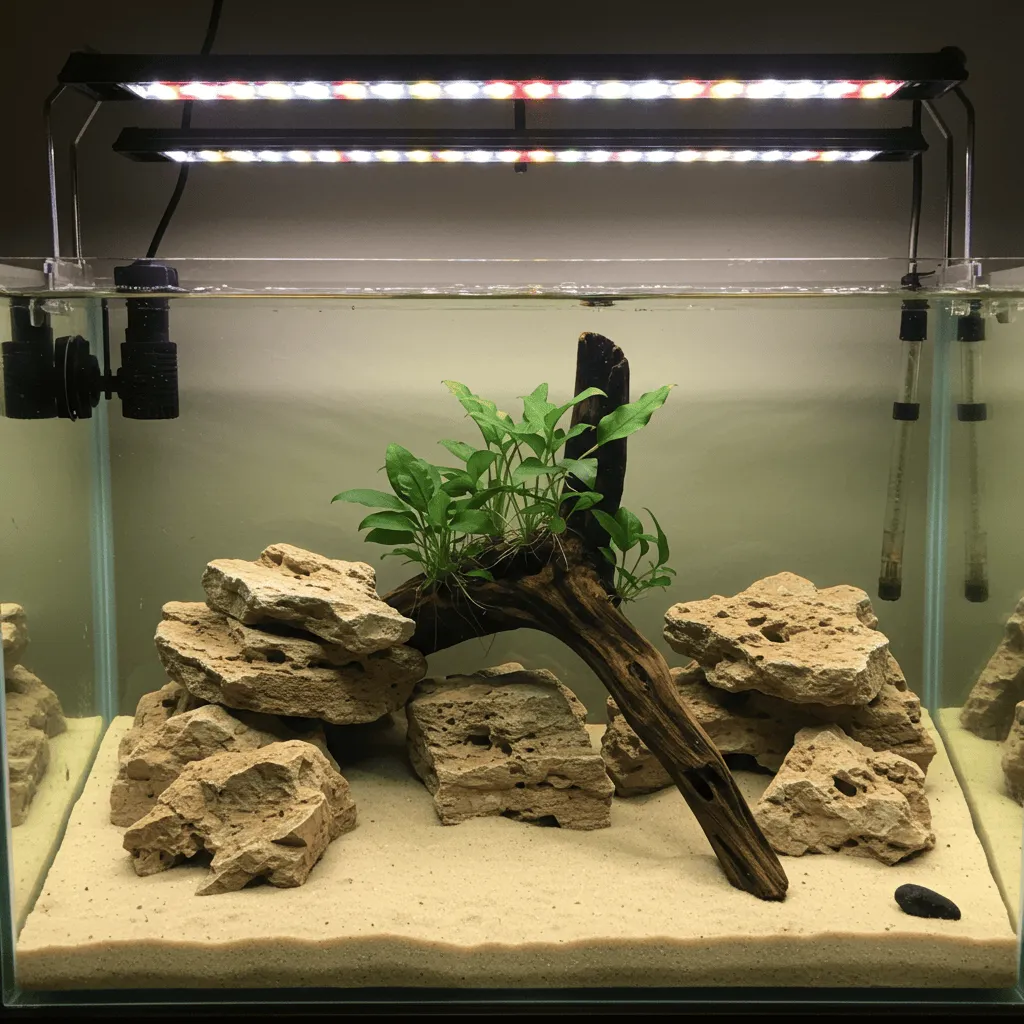
3. Tank Requirements & Setup
Jewel Cichlids are not difficult in terms of water chemistry, but they need the right tank size, layout, and territories to manage aggression.
3.1 Minimum Tank Size
- Single Jewel Cichlid or one pair:
- 30 gallons (115 L) minimum
- Community with other robust cichlids:
- 40–55+ gallons (150–200+ L), larger is always better
Because of their aggression—especially when breeding—many aquarists keep:
- Species-only tanks (just Jewel Cichlids), or
- Jewel pairs with other equally robust African or large cichlids in big tanks.
3.2 Substrate
Ideal substrate:
- Fine sand or small-grain smooth gravel
- Jewels like to dig when pairing and spawning
Avoid sharp or very coarse gravel that can damage gills or mouth.
3.3 Decor & Territory
Jewel Cichlids appreciate:
- Rocks and driftwood to form caves and territories
- Broken line-of-sight so bullied fish can escape aggressors
- Open swimming areas in the middle and front
Good aquascape elements:
- Rock piles or cave structures
- Driftwood branches
- Sturdy decorations that won’t topple if dug under
Plants:
- Can be kept, but Jewels may dig up or nibble softer plants.
- Better choices:
- Anubias, Java Fern, and other hardy plants attached to wood or rocks
- Floating plants to provide shade and security
3.4 Filtration & Aeration
Jewel Cichlids are moderately messy:
- Use a decent external filter (canister or high-quality HOB)
- Aim for at least 4–6x tank volume turnover per hour
- Add a sponge filter or air stone for extra biofiltration and oxygen
3.5 Lighting
- Standard LED aquarium lighting is fine.
- Jewels look fantastic under full-spectrum light that brings out reds and blues.
- Provide some shaded areas with caves or floating plants.
4. Water Parameters & Maintenance Schedule
Jewel Cichlids are fairly adaptable, but stable, clean water is still essential.
4.1 Ideal Water Parameters
| Parameter | Recommended Range |
|---|---|
| Temperature | 75–82°F (24–28°C) |
| pH | 6.5–7.5 (tolerates slightly higher up to ~8.0) |
| GH (Hardness) | 5–15 dGH |
| KH | 3–8 dKH (for pH stability) |
| Ammonia | 0 ppm |
| Nitrite | 0 ppm |
| Nitrate | Ideally < 20 ppm (always < 40 ppm) |
Most treated tap water falls within or close to this range in many regions, making Jewel Cichlids relatively “easy” for water chemistry compared to many African lake cichlids.
4.2 Water Changes
Perform regular water changes to keep Jewels healthy and colorful:
- 25–40% weekly is a good target
- In heavily stocked tanks or breeding setups, you can do 2 smaller changes per week (e.g., 20% twice weekly)
Always:
- Dechlorinate water
- Match temperature closely
- Avoid drastic pH swings
4.3 Testing & Routine Maintenance
Weekly:
- Test ammonia, nitrite, nitrate, pH
- Inspect fish for wounds or unusual behavior (hiding, clamped fins, gasping)
Every 2–4 weeks:
- Rinse filter sponges and mechanical media in tank water
- Vacuum substrate in open areas (avoid destroying breeding pits if eggs/fry are present)
5. Diet, Feeding Schedule & Nutrition Tips
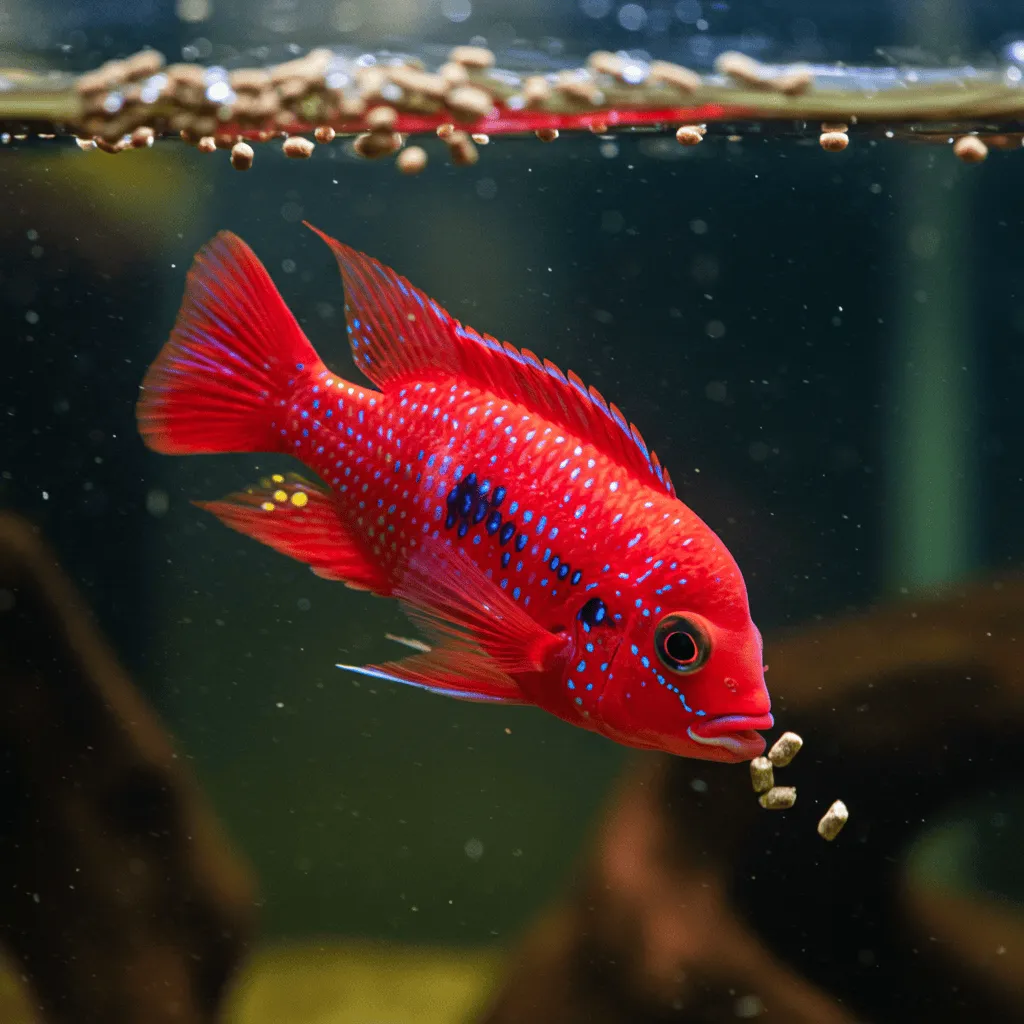
Jewel Cichlids are omnivores with an insectivorous bias—in the wild, they eat insects, crustaceans, worms, and some plant matter.
5.1 Staple Diet
Best staple foods:
- High-quality cichlid pellets (small to medium size)
- Quality flake or granule foods for omnivorous cichlids
Look for:
- Whole fish, krill, shrimp as main ingredients
- Added vitamins and natural color enhancers (spirulina, astaxanthin)
5.2 Supplemental Foods
2–4 times per week, offer:
- Frozen or live:
- Bloodworms
- Brine shrimp
- Daphnia
- Blackworms (from safe sources)
- Occasional treats:
- Chopped earthworms
- Small pieces of shrimp or fish fillet (unseasoned)
Plant matter:
- Spirulina-based flakes or pellets
- Blanched peas (shelled) or spinach in small amounts for fiber
5.3 Feeding Frequency
- Juveniles:
- 2–3 small meals per day
- Adults:
- 1–2 meals per day
Feed only what they can completely eat in 1–2 minutes. Overfeeding = poor water quality = stress = more aggression and disease.
5.4 Foods to Avoid
- Feeder fish (disease & parasite risk, poor nutrition)
- Very fatty meats (beef heart, pork)
- Low-quality “generic” flakes with lots of fillers
6. Temperament & Tank Mates
6.1 Temperament
Jewel Cichlids are:
- Semi-aggressive to aggressive
- Especially intensely aggressive when breeding
- Territorial, particularly around caves or chosen spawning sites
- Bold and confident—rarely shy once settled
During non-breeding times, aggression is moderate and manageable in a well-structured tank. When a pair forms and spawns, they may attempt to wipe out all other tank mates.
6.2 Suitable Tank Mates
If you want tank mates, choose:
- Robust, similarly-sized or larger cichlids that can hold their own
- Active, medium–large fish that are too big to be eaten and not easily bullied
Examples (in adequately large tanks):
- Other West/Central African cichlids (e.g., Kribensis, Pelvicachromis—though mixed success)
- Some Central American cichlids in large tanks (Firemouths, Convicts – with caution)
- Large barbs (Tinfoil barbs, Rosy barbs) in big, high-activity tanks
- Robust plecos or catfish (Synodontis species, common Bristlenose)
Even then:
- Watch for signs of stress and injury
- Be prepared to separate fish or maintain species-only tanks
6.3 Tank Mates to Avoid
Avoid:
- Small, peaceful community fish (tetras, guppies, rasboras) – likely to be picked on or eaten
- Delicate fish or long-finned slow species (angelfish, fancy guppies)
- Very aggressive, large cichlids that might overwhelm Jewel Cichlids in small setups
Many experienced keepers choose to keep a Jewel Cichlid pair alone in a species-only tank, especially for breeding.
7. Breeding Jewel Cichlid (Not Angelfish!)
(This section replaces the template “Breeding Angelfish” with Breeding Jewel Cichlid.)
Breeding Jewel Cichlids is relatively easy—almost too easy, as a bonded pair will repeatedly spawn and aggressively defend their fry.
7.1 Pair Formation & Sexing
- Best method:
- Buy a group of 4–6 juveniles and grow them together.
- As they mature, pairs will form naturally.
Signs of pairing:
- Two fish spending more time together
- Cleaning a specific rock or area
- Driving others away from their chosen territory
Sexing:
- Difficult when young
- Adults: males larger with somewhat more pointed fins; females rounder, especially when full of eggs
- In breeding color, both sexes can become very red.
7.2 Breeding Tank Setup
For reliable, safe breeding:
- Dedicated 30–40 gallon breeding tank for one pair
- Sand or fine gravel substrate
- Flat stones, flowerpots, or slate for spawning site
- Caves and line-of-sight breaks
- Sponge filter or gentle HOB for good filtration without strong currents
7.3 Spawning & Egg Care
Typical process:
- Pair chooses and cleans a flat surface or inside a cave.
- Female lays 100–300+ eggs in tidy rows.
- Male fertilizes the eggs.
- Both parents guard and fan the eggs aggressively.
- Eggs hatch in 2–3 days (depending on temperature).
- Parents often move wriggling fry to a pre-dug pit.
- Fry become free-swimming after 4–5 more days.
Parent behavior:
- Jewel Cichlid parents are excellent, if intense, caregivers.
- They will attack anything (including your hand) that comes near fry.
7.4 Fry Care
Feeding:
- First foods (free-swimming fry):
- Finely crushed flake food
- Commercial fry powders
- Newly hatched baby brine shrimp (excellent growth food)
Maintenance:
- Small, frequent water changes (e.g., 10–20% every couple of days)
- Careful siphoning to avoid sucking up fry
As fry grow:
- You may need additional grow-out tanks
- You’ll likely have hundreds of fry if you let a pair breed repeatedly—plan ahead for rehoming.
8. Common Diseases, Prevention & Treatment
Jewel Cichlids are relatively robust, but like all cichlids they can suffer from:
8.1 Common Issues
- Ich (White Spot Disease):
- Small white spots, flashing, clamped fins, rapid breathing.
- Fin Rot / Bacterial Infections:
- Ragged fin edges, red streaks, ulcers.
- Internal Parasites:
- White, stringy feces, weight loss despite eating.
- Bloat (Less common than in strict herbivores, but still possible):
- Swollen belly, lethargy, loss of appetite.
- Injury-related infections:
- From fighting or bumping decor.
8.2 Prevention
- Maintain stable, clean water with regular water changes.
- Avoid overstocking and provide territories to reduce stress.
- Quarantine new fish for 2–4 weeks before adding to the main tank.
- Don’t overfeed, especially rich/fatty foods.
- Minimize big temperature and pH swings.
8.3 Treatment (General Guidance)
Always follow medication instructions and remove activated carbon before dosing.
- Ich:
- Raise temperature slightly (if safe), treat with Ich medication.
- Increase aeration.
- Bacterial infections / Fin rot:
- Improve water quality.
- Use broad-spectrum antibacterial meds if needed.
- Internal parasites:
- Treat with dewormers (e.g., praziquantel, levamisole, metronidazole-based) as indicated.
Act early when you see changes in appetite, behavior, or coloration—Jewel Cichlids often show you something is wrong through darker coloration or unusual hiding.
9. Where to Buy & Price Guide
9.1 Where to Buy Jewel Cichlids
- Local Fish Stores (LFS):
- Many general aquarium stores carry Jewel Cichlids in their cichlid section.
- Ask staff about exact species (though they may simply be labeled “Jewel Cichlid”).
- Online Retailers & Cichlid Specialists:
- Wider choice of Hemichromis species and color morphs.
- Check reviews, shipping methods, and live-arrival guarantees.
- Local Hobbyists & Clubs:
- Because they breed readily, local breeders may have healthy juveniles at good prices.
9.2 Price Range
Jewel Cichlids are generally affordable:
- Juveniles (1–2″) – low price per fish
- Sub-adults/adults – modest increase, still reasonably priced
- Rare species/locality variants – may cost a bit more, but usually still within hobbyist budget
Costs beyond fish:
- Adequate tank size and filtration
- Quality food
- Potential additional tanks if you plan to breed
10. Beginner Mistakes to Avoid
- Treating Jewel Cichlids Like Community Fish
- They are too aggressive for peaceful community setups.
- Too Small a Tank
- A pair in a 10 or 20-gallon tank will terrorize each other and be highly stressed.
- Not Planning for Breeding
- Jewel Cichlids can breed easily; unplanned pairs and fry lead to overcrowding and aggression.
- Inadequate Hiding Spots
- Without rocks and caves, weaker fish get chased relentlessly.
- Overfeeding
- Leads to poor water quality and health problems.
- Ignoring Water Changes
- High nitrates and waste buildup = stressed fish and more disease.
- Adding Delicate Tank Mates
- Tetras, guppies, small barbs will often become targets.
11. Care Level & Difficulty Rating
For most hobbyists:
- Care Level: Moderate
- Difficulty Rating: 5–6 / 10
Why moderate?
- Water requirements are flexible and not overly demanding.
- Diet is straightforward.
- Main challenge is managing aggression and breeding behavior.
They’re a good choice for:
- Beginners with some experience keeping hardy community fish and ready for a species tank.
- Intermediate aquarists interested in cichlid behavior and breeding projects.
12. Pros, Cons & Final Verdict
Pros
- Absolutely stunning coloration—especially in breeding dress
- Very interesting behavior and tight pair bonding
- Breed readily; great for learning about cichlid reproduction
- Hardy and adaptable to a range of water conditions
- Moderate size (4–6″) suitable for medium tanks (30–55+ gallons)
Cons
- Aggressive, especially when breeding—can be ruthless to tank mates
- Not suitable for peaceful community aquariums
- Can overpopulate a tank quickly if breeding is not managed
- Some confusion over exact species/varieties in trade
Final Verdict
If you:
- Want a vibrant, medium-sized cichlid with fiery color
- Are willing to provide a dedicated tank with the right rockwork and hiding places
- Understand and accept cichlid aggression and breeding behavior,
then the Jewel Cichlid can be a wonderful, fascinating addition to your fish room.
If you’re more interested in a calm community tank with small peaceful fish, Jewel Cichlids are not the right choice.
13. FAQ Section (Frequently Asked Questions)
1. Are Jewel Cichlids good for beginners?
Yes and no. They’re hardy and adaptable (good), but also aggressive and prolific breeders (challenging). They’re better suited for beginners who already understand basic aquarium maintenance and are ready for a cichlid species tank.
2. How big do Jewel Cichlids get?
Most Jewel Cichlids grow to about 4–6 inches (10–15 cm) in home aquariums.
3. Can Jewel Cichlids live in a community tank?
Generally not recommended. They may coexist with some robust, similarly sized cichlids in bigger tanks, but they are too aggressive for typical community setups with tetras, guppies, etc.
4. What size tank do Jewel Cichlids need?
A single or bonded pair needs at least a 30-gallon tank. For multiple cichlids or mixed communities, 40–55+ gallons is better.
5. Are Jewel Cichlids aggressive?
Yes. They are semi-aggressive to aggressive, and extremely so when breeding.
6. Do Jewel Cichlids eat plants?
They may dig plants up and occasionally nibble soft plants. Use hardy, attached plants (Anubias, Java Fern) or be prepared for some plant damage.
7. How often do Jewel Cichlids breed?
A bonded pair can spawn every few weeks under good conditions, especially if fry are removed and parents are well-fed.
8. Can I keep more than one Jewel Cichlid?
Yes, but:
- Keep them in a sufficiently large tank
- Ideally as a bonded pair or carefully managed group
- Provide many hiding spots and be prepared to separate fish if aggression becomes excessive
9. What do Jewel Cichlids eat?
They are omnivores and eat:
- High-quality cichlid pellets or flakes
- Frozen/live foods like brine shrimp, bloodworms
- Occasional plant matter or spirulina-based foods
10. How long do Jewel Cichlids live?
With good care, they typically live 5–7 years, sometimes longer.
https://shorturl.fm/rfnb1