Neon tetras are among the most iconic aquarium fish in the world. Their electric blue and red stripes light up planted tanks, and their peaceful schooling behavior makes them perfect centerpiece fish for small community aquariums.
This guide covers Neon Tetra care, tank setup, diet, breeding, diseases, and tank mates in a detailed, SEO-friendly format.
1. Introduction & Quick Facts
Common Name: Neon Tetra
Scientific Name: Paracheirodon innesi
Neon tetras are small, peaceful schooling fish from the Amazon Basin. They’re especially popular in planted aquariums and blackwater biotopes due to their glowing colors and calm temperament.
| Neon Tetra Quick Facts | |
|---|---|
| Scientific Name | Paracheirodon innesi |
| Care Level | Beginner to Moderate (sensitive to poor water quality) |
| Temperament | Peaceful, schooling fish |
| Size at Maturity | Up to 1.2 in (3 cm) |
| Minimum Tank Size | 10 gallons / 40 liters (for a small school) |
| Water Temperature | 70–81°F (21–27°C), ideal 74–78°F (23–26°C) |
| pH Range | 6.0–7.5 (slightly acidic to neutral) |
| Water Hardness | Soft to moderately hard, 2–12 dGH |
| School Size | Minimum 6, ideally 10–15+ |
| Lifespan | 5+ years with proper care (often 2–3 years in basic setups) |
2. Comprehensive Overview
Origin & Natural Habitat
Neon tetras are native to the Amazon Basin in South America, primarily:
- Peru
- Colombia
- Brazil
They inhabit:
- Slow-moving, shaded forest streams
- Blackwater tributaries
- Soft, acidic waters stained brown by tannins from decaying leaves
Typical wild habitat features:
- Dense plant roots and leaf litter
- Very soft water (low minerals)
- Low light levels (shade from jungle canopy)
- Slightly acidic pH (often 5.0–6.5 in nature)
Most neon tetras in the aquarium trade today are captive-bred, but they still do best in stable, soft to moderately hard water with gentle filtration and dim lighting.
Appearance & Color Variations
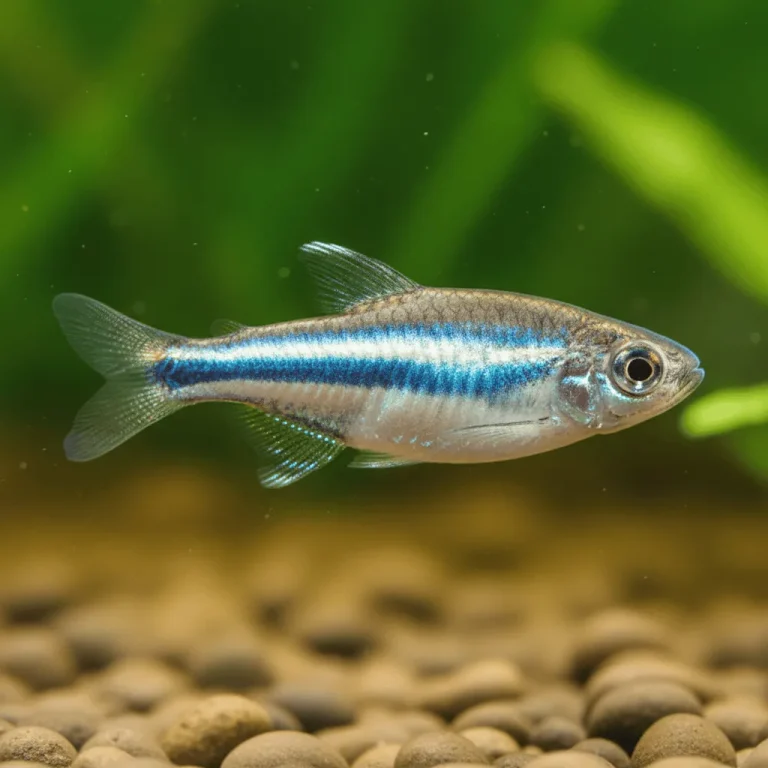
Neon tetras are small, torpedo-shaped fish with an unmistakable color pattern:
- Iridescent blue stripe running horizontally from nose to adipose fin
- Bright red stripe from mid-body to tail
- Silver/whitish belly
- Clear fins
When kept in good conditions, the colors are intensely bright. In the dark or when stressed, neons can appear faded or dull – this is normal short-term but a warning sign if it persists.
Common Variants & Related Species
While the standard neon tetra (Paracheirodon innesi) is most common, you may encounter:
- Long-Fin Neon Tetra – extended fins, more flowing appearance
- Gold Neon Tetra – paler, golden hue with partially reduced pigmentation
- Diamond-Head Neon Tetra – bright reflective area on the forehead
Closely related but distinct species:
- Cardinal Tetra (Paracheirodon axelrodi):
- Red stripe runs the full length of the body
- Slightly larger; often more demanding
- Green Neon Tetra (Paracheirodon simulans):
- Smaller, more greenish-blue
- Prefers even softer, more acidic water
3. Neon Tetra Care: Tank Requirements & Setup
Tank Size
Neon tetras are small, but they are schooling fish and must be kept in groups.
- Absolute minimum:
- 10 gallons / 40 liters for a school of 6–8
- Better for long-term:
- 15–20 gallons / 60–75 liters for 10–20 neons and tank mates
A longer tank (e.g., 20-gallon long) is preferable for schooling and natural behavior.
Key point: A larger, stable tank is more important than size alone. Neon tetras do poorly in uncycled or unstable nano tanks.
Filtration
Neons require:
- Clean, stable water
- Gentle to moderate flow
- Good biological filtration
Recommended filter types:
- Hang-On-Back (HOB) Filter
- Ideal for 10–30 gallon tanks
- Adjustable flow models allow you to keep current gentle
- Canister Filter
- Great for 20+ gallon planted tanks
- Excellent mechanical and biological filtration
- Inlet/outlet can be positioned for soft flow across plants
- Sponge Filter
- Good for nano or breeding tanks
- Very gentle flow, safe for fry
Affiliate Tip (Filters):
Promote a quiet, adjustable HOB filter or canister filter with high media capacity (e.g., Fluval, AquaClear, Seachem Tidal). Emphasize “ideal for neon tetra planted tanks” in your call-to-action.
Temperature & Heater
Neon tetras are tropical fish:
- Ideal temperature: 74–78°F (23–26°C)
- Acceptable range: 70–81°F (21–27°C)
Use a reliable heater rated correctly for your tank:
- ~50W for 10 gallons
- 75–100W for 15–20 gallons
Choose:
- Adjustable thermostat
- Shatter-resistant housing
- Safety shutoff if exposed to air
Lighting
Neon tetras come from shaded habitats and look best under:
- Moderate, diffused lighting
- Planted tank lighting (not too harsh)
Too bright lighting without plants can stress them and wash out colors.
Lighting recommendations:
- LED aquarium light with adjustable brightness
- 6–8 hours/day for low-tech planted tanks
- 8–10 hours/day if heavily planted (with CO₂ and fertilizers)
Use floating plants or tall stems to create shaded areas.
Decor: Rocks, Wood, Caves & Plants
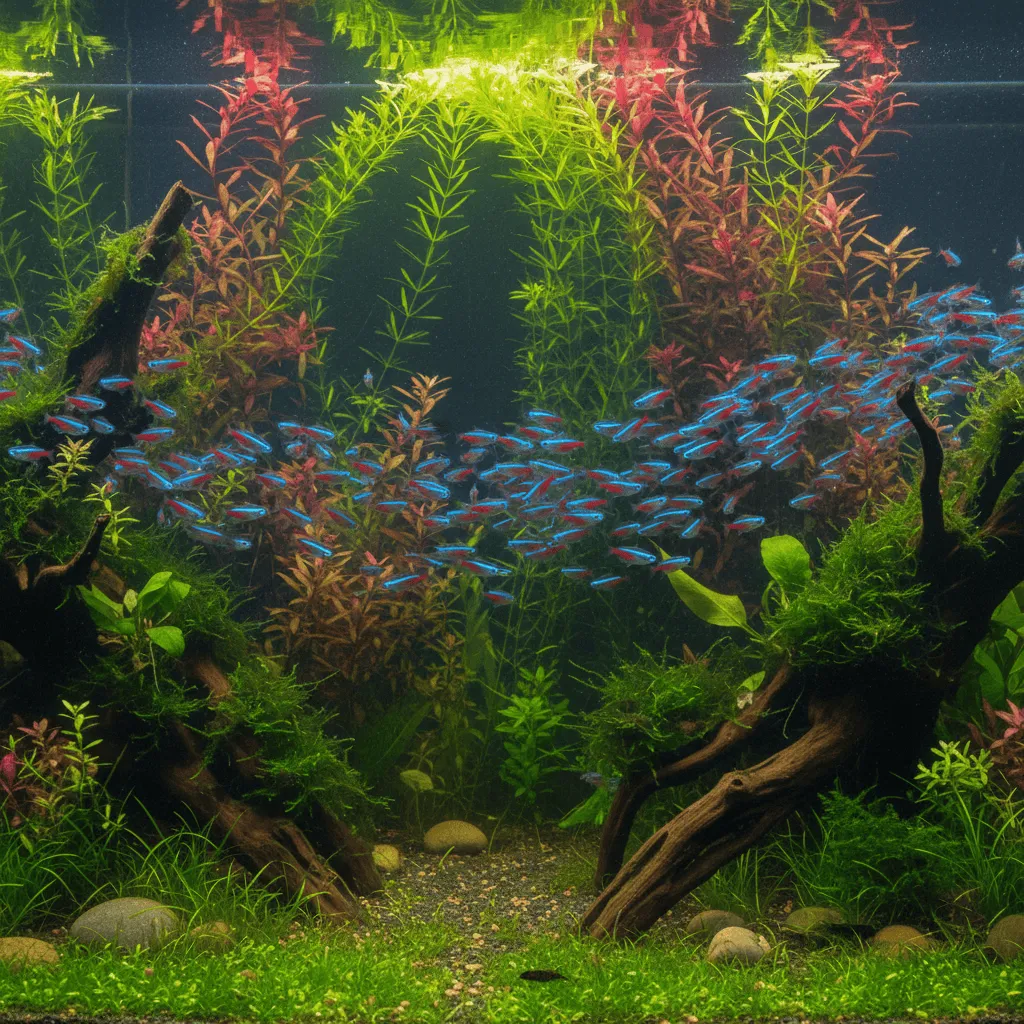
Aim for a natural, Amazon-inspired aquascape:
Substrate:
- Dark sand or fine gravel
- Dark substrate enhances neon colors
Hardscape:
- Driftwood branches and roots
- Smooth stones or leaf litter (almond leaves, beech/oak leaves)
- Provide hiding spaces and visual barriers
Plants (highly recommended):
- Background:
- Amazon Swords
- Vallisneria
- Limnophila, Hygrophila species
- Midground/foreground:
- Cryptocoryne
- Java Fern
- Anubias
- Mosses & Floating Plants:
- Java Moss, Christmas Moss
- Frogbit, Salvinia, Water Lettuce
4. Water Quality for Neon Tetras
Neon tetras are more sensitive to poor water conditions than some other beginner fish, especially newly imported or poorly bred stock.
Recommended Water Parameters
- Temperature: 74–78°F (23–26°C)
- pH: 6.0–7.5 (ideal ~6.2–7.0)
- GH (General Hardness): 2–10 dGH (soft to moderately soft)
- KH (Carbonate Hardness): 1–6 dKH
Ammonia, Nitrite, Nitrate
- Ammonia (NH₃): 0 ppm
- Nitrite (NO₂): 0 ppm
- Nitrate (NO₃): ideally < 20 ppm (keep under 40 ppm)
Perform:
- 25–30% weekly water changes (more in heavily stocked tanks)
- Gentle gravel vacuuming (especially in low-flow areas)
Testing: Essential for Neon Tetra Health
Neons are often lost in new tanks due to “new tank syndrome.” Regular testing helps avoid that.
Use liquid test kits (more accurate than strips) for:
- Ammonia
- Nitrite
- Nitrate
- pH
Consider separate test kits for GH/KH if:
- Your tap water is very soft or very hard
- You’re trying to breed neon tetras
Affiliate Tip (Test Kits):
Recommend a “Freshwater Master Test Kit” (e.g., API) plus a GH/KH kit. These are high-intent, recurring-purchase products ideal for SEO monetization.
5. Diet & Feeding
Neon tetras are omnivorous micro-predators. In the wild, they eat tiny invertebrates, insect larvae, and plant matter.
Food Types
Staple Foods:
- High-quality micro flakes suitable for small mouths
- Small granules or micro pellets
- Livebearer or small-tetra specific foods
Supplemental Foods:
- Live or frozen:
- Daphnia
- Cyclops
- Baby brine shrimp
- Micro bloodworms (sparingly)
- Freeze-dried:
- Daphnia
- Tubifex (occasional)
Variety improves:
- Color
- Immune system
- Natural behavior
Feeding Times & Amount
- Adults:
- 1–2 small feedings per day
- Only what they can consume in 1–2 minutes
- Juveniles:
- 2–3 small meals per day
Avoid overfeeding – neons have small stomachs and easily suffer in polluted water.
Best Food Brands for Neon Tetras
Good options for affiliate recommendations:
- Hikari Micro Pellets / Micro Wafers
- TetraMin or Tetra Micro Food
- Fluval Bug Bites (small fish formula)
- Omega One Micro Pellets / Flakes
You can create a “Best Food for Neon Tetras” section or comparison table and link to each product.
6. Temperament & Tank Mates
Temperament
Neon tetras are:
- Peaceful, shy if kept in small numbers
- Schooling fish – must be kept in groups of at least 6, ideally 10–15+
- Comfortable and confident in a well-planted, quiet community tank
When kept in a proper school, they display beautiful coordinated swimming and are far less stressed.
Suitable Tank Mates
Choose similarly peaceful, small fish that enjoy similar water parameters:
- Other small tetras:
- Ember, Rummy-nose, Black Neon, Glowlight Tetra
- Rasboras:
- Harlequin Rasboras, Chili Rasboras
- Small Corydoras:
- Pygmy Cory, Corydoras habrosus, Corydoras panda
- Small peaceful gouramis:
- Honey Gourami, Sparkling Gourami (with caution and enough space)
- Otocinclus catfish
- Small, peaceful shrimp (Amano, adult cherry shrimp – some shrimplets may be eaten)
Unsuitable Tank Mates
Avoid fish that are:
- Large enough to eat neons
- Aggressive or highly territorial
- Known fin-nippers
Examples:
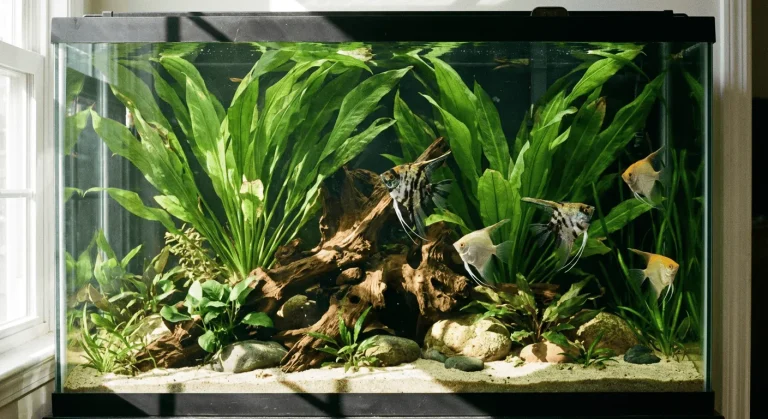
- Angelfish (adult angelfish may eat neon tetras)
- Large cichlids (Oscar, Green Terror, Convicts, etc.)
- Tiger Barbs, Serpae Tetras (fin-nippers)
- Large predatory catfish
- Some Bettas (especially aggressive males in small tanks)
7. Breeding Neon Tetras
Breeding neon tetras is challenging and generally considered suitable for advanced aquarists, but it’s possible with the right conditions.
Sex Differences (Male vs Female)

Sexing neon tetras is subtle:
Males:
- Slightly slimmer body
- Blue stripe tends to be straighter
Females:
Blue stripe may appear slightly curved due to fuller belly
Slightly larger and rounder, especially when full of eggs
Breeding Tank Requirements
Set up a separate breeding tank:
- Size: 5–10 gallons (20–40 liters)
- Bare bottom or very fine dark substrate
- Very soft, acidic water:
- pH 5.0–6.5
- GH 1–4 dGH
- Temperature: 74–78°F (23–26°C)
- Very dim lighting or no direct light
Add:
- Fine-leaved plants (Java Moss, Myriophyllum)
- Spawning mops or mesh for eggs to fall through
- Gentle sponge filter (no strong current)
Spawning & Egg Care
Breeding steps:
- Condition adults in the main tank with high-quality live and frozen foods for 1–2 weeks.
- Move a pair or small group (2 males, 3–4 females) to the breeding tank in the evening.
- Spawning usually occurs at dawn:
- Males chase females
- Eggs are scattered among plants/mop
- Immediately after spawning:
- Remove adults – they will eat eggs.
Neon tetra eggs are:
- Very light-sensitive – keep the tank dark
- They hatch in ~24–36 hours
Raising Fry
- Fry become free-swimming after ~3–4 days.
- Initially very tiny and need microscopic foods:
- Infusoria
- Commercial liquid fry food
- After ~1 week, gradually introduce:
- Vinegar eels, microworms
- Newly hatched brine shrimp (baby brine)
Keep light levels low and water very clean with gentle, frequent small water changes.
8. Neon Tetra Health & Disease
Common Diseases in Neon Tetras
- Neon Tetra Disease (NTD)
- Caused by a microsporidian parasite (Pleistophora hyphessobryconis)
- Symptoms:
- Fading or patchy loss of color
- Cysts or lumps in the muscles
- Difficulty swimming, abnormal posture
- Isolating from the school
- Unfortunately, no reliable cure; infected fish should be removed and humanely euthanized to protect the others.
- False Neon Tetra Disease
- Bacterial disease with similar symptoms (color loss, lethargy)
- Sometimes responds to antibacterial treatment
- Ich (White Spot Disease)
- Small white spots on fins and body
- Fish scratch on objects
- Fin Rot
- Ragged, frayed fins
- Often due to bacteria and poor water quality
- Fungal Infections
- Cotton-like tufts on skin or fins
- Internal Parasites
- Weight loss despite eating
- Stringy white feces
Early Symptoms to Watch For
- Dull or faded colors (not just night-time fading)
- Isolating from the school
- Clamped fins
- Loss of appetite
- Erratic swimming, difficulty maintaining position
- Visible spots, patches, or lumps
Treatment Recommendations
Always diagnose carefully and follow medication instructions. Remove activated carbon from filters during treatment.
General Steps:
- Isolate Sick Fish
- Use a hospital/quarantine tank
- Prevent spread and allow precise treatment
- Improve Water Quality
- Test ammonia, nitrite, nitrate, pH
- Perform partial water changes
- Ensure proper filtration and aeration
- Targeted Medications:
- Ich:
- Raise temperature slowly to 78–80°F (25–27°C)
- Use commercial Ich medications (malachite green/formalin combo or safer alternatives)
- Bacterial (fin rot, false NTD):
- Broad-spectrum antibacterial treatments (e.g., Maracyn, Furan-based, or equivalent products depending on region)
- Fungal:
- Antifungal medications or combined bacterial/fungal treatments
- Internal Parasites:
- Medications with praziquantel, metronidazole, or levamisole (as appropriate)
Neon Tetra Disease (true NTD):
- No effective cure – infected fish should be removed and euthanized
- Strict hygiene and quarantine to keep it from spreading
Affiliate Tip (Medications & Salt):
Link to Ich cures, broad-spectrum antibacterial meds, antifungals, and high-purity aquarium salt from reputable brands (API, Seachem, etc.). Emphasize “for treating common neon tetra diseases” in product descriptions.
9. Where to Buy Neon Tetras
Price Range
Neon tetras are widely available and usually inexpensive:
- Often sold individually or in groups (e.g., 6, 10, 20)
- Price per fish tends to drop when buying larger groups
- Specialty variants (long-fin, gold) may cost more
Exact prices depend on country, supplier, and strain.
Trusted Sources
Local Fish Stores (LFS):
- Choose stores with:
- Clean tanks, no dead fish
- Active, well-colored neons
- Separate quarantine systems if possible
Fish Farms & Wholesalers:
- Some regions have specialized tetra breeders/farms
- May offer better bulk pricing and stronger stock
Online Retailers:
- Look for:
- Good reviews and ratings
- Live-arrival guarantee
- Proper packaging and overnight/express shipping
When selecting neons:
- Avoid fish with faded colors, sunken bellies, or erratic swimming
- Check that they school together and are not isolating or drifting
You can link to online vendors selling “Neon Tetra Packs” or “School of 10–20 Neon Tetras” through your affiliate program.
10. Summary & Final Verdict
Are Neon Tetras Good for Beginners?
Yes – but they’re sensitive and need a properly cycled, stable tank.
Why they’re great:
- Spectacular colors in planted or blackwater aquariums
- Peaceful schooling behavior
- Small size, suitable for modest-sized tanks (10–20 gallons)
- Widely available and relatively affordable
Challenges:
- Sensitive to poor water quality and uncycled tanks
- Susceptible to Neon Tetra Disease and other infections
- Breeding is not easy and requires advanced conditions
If you:
- Cycle your tank properly
- Keep them in groups of 10+
- Provide soft, stable water and gentle filtration
then neon tetras can be a stunning, centerpiece species in a peaceful community aquarium – even for a careful beginner.