Platies are small, hardy, and endlessly colorful livebearers that thrive in peaceful community aquariums. They’re one of the best beginner fish thanks to their easy care, friendly nature, and willingness to breed.
In one sentence: Platy fish (Xiphophorus maculatus and X. variatus) are hardy, peaceful livebearers that do best in groups in a heated, filtered tank of 10+ gallons with slightly alkaline, moderately hard water.
1. Introduction & Quick Facts
Common Name: Platy, Platyfish
Scientific Names:
- Southern platyfish – Xiphophorus maculatus
- Variable platyfish – Xiphophorus variatus
Most aquarium “platies” are hybrids of these two species, selectively bred for color and pattern.
Platy Quick Stats
Parameter | Recommended Value |
|---|---|
Care Level | Beginner |
Temperament | Peaceful, active community fish |
Size at Maturity | ~2–2.5 in (5–6 cm) |
Minimum Tank Size | 10 gal (38 L) for a small group; 20+ gal (75+ L) preferred |
Water Temperature | 70–78°F (21–26°C), ideal 72–76°F (22–24.5°C) |
2. Comprehensive Overview
Origin & Natural Habitat
- Native range: Mexico and Central America (primarily Atlantic coastal drainages).
- Habitat types:
- Slow-moving streams
- Ditches
- Canals
- Shallow ponds and marshes
- Water is often:
- Warm
- Moderately hard to hard
- Slightly alkaline
- They naturally inhabit areas with thick vegetation, roots, and submerged plants.
Appearance & Color Variations
- Body shape:
- Short, stocky, oval body with a small head and fan-shaped tail.
- Size:
- Adults typically 2–2.5 in (5–6 cm).
- Females are generally larger and deeper-bodied than males.
- Fin shape:
- Standard platies have short, rounded fins.
- Some selectively bred strains have slightly extended fins, but nothing like fancy guppies or veil-tail breeds.
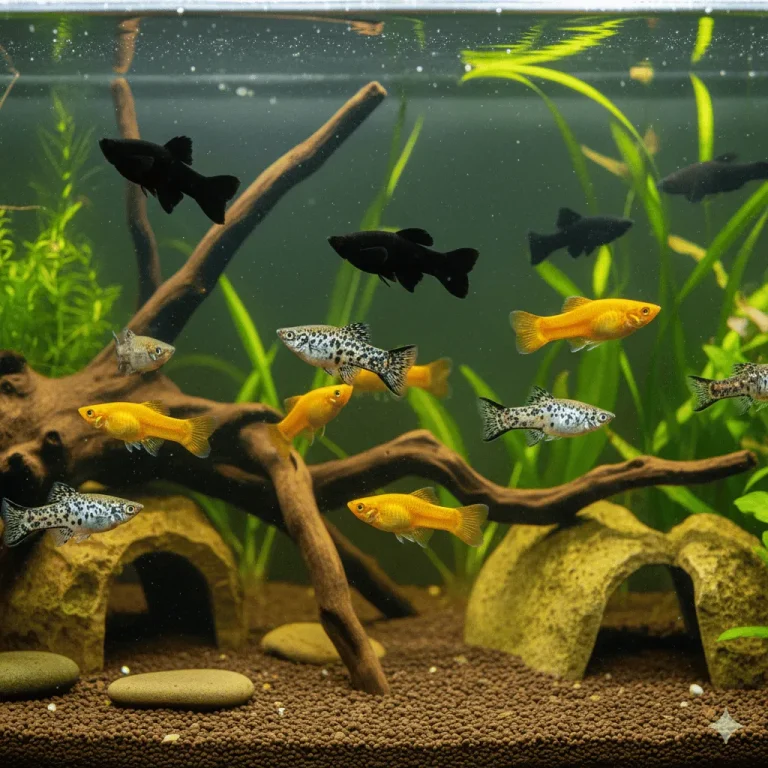
- Color morphs (examples):
- Solid colors: Red, orange, yellow, gold.
- Wagtail: Bright body with black tail and sometimes black fins.
- Tuxedo: Dark rear half of the body with a lighter front.
- Mickey Mouse: Distinctive tail base pattern resembling three dots (like Mickey Mouse ears and head).
- Sunset / Sunset variatus: Gradient orange-to-yellow or red-to-yellow.
- Marbled / calico: Speckled or blotchy multi-color patterns.
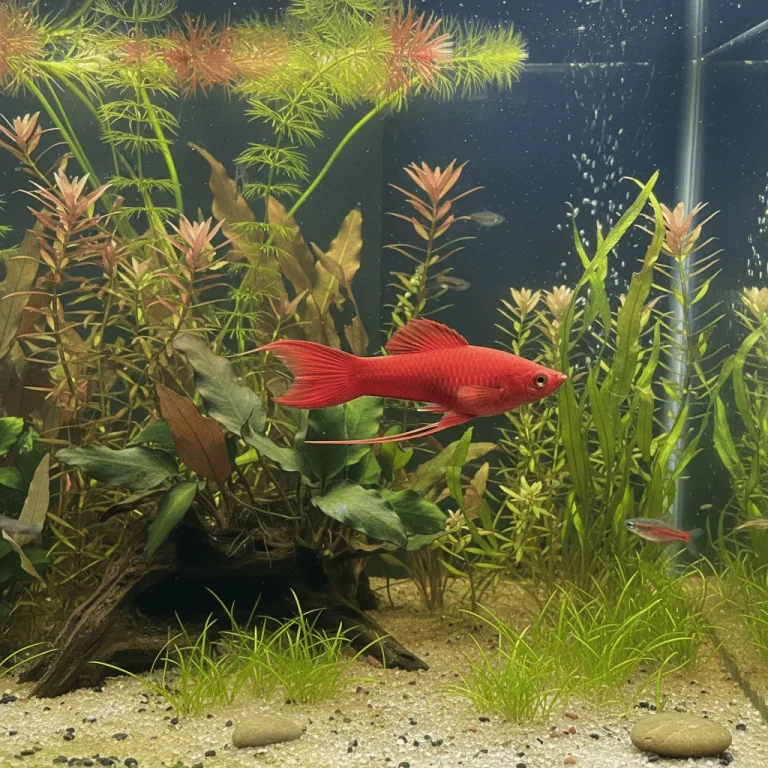
- Hi-fin / Sailfin: Extended dorsal fin (less common in standard platies, more in related species).
- Platies are often brighter and more varied than many other beginner fish, which is why they’re staples in community tanks.
3. Tank Requirements & Setup
Tank Size
- Minimum:
- 10 gallons (38 L) for a small group (e.g., 1 male with 2–3 females).
- Better long-term setups:
- 20 gallons (75 L) or larger if:
- You keep a bigger group.
- You want a community with other species.
- You expect or want to manage frequent breeding.
- 20 gallons (75 L) or larger if:
Platies are social and do best in groups of at least 4–6. Aim for more females than males (e.g., 2–3 females per male) to reduce harassment.
Filtration
Platies are active and produce a reasonable amount of waste.
- Recommended filter types:
- HOB (Hang-On-Back) filter: Great for 10–30 gallon tanks; easy to maintain.
- Canister filter: Best for larger tanks (20+ gallons) and heavily stocked communities.
- Sponge filter: Excellent for fry tanks and gentle, low-flow setups.
- Water flow:
- Moderate flow is fine; platies handle it well.
- Avoid overly strong currents in small tanks where they can’t escape the flow.
(Good place to recommend HOB filters, canister filters, and sponge filters with affiliate links.)
Temperature & Heater
While platies can tolerate slightly cooler water than many tropical fish, stable warmth is still important.
- Ideal temperature range: 72–76°F (22–24.5°C).
- Heater recommendations:
- Use a reliable, adjustable aquarium heater matched to tank size.
- Pair with a digital thermometer to monitor temperature.
- They can tolerate down to ~68°F (20°C), but this is not ideal long-term, especially if kept with tropical community fish.
Lighting
- Platies don’t have special lighting needs, but good light:
- Shows off their bright colors.
- Supports live plants.
- Use an LED aquarium light with:
- Adjustable brightness.
- 8–10 hour daily photoperiod.
- Too much light without plants or algae control can lead to algae overgrowth.
Decor & Aquascaping
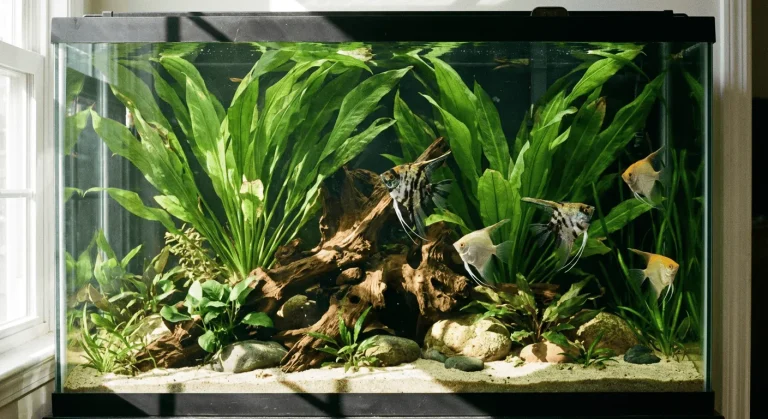
Think “planted community aquarium”:
- Substrate: Fine gravel or sand.
- Plants (live or high-quality artificial):
- Easy live plants: Java fern, Anubias, Vallisneria, Amazon sword, Hornwort, Java moss.
- Floating plants are excellent for fry cover: Frogbit, water lettuce, Salvinia.
- Hardscape:
- Smooth stones, driftwood, and root structures.
- Hiding and breeding areas:
- Dense plant thickets.
- Breeding grass, moss piles, or small caves.
- Platies will explore all levels of the tank, so create interest from bottom to surface.
4. Water Quality
Ideal Parameters
- pH: 7.0–8.2 (slightly alkaline).
- GH (General Hardness): ~10–25 dGH (moderately hard to hard).
- KH (Carbonate Hardness): ~8–12 dKH to keep pH stable.
- Ammonia & Nitrite: 0 ppm at all times.
- Nitrate: Preferably under 20 ppm, maximum ~40 ppm with good maintenance.
Platies are more tolerant of hard, alkaline water than many soft-water species (like tetras and dwarf cichlids), which makes them perfect for many tap water sources.
Testing & Maintenance
- Use a liquid water test kit to routinely check:
- Ammonia
- Nitrite
- Nitrate
- pH
- Water changes:
- Typically 25–40% weekly, depending on stock and feeding.
- Always use a dechlorinator/water conditioner when adding tap water.
- Rinse filter media in tank water (never tap water) to preserve beneficial bacteria.
(Link test kits, dechlorinators, and gravel vacuums here.)
5. Diet & Feeding
Food Type
Platies are omnivores with a strong tendency toward herbivory:
- They graze on algae, plant matter, and small invertebrates.
- A balanced diet must include both plant and animal-based foods.
What to Feed
- Staple foods:
- High-quality community or livebearer flakes.
- Small sinking or floating pellets.
- Vegetable content (very important):
- Spirulina-based flakes or pellets.
- Blanched vegetables: zucchini, spinach, peas (in moderation).
- Treats (2–3x per week):
- Frozen or live foods: daphnia, brine shrimp, bloodworms (use bloodworms sparingly).
- Avoid over-heavy, all-meat diets; they can cause digestive and health issues in livebearers.
Feeding Schedule
- Frequency: 1–2 times per day.
- Amount: Only what they consume in about 1–2 minutes.
- Remove uneaten food to prevent water quality issues.
Recommended Food Brands (Examples)
(Adjust based on your region and affiliate partners.)
- Flakes/pellets: community or livebearer formulas from:
- Fluval, Omega One, Hikari, Tetra, Xtreme, NorthFin.
- Plant-based supplements:
- Spirulina flakes, veggie wafers, or algae-based pellets.
- Frozen foods:
- Brine shrimp, daphnia, mysis shrimp from reputable aquarium brands.
6. Temperament & Tank Mates
Temperament
- Peaceful and active.
- Ideal for community aquariums.
- Males may occasionally spar or chase each other, but serious damage is rare if the tank is large and well-decorated.
Suitable Tank Mates
Platies mix well with other peaceful species that enjoy similar water conditions:
- Other livebearers:
- Guppies, mollies, swordtails (watch size and aggression with swordtails).
- Small to medium peaceful fish:
- Corydoras catfish
- Harlequin rasboras, danios (non-nippy varieties)
- Some tetras that prefer neutral to slightly alkaline water (e.g., black neon, lemon tetras)
- Bottom dwellers & clean-up crew:
- Bristlenose plecos
- Kuhli loaches (if pH and hardness are acceptable)
- Nerite snails, mystery snails
- Always research each species’ preferred parameters and temperament.
Unsuitable Tank Mates
Avoid:
- Large or aggressive fish:
- Cichlids (especially medium/large species), large barbs.
- Fin-nippers:
- Tiger barbs, some larger danios, Serpae tetras.
- Very soft-water or delicate species:
- Discus, wild-caught soft-water tetras, some dwarf cichlids (mismatched water preferences).
Also remember: platies breed readily, so consider this when mixing with species that might eat fry—or if you want to avoid population booms.
7. Breeding Platies
Platies are livebearers and extremely easy to breed, often doing so without any special effort.
Sex Differences
- Males:
- Smaller, slimmer body.
- Anal fin modified into a pointed organ called a gonopodium.
- Females:
- Larger and rounder, especially when gravid (pregnant).
- Anal fin is fan-shaped, not pointed.
- Often show a gravid spot (dark area near the rear belly).
Breeding Tank Requirements
You can breed them in the main tank, but a separate breeding/grow-out tank gives better fry survival:
- Size: 10–20 gallons (38–75 L).
- Setup:
- Sponge filter for gentle filtration.
- Heater set to 74–76°F (23–24.5°C).
- Dense plants: live plants, moss, and floating plants.
- Fine-leaved plants or breeding grass to hide fry.
- Typically, just keeping a ratio of 1 male to 2–3 females results in plenty of fry without extra effort.
Spawning & Fry Care
- Mating:
- Males court and inseminate females using the gonopodium.
- Gestation:
- Around 24–30 days, depending on temperature and conditions.
- Birth:
- Females give birth to fully formed fry.
- A single drop can produce anywhere from ~20 to 80 fry, sometimes more.
- Preventing fry predation:
- Parents and tank mates will eat fry if given the chance.
- Provide dense plant cover, or move pregnant females to a breeding tank shortly before giving birth.
- Feeding fry:
- Newly hatched fry can eat:
- Crushed flakes or powdered fry food.
- Baby brine shrimp (excellent growth booster).
- Microworms or high-quality liquid fry foods.
- Feed small amounts 3–4 times per day.
- Newly hatched fry can eat:
- Grow-out:
- Maintain excellent water quality with frequent small water changes.
- Separate growing fry if tank becomes crowded.
8. Health & Disease
Platies are hardy but still susceptible to common freshwater diseases, especially if water quality is poor.
Common Platy Diseases
- Ich (White Spot Disease)
- Symptoms: White sugar-like spots on body/fins, scratching on decor, clamped fins.
- Fin Rot
- Symptoms: Ragged or fraying fins, discolored edges.
- Often linked to poor water conditions.
- Columnaris / Bacterial infections
- Symptoms: White or gray patches, ulcers, “cottony” growth around mouth or body.
- Fungal infections
- Symptoms: Fluffy, white cotton-like patches on skin or fins.
- Livebearer disease / Internal parasites
- Symptoms: Weight loss despite eating, stringy feces, hollow belly, lethargy.
- Obesity / liver issues
- Symptoms: Overly round bodies, lethargy, difficulty swimming.
- Typically caused by overfeeding and high-fat diets.
Early Warning Signs
- Loss of appetite
- Lethargy or hiding
- Clamped fins
- Rapid breathing or gasping at the surface
- Rubbing or flashing on objects
- Color fading
Treatment Recommendations
(Always follow medication instructions and consult knowledgeable sources when in doubt.)
- Step 1 – Check water quality:
- Test ammonia, nitrite, nitrate, pH, and temperature.
- Fix any issues and perform partial water changes.
- Ich:
- Raise temperature gradually (if tank mates allow) and use an ich-specific medication.
- Fin rot & mild bacterial issues:
- Improve water quality.
- Consider aquarium salt (when compatible with plants/invertebrates) and, if needed, a broad-spectrum antibacterial medication.
- Fungal infections:
- Use antifungal medications specifically labeled for aquarium use.
- Internal parasites:
- Use a dewormer or anti-parasitic medication recommended for livebearers.
- Quarantine tank (highly recommended):
- Treat sick fish in a separate tank when possible to protect the main aquarium and use medications more effectively.
(Ideal section for promoting medications, aquarium salt, hospital tanks, and test kits.)
9. Where to Buy Platy Fish
Price Range
Platies are generally inexpensive:
- Common varieties (red, wagtail, sunset, Mickey Mouse):
- Around $1–$4 USD per fish at most stores.
- Special morphs or high-quality strains:
- $4–$10+ USD depending on rarity and breeder.
Trusted Sources
- Local fish stores (LFS):
- Good selection of common color morphs.
- Easy to observe health and behavior before purchase.
- Reputable online retailers and breeders:
- Often offer rarer color forms and higher-quality stock.
- Look for:
- Live arrival guarantee.
- Good customer reviews.
- Clear photos of actual fish or representative stock.
- Local clubs and hobbyist breeders:
- Aquarium societies and online forums/groups often have platy breeders.
- Fish are often well-acclimated to local water conditions.
Choose fish that are:
- Active and alert.
- Eating well.
- Free of visible spots, torn fins, or bloated/sunken bellies.
10. Summary & Final Verdict
Is the platy fish suitable for beginners?
Yes—platies are among the best beginner fish available.
They offer:
- Hardiness: Tolerant of a wide range of conditions (within reason).
- Peaceful nature: Ideal community fish.
- Bright colors: Huge variety of eye-catching patterns.
- Easy breeding: Great for hobbyists who want to try breeding livebearers.
- Simple care: Thrive with basic filtration, heating, and regular maintenance.
Best suited for:
- Beginners wanting a colorful, forgiving community fish.
- Families and children learning aquarium care.
- Hobbyists interested in livebearer breeding and color projects.