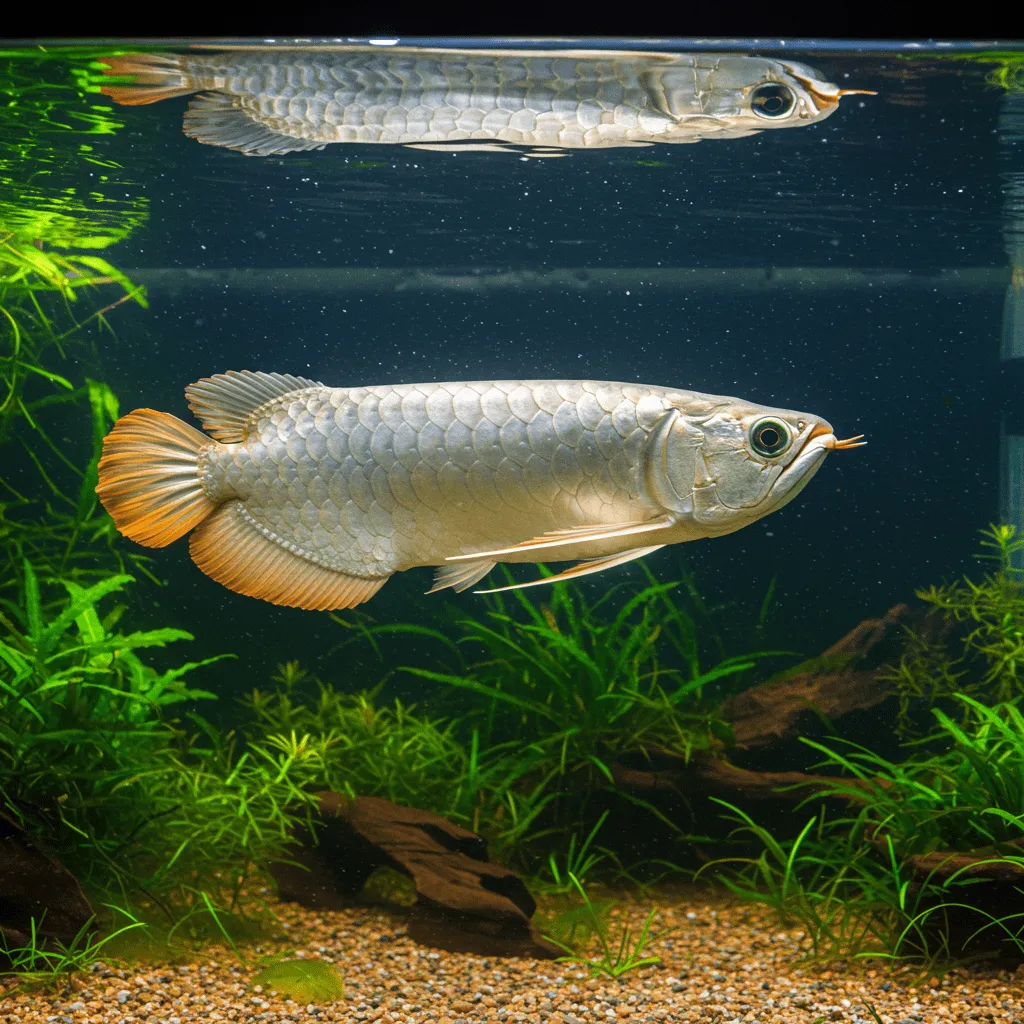
Few freshwater fish are as instantly recognizable as the Silver Arowana. Long, sleek, and downright prehistoric-looking, this “dragon fish” glides just under the surface, scanning for prey with a mouth perfectly designed to grab anything that falls in the water.
Silver Arowana are stunning centerpiece fish, but they also grow very large, jump like rockets, and demand massive, well-filtered tanks. This guide will walk you through Silver Arowana care step by step so you can decide if this incredible fish is truly right for you.
1. Introduction & Quick Facts
The Silver Arowana (Osteoglossum bicirrhosum) is a large, surface-dwelling predator from South America. It’s sometimes called the “water monkey” because in the wild, it can jump out of the water to snatch insects and even small animals from branches above.
Kept properly, Silver Arowana can reach 3 feet (90 cm) and live well over a decade—so they are not impulse buys.
Quick Facts Table
| Attribute | Details |
|---|---|
| Common Name | Silver Arowana, Dragon Fish |
| Scientific Name | Osteoglossum bicirrhosum |
| Family | Osteoglossidae |
| Origin | Amazon Basin, Rupununi, and surrounding South American waters |
| Adult Size | Up to 36 in (90 cm) in aquariums with space; larger in the wild |
| Lifespan | 10–15+ years (often longer with ideal care) |
| Care Level | Advanced (not recommended as a first big fish) |
| Temperament | Semi-aggressive, predatory, territorial at the surface |
| Minimum Tank Size | 180 gallons (680 L) absolute minimum; 240–300+ gallons strongly preferred |
| Temperature Range | 75–82°F (24–28°C) |
| pH Range | 6.0–7.5 (slightly acidic to neutral) |
| Hardness Range | Soft to moderately hard (3–12 dGH) |
| Tank Level | Top-dweller, cruises just under the surface |
| Diet Type | Carnivore (insects, fish, crustaceans; high-quality pellets) |
2. Species Profile & Varieties
2.1 Origin & Natural Habitat
Silver Arowana come from:
- The Amazon River Basin in Brazil, Peru, Colombia
- Rivers and floodplains of Guyana and surrounding areas
Natural habitat characteristics:
- Slow-moving rivers, flooded forests, and backwaters
- Warm, soft, slightly acidic water
- Overhanging vegetation where insects and small animals fall into the water
In these environments, they:
- Patrol the surface looking for prey
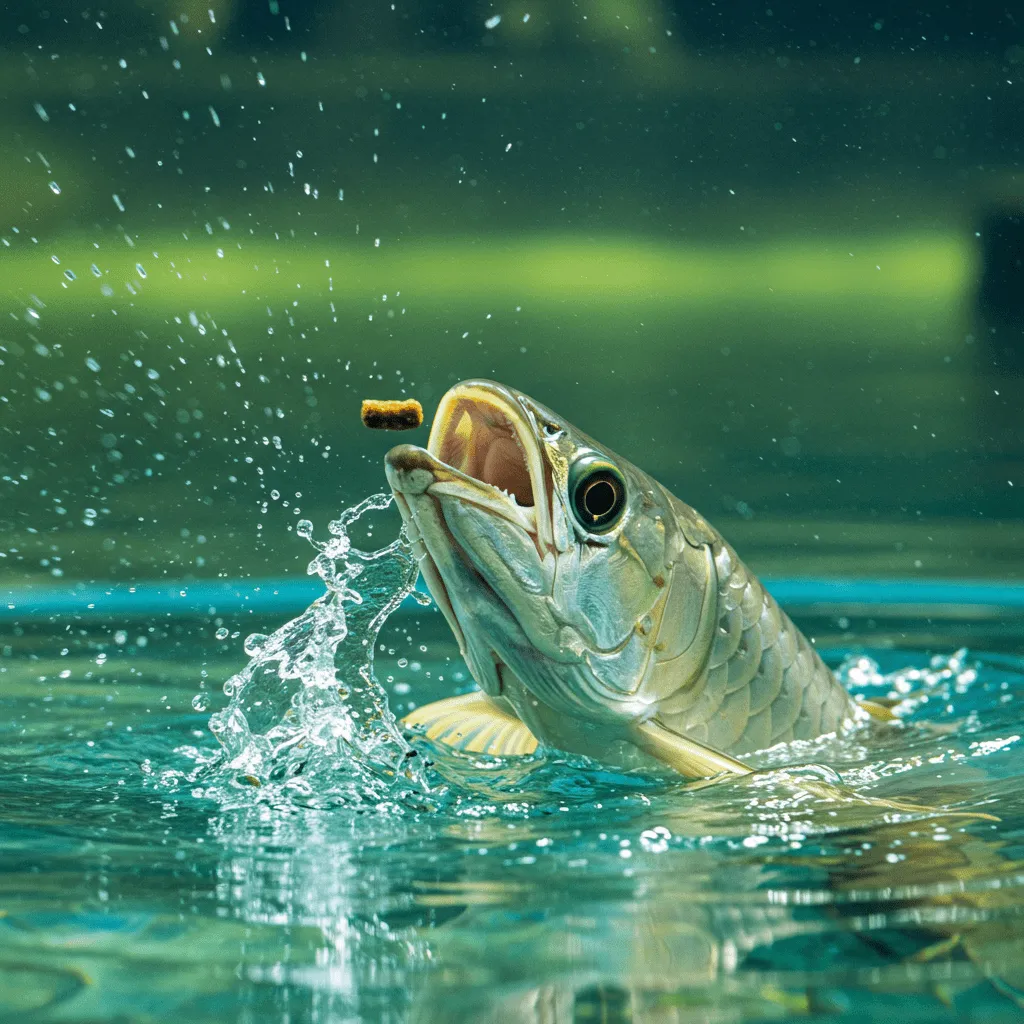
- Use powerful jumps to grab food from branches and low vegetation
- Often travel alone or in loose groups when young; become more solitary with age
2.2 Physical Characteristics
Silver Arowana have:
- Long, torpedo-shaped body with large, metallic silver scales
- Upturned mouth with two barbels on the lower jaw
- Dorsal and anal fins that run along much of the body length, creating a “ribbon” look
- Large, expressive eyes (can suffer from “drop-eye” in captivity)
They’re often mistaken for Asian Arowana, but:
- Silver Arowana are larger, more elongated, and generally silver with a blue or green sheen in adults.
- Asian Arowana (often red or gold) are CITES-protected and usually far more expensive.
2.3 Related Species & Varieties
Within the same genus:
- Black Arowana (Osteoglossum ferreirai)
- Similar shape but darker, with distinct juvenile coloring
- Slightly different range and care nuances
Variety-wise, Silver Arowana are mostly available as:
- Standard Silver Arowana (typical metallic silver)
- Occasional leucistic or “platinum” individuals (rare, very expensive)
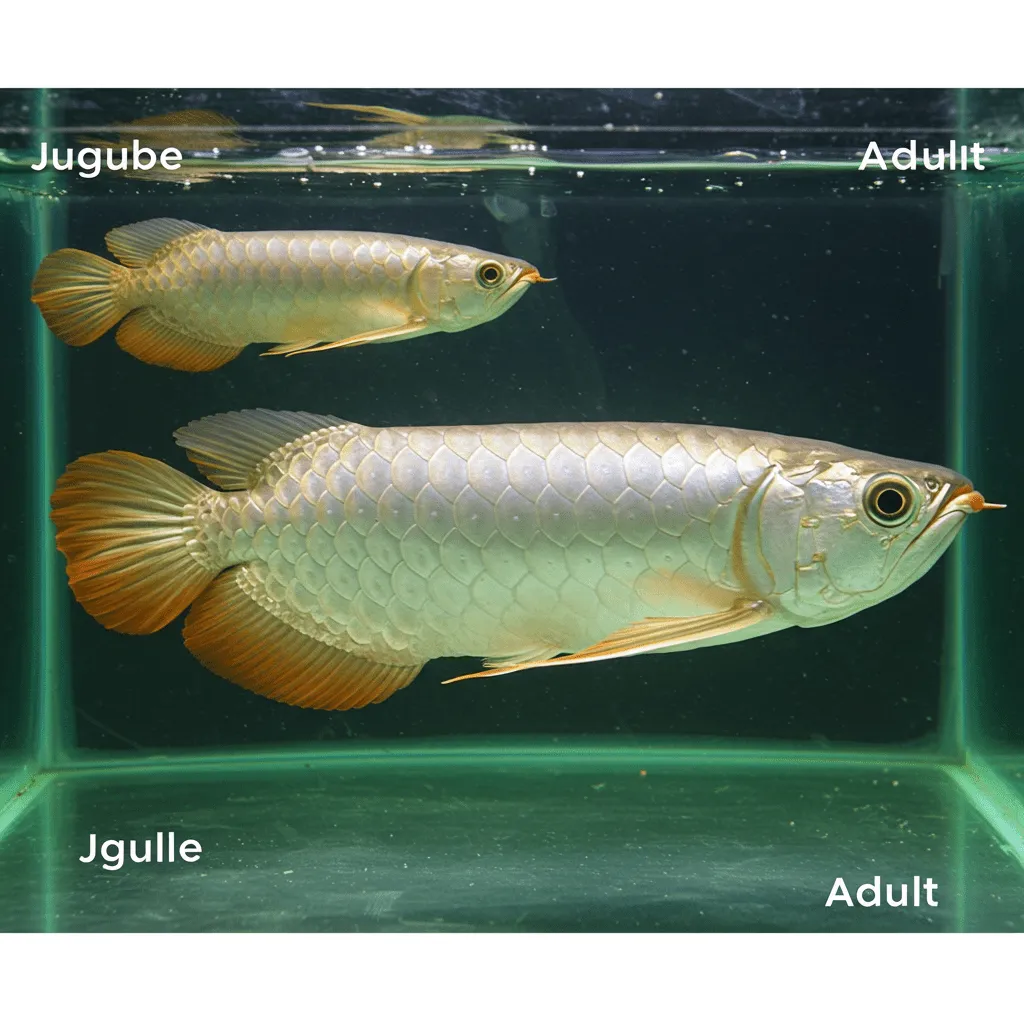
- Juveniles often have a slight golden hue and a black-edged tail that fades as they grow
For this guide, we’ll focus on standard Silver Arowana care, which covers the needs of most fish sold under this name.
3. Tank Requirements & Setup
3.1 Minimum Tank Size & Dimensions
Silver Arowana are big, fast, and active surface swimmers. Tank size is not just about gallons, but length and width:
- Absolute minimum:
- 180 gallons (6 ft / 180 cm long x 2 ft / 60 cm wide) for a single adult
- Much better / recommended:
- 240–300 gallons or more with at least 7–8 ft (210–240 cm) length and 30″+ width
Key dimension:
- Arowana need room to turn comfortably. A narrow tank can cause deformities and stress.
If you cannot provide a 6–8 foot tank, a Silver Arowana is not an appropriate choice.
3.2 Filtration & Flow
Silver Arowana are large predators and produce a lot of waste:
- Use overpowered filtration:
- Sump filter (ideal for big tanks)
- OR 2 large canister filters running in parallel
- Aim for:
- 6–10x turnover of tank volume per hour, with strong biological filtration
Water Flow:
- Moderate flow is fine, but avoid blasting the surface where the Arowana cruises.
- Use spray bars or diffusers to spread return flow.
3.3 Tank Cover: Arowana Are Extreme Jumpers
This is absolutely critical:
- Silver Arowana are notorious jumpers and can launch themselves several feet out of the water.
- Use a tight, heavy lid that completely covers the tank.
- Secure all gaps around filters, hoses, heaters, and cords.
- Glass lids must be thick enough and clamped or weighted down; flimsy lids will not stop a full-grown Arowana.
Many hobbyists lose Arowana to jumping accidents—it’s one of the top causes of death in captivity.
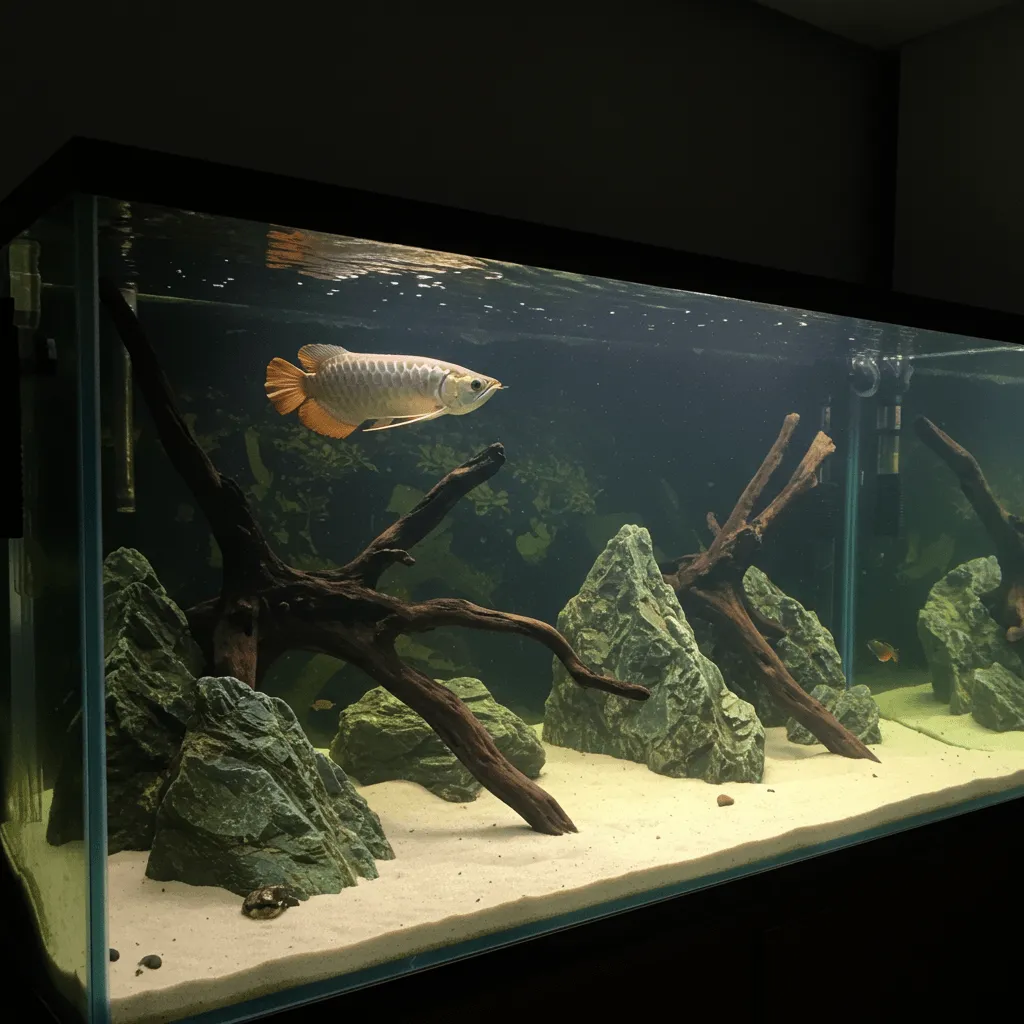
3.4 Substrate & Decor
Substrate:
- Sand or fine gravel is ideal.
- Bare-bottom can work in very large, minimalist setups.
Decor:
- Driftwood and large rocks can add structure, but:
- Keep most decorations low – you want open surface area for swimming.
- Avoid sharp edges that could injure a jumping or spooked fish.
Plants:
- Tough plants like Anubias or Java Fern on wood/rocks can be used, but Arowana may ignore or occasionally damage them.
- Floating plants can provide cover, but don’t cover so much that you restrict oxygen exchange or feeding.
3.5 Lighting
- Silver Arowana don’t require intense lighting.
- Moderate lighting that simulates a natural day-night cycle (8–10 hours on) is sufficient.
- Too-bright lights with no shade can stress them. Use driftwood or floating plants for shaded areas.
3.6 Tankmates & Layout Considerations (More in Section 6)
Because Arowana are surface predators:
- Leave the upper half of the tank mostly open.
- Use decor and tankmates that occupy the mid and bottom levels.
4. Water Parameters & Maintenance Schedule
Silver Arowana are somewhat adaptable but need stable, clean conditions.
4.1 Ideal Water Parameters
| Parameter | Recommended Range |
|---|---|
| Temperature | 75–82°F (24–28°C) |
| pH | 6.0–7.5 (slightly acidic to neutral) |
| GH (Hardness) | 3–12 dGH (soft to moderately hard) |
| KH | 2–8 dKH (for pH stability) |
| Ammonia | 0 ppm |
| Nitrite | 0 ppm |
| Nitrate | Ideally < 20 ppm (always < 40 ppm) |
While wild fish prefer softer, more acidic water, captive-bred Silver Arowana often do well in slightly harder, neutral water—as long as it’s stable and well-maintained.
4.2 Testing & Monitoring
Use liquid test kits to regularly check:
- Ammonia
- Nitrite
- Nitrate
- pH
In very large systems with heavy stocking, also keep an eye on:
- KH (carbonate hardness)
- Temperature (with reliable heater & thermometer)
4.3 Water Changes
For a large predatory fish like Silver Arowana:
- Aim for 30–50% water changes weekly
- In heavily stocked or lightly filtered tanks, two smaller changes per week may be better (e.g., 25% twice a week)
Always:
- Match temperature within 1–2°F (0.5–1°C)
- Use dechlorinator for tap water
- Avoid drastic pH or hardness swings
4.4 Filter & Tank Maintenance
- Rinse mechanical filter media (sponges, floss) in tank water every 1–2 weeks
- Clean canister filters/sump compartments in rotation (never all bio-media at once)
- Siphon detritus from substrate areas where waste accumulates
Large tanks are more stable, but they require consistent, scheduled maintenance to stay that way.
5. Diet, Feeding Schedule & Nutrition Tips
Silver Arowana are carnivores with specialized mouths built for surface prey.
5.1 Natural Diet
In the wild, they eat:
- Insects
- Crustaceans
- Small fish
- Spiders, frogs, and sometimes small mammals or birds that fall in the water
5.2 Recommended Diet in Captivity
For healthy Silver Arowana care, rely on:
Staple Foods:
- High-quality floating carnivore pellets or Arowana-specific pellets
- Train your Arowana to accept pellets as a main food source
- This ensures balanced nutrition and reduces disease risks
Supplemental Foods (2–4 times per week):
- Frozen/thawed:
- Shrimp (shell-off, unsalted)
- Krill
- Silversides or other small whole fish (sparingly)
- Occasional live or insect foods:
- Crickets
- Mealworms (not too often; high in fat)
- Dubia roaches (from safe, pesticide-free sources)
Vegetable matter:
- Not strictly necessary, but some individuals nibble bits of peas or spinach; the main diet should still be animal-based.
5.3 Avoid Feeder Fish
Feeding cheap feeder fish (goldfish, rosy reds, etc.) is not recommended:
- High risk of introducing parasites and diseases
- Goldfish and some feeders contain thiaminase, which destroys vitamin B1 and can lead to deficiencies
- Encourages aggressive feeding behavior without added benefits
Instead, use frozen/thawed and pellet foods for safety and nutrition.
5.4 Feeding Frequency
- Juveniles (under 10–12 inches):
- 2–3 small feedings per day
- Sub-adults and adults:
- 1–2 feedings per day
- Some keepers feed large adults once daily or 5–6 times per week to prevent obesity
General rule:
- Offer only as much as your Arowana can fully consume in 2–3 minutes, leaving little to no leftovers.
5.5 Nutrition Tips
- Vary the diet to keep them interested and cover nutritional bases.
- Don’t overfeed rich foods (fatty fish, mealworms) – risk of fatty liver and water quality issues.
- Observe body condition:
- Sunken belly = underfed or sick
- Very rounded, sluggish fish = overfed or obese
6. Temperament & Tank Mates
6.1 Temperament
Silver Arowana are:
- Semi-aggressive, especially toward fish near the surface
- Predatory—will eat any tank mate small enough to fit in their mouth
- Territorial about their swimming space, mainly the upper water layer
They can, however, coexist with certain large, robust tank mates in very large tanks.
6.2 Suitable Tank Mates
Tank mates should be:
- Too large to be swallowed
- Peaceful to semi-aggressive (but not hyper-aggressive)
- Preferably mid-water or bottom-dwellers
Examples:
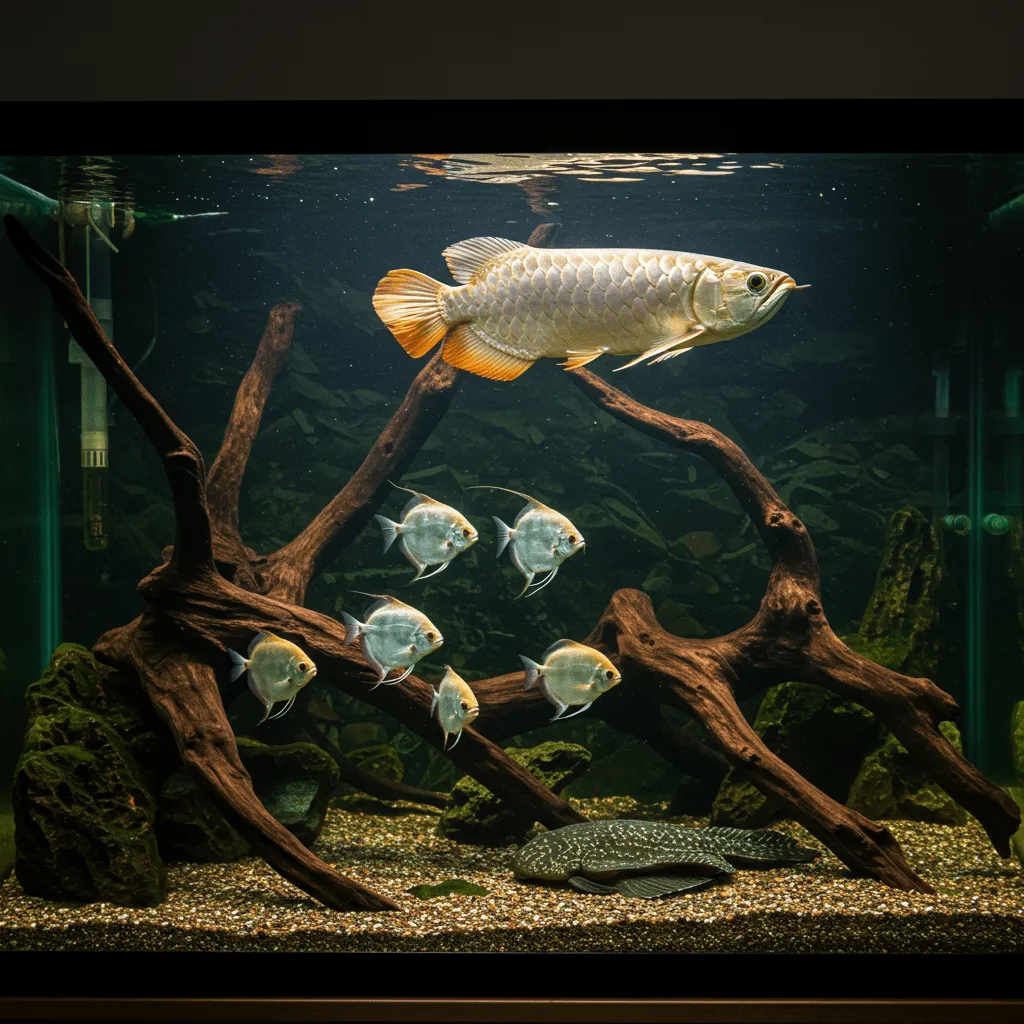
- Large South American cichlids (e.g., Severum, some large Geophagus) in big tanks
- Large catfish:
- Plecos (Bristlenose, some Panaque, common plecos in large systems)
- Synodontis species (for big setups)
- Big characins:
- Silver Dollars (group of 5–6+)
- Larger tetras or barbs (only in huge tanks)
6.3 Tank Mates to Avoid
Avoid keeping Silver Arowana with:
- Small fish (tetras, guppies, rainbowfish) – they will be eaten
- Very aggressive large cichlids (like some Central American species) that might injure the Arowana
- Other Arowana in small or moderate-sized tanks—fights and serious injuries are common
- Fin-nippers that target barbels or fins
In many home aquariums, the safest approach is a single Silver Arowana with a few large bottom/ mid-water companions in a very big tank.
7. Breeding Silver Arowana in Captivity
(Adjusting the template section “Breeding Angelfish” to Breeding Silver Arowana.)
7.1 Difficulty Level
Breeding Silver Arowana in the home aquarium is extremely difficult and rarely done successfully outside of large, specialized facilities.
Reasons:
- They need very large tanks or ponds to reach full breeding maturity
- They are territorial and may fight rather than pair up
- Specific environmental cues (water level, seasonality) are hard to replicate
7.2 Breeding Behavior
In the wild and in breeding farms:
- Silver Arowana are mouthbrooders (paternal):
- The male carries fertilized eggs in his mouth
- He protects them until the fry are free-swimming and somewhat developed
General process:
- A mature male and female spawn; eggs are laid and fertilized.
- Male picks up eggs in his mouth for incubation.
- After a few weeks, fry emerge, still with yolk sacs.
- Male may continue to guard them for a period.
7.3 Practical Considerations for Hobbyists
Because of space, pairs, and behavioral challenges:
- Most hobbyists do not attempt breeding Silver Arowana.
- Commercial breeding is typically done in large outdoor ponds or very large indoor tanks.
If breeding is a key goal, consider more manageable species (e.g., angelfish, discus, smaller cichlids) instead of Silver Arowana.
8. Common Diseases, Prevention & Treatment
Silver Arowana are tough fish but prone to specific issues in captivity.
8.1 Common Health Problems
- Drop-Eye (Eye Droop)
- One or both eyes begin to permanently point downward.
- Causes debated: genetics, high-fat diet, frequent looking down at bottom, injury.
- Primarily cosmetic but may affect depth perception.
- Gill Curl (Gill Deformity)
- Gill covers bend or curl outward.
- Often linked to poor water quality, cramped tanks, or injury.
- Sometimes correctable with surgery by experienced keepers/vets.
- Ich (White Spot Disease)
- White salt-like spots, flashing, rapid breathing.
- Often occurs after temperature swings or new fish introductions.
- Fin Rot & Bacterial Infections
- Ragged fins, red streaks, cloudy patches.
- Parasitic Infections (Internal & External)
- Weight loss, stringy white feces, lethargy.
8.2 Prevention
- Provide ample tank size so the fish can grow properly.
- Maintain excellent water quality: 0 ammonia/nitrite, low nitrates.
- Avoid high-fat, unbalanced diets (too much feeder fish, fatty foods).
- Quarantine new fish and live foods where possible.
- Minimize stress (sudden noise, banging glass, quick parameter changes).
8.3 Treatment (General Guidance)
Always research specific medications and, if possible, consult an aquatic veterinarian.
- Ich:
- Gradual temperature increase (if appropriate)
- Use an Ich Remedy safe for large scaleless or sensitive fish; follow dosing carefully.
- Bacterial infections / fin rot:
- Improve water quality
- Use broad-spectrum antibacterial medications in a hospital tank if feasible
- Parasites:
- Internal: dewormers such as praziquantel or metronidazole, per product instructions
- External: formalin, malachite green, or other antiparasitic meds as appropriate
Always:
- Remove carbon/chemical filter media before treatment
- Increase aeration
- Watch for signs of stress or intolerance to medications
9. Where to Buy & Price Guide
9.1 Where to Buy Silver Arowana
- Local Fish Stores (LFS):
- Many larger or specialty LFS carry juvenile Silver Arowana (usually 3–6 inches).
- Inspect fish for straight spines, clear eyes, no visible injuries, and good feeding response.
- Online Retailers:
- Ship Silver Arowana overnight—look for reputable sellers with good reviews.
- Check DOA (dead on arrival) policies.
- Hobbyist Breeders / Clubs:
- Less common, but you may occasionally find locally bred or rehomed specimens.
9.2 Price Range
Prices vary by size, quality, and region:
- Juveniles (3–6 inches): generally inexpensive to moderate
- Sub-adults (8–12 inches): moderately higher price
- Large adults and rare morphs (platinum, leucistic): can be quite expensive
Remember to factor in:
- Cost of huge tank, sump/canister filtration, and lids
- Ongoing electricity, food, and maintenance costs
Silver Arowana themselves are often the cheapest part of the overall setup.
10. Beginner Mistakes to Avoid
- Underestimating Size & Tank Needs
- Buying a Silver Arowana for a 55–75 gallon tank and planning to “upgrade later” but never doing so.
- Weak or Inadequate Tank Cover
- Losing fish because they jumped through a gap or pushed off a light-lid.
- Relying on Feeder Fish
- Introducing parasites, causing nutritional imbalance, and unnecessary cruelty.
- Poor Filtration & Infrequent Water Changes
- Large fish need big filters and regular large water changes to remain healthy.
- Choosing Incompatible Tank Mates
- Housing with small fish (instant food) or very aggressive large fish (injury risk).
- Rapid Changes in Water Parameters
- Drastic temperature or pH swings leading to stress and disease.
- Ignoring Long-Term Commitment
- Silver Arowana can live well over a decade and grow larger than most people expect.
11. Care Level & Difficulty Rating
- Care Level: Advanced
- Difficulty Rating: 8 / 10
Silver Arowana are not recommended for:
- Small tanks
- Casual or short-term hobbyists
- First-time fish keepers
They are suitable for:
- Aquarists with experience keeping large cichlids or monster fish
- People who can provide 6–8 ft tanks, heavy filtration, and secure lids
- Keepers looking for a long-term, interactive predator fish
12. Pros, Cons & Final Verdict
Pros
- Stunning, prehistoric appearance; true “dragon fish” presence
- Fascinating surface-hunting behavior
- Intelligent and responsive—often recognize and interact with owners
- Impressive centerpiece fish in a large, well-designed aquarium
Cons
- Require huge tanks (180–300+ gallons) and strong filtration
- Extreme jumpers—prone to fatal escape attempts without secure lids
- Predatory; will eat smaller tank mates
- Prone to cosmetic issues like drop-eye and gill curl in suboptimal setups
- Long-lived and not easy to rehome once large
Final Verdict
If you have:
- The space and budget for a very large aquarium,
- The experience to manage big, predatory fish, and
- The commitment for 10–15+ years of care,
then the Silver Arowana can be one of the most impressive and rewarding ornamental fish you’ll ever keep.
If not, consider starting with more manageable species and revisiting Silver Arowana care when you’re truly ready.
13. FAQ Section (Frequently Asked Questions)
1. How big does a Silver Arowana get?
In spacious aquariums, they commonly reach 24–30 inches (60–75 cm) and can grow up to 36 inches (90 cm) in very large, well-maintained systems.
2. What is the minimum tank size for a Silver Arowana?
An absolute minimum is 180 gallons (6 ft / 180 cm long) for one adult, but 240–300+ gallons with more length and width is strongly recommended.
3. Is a Silver Arowana good for beginners?
No. Silver Arowana care is considered advanced due to tank size, jumping risk, diet, and long-term commitment.
4. Can I keep a Silver Arowana in a 75-gallon tank?
Only as a very short-term grow-out for a juvenile. Long-term, 75 gallons is far too small.
5. What do Silver Arowana eat?
They are carnivores and should be fed:
- High-quality floating carnivore pellets
- Frozen/thawed shrimp, fish, and krill
- Occasional insects like crickets or mealworms (as treats)
6. How long do Silver Arowana live?
With proper care, 10–15+ years is common. Some individuals may live even longer in ideal conditions.
7. Can I keep two Silver Arowana together?
In most home aquariums, no. They are territorial and may fight, causing serious injuries unless kept in extremely large setups (pond-sized or huge public aquaria).
8. Do Silver Arowana jump?
Yes—very powerfully. A tight-fitting, secure lid is mandatory.
9. Are Silver Arowana aggressive?
They are semi-aggressive and predatory. They may not constantly attack tank mates, but they will eat smaller fish and can be territorial at the surface.
10. What’s the difference between Silver and Asian Arowana?
- Silver Arowana: South American, larger, silver coloration, generally less expensive, widely legal.
- Asian Arowana: Asian species, multiple color forms (red, gold), CITES-protected, far more expensive, restricted in some countries.