1. Introduction & Quick Facts
If there is one fish that bridges the gap between the community tank and the specialized world of cichlids, it is the Ram Cichlid (Mikrogeophagus ramirezi). Often referred to as the “jewel of the freshwater aquarium,” these dwarf cichlids pack the personality of their larger, aggressive cousins into a small, peaceful, and stunningly colorful package.
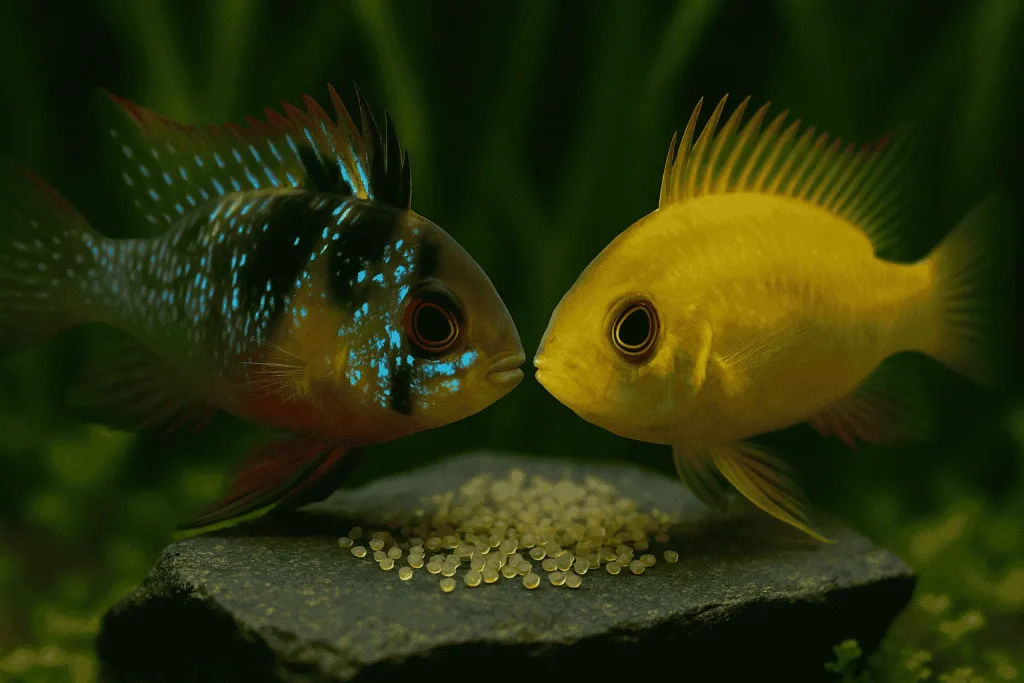
Whether you are captivated by the neon iridescence of the German Blue Ram or the sunny disposition of the Gold Ram, these fish are a favorite among aquarists who want a centerpiece fish for a planted tank. However, they do have a reputation for being delicate. Are they hard to keep? Not if you know their secrets.
In this guide, we will dive deep into everything you need to know to keep your Rams thriving, not just surviving.
Quick Reference Table
| Attribute | Details |
|---|---|
| Scientific Name | Mikrogeophagus ramirezi |
| Common Names | German Blue Ram, Gold Ram, Butterfly Cichlid, Ramirez’s Dwarf Cichlid |
| Family | Cichlidae |
| Origin | Colombia, Venezuela (Orinoco River basin) |
| Adult Size | 2-3 inches (5-7.5 cm) |
| Lifespan | 2-4 years (with excellent care) |
| Temperament | Peaceful to semi-aggressive |
| Minimum Tank Size | 20 gallons (75 liters) |
| Care Level | Intermediate |
| Diet | Omnivore |
| Temperature Range | 78-85°F (25-29°C) |
| pH Range | 6.0-7.5 |
| Hardness | 5-12 dGH |
Species Profile & Varieties
Natural Habitat & Background
Ram Cichlids originate from the warm, slow-moving waters of the Orinoco River basin in Colombia and Venezuela. In their natural environment, they inhabit shallow pools with sandy substrates, dense vegetation, and submerged roots where they forage for small invertebrates and plant matter.
These fish were first described in 1948 and named after aquarist Manuel Vicente Ramírez, who collected the original specimens. The “German” prefix in German Blue Ram comes from the selective breeding programs developed by German aquaculturists who enhanced the species’ brilliant blue coloration.
Popular Ram Cichlid Varieties
The aquarium trade offers several stunning color morphs and variations:
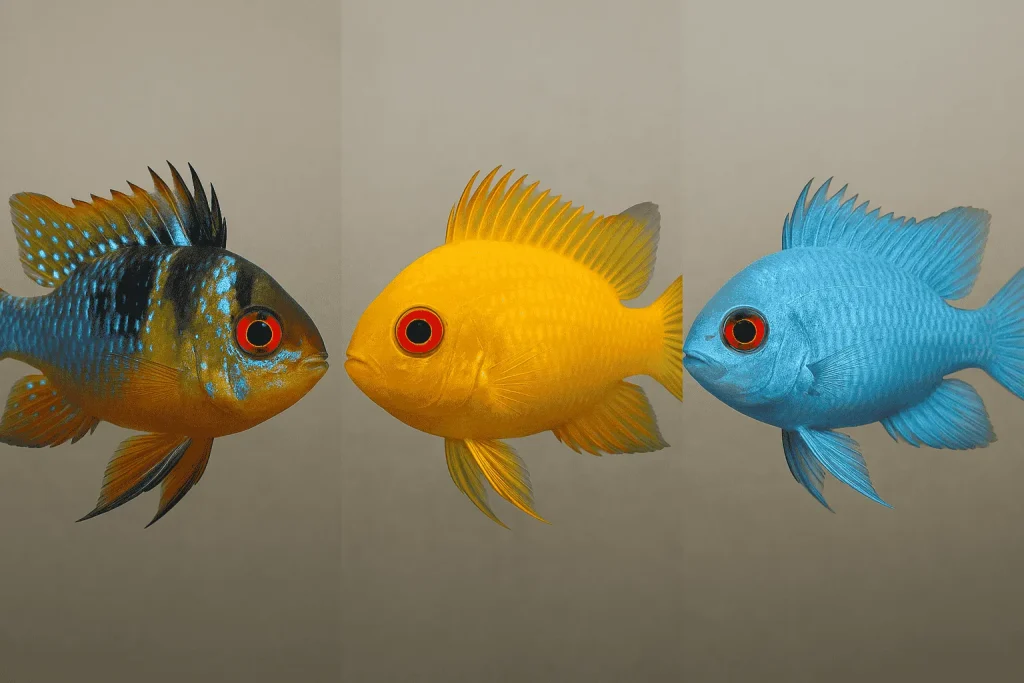
German Blue Ram
- Appearance: Electric blue body with golden-yellow head and black markings
- Distinguishing Features: Red eyes, black spot on the side, extended first dorsal rays
- Popularity: Most common and widely available variety
- Price Range: $8-15 per fish
Gold Ram (Golden Ram)
- Appearance: Bright golden-yellow body with minimal blue coloration
- Distinguishing Features: Maintains the red eyes and black spot characteristic
- Popularity: Second most popular after German Blue
- Price Range: $10-18 per fish
Electric Blue Ram
- Appearance: Intensified blue coloration covering most of the body
- Distinguishing Features: Reduced yellow pigmentation, striking neon blue appearance
- Popularity: Highly sought after for planted tanks
- Price Range: $15-25 per fish
Balloon Ram
- Appearance: Shortened, rounded body shape in various colors
- Health Considerations: Selective breeding has created spinal deformities; often has reduced lifespan
- Controversy: Many ethical aquarists avoid this variety due to health concerns
- Price Range: $12-20 per fish
Long-Fin Ram
- Appearance: Extended finnage on all fins
- Care Requirements: May need lower water flow to protect delicate fins
- Price Range: $18-30 per fish
Tank Requirements & Setup
Minimum Tank Size & Dimensions
For a pair of Ram Cichlids, a 20-gallon long tank (30″ x 12″ x 12″) serves as the absolute minimum. However, a 29-gallon or 30-gallon tank provides better territory establishment and water stability. If you’re planning a community setup with multiple pairs or other species, consider 40 gallons or larger.
Recommended Tank Sizes:
- Single pair: 20 gallons minimum (29 gallons preferred)
- Two pairs: 40 gallons minimum
- Community tank with multiple species: 40-55 gallons
- Breeding setup: 20-29 gallons dedicated
Substrate Selection
Ram Cichlids are bottom-dwellers that naturally sift through substrate searching for food. Choose a substrate that accommodates this behavior:
Best Options:
- Fine sand: Mimics natural habitat, allows sifting behavior (TOP CHOICE)
- Smooth gravel (small grain): Acceptable alternative
- Pool filter sand: Inexpensive and fish-safe
- CaribSea Super Naturals: Specially designed for cichlids
Avoid:
- Sharp or coarse gravel (can damage delicate mouths)
- Large stones that prevent natural foraging
Filtration Requirements
Ram Cichlids require pristine water conditions but prefer gentle water flow. They come from still or slow-moving waters and can become stressed by strong currents.
Filtration Recommendations:
- Filter type: Canister filter or high-quality hang-on-back (HOB)
- Turnover rate: 4-6 times tank volume per hour
- Flow adjustment: Use spray bars or deflect output to reduce current
- Media: Biological, mechanical, and chemical (activated carbon optional)
- Backup: Sponge filter adds biological filtration and provides feeding grounds for fry
Lighting & Photoperiod
Moderate lighting works best for Ram Cichlids, supporting plant growth while preventing stress:
- Intensity: Low to medium (1-2 watts per gallon for standard lighting)
- Duration: 8-10 hours daily
- Type: LED or T5 fixtures work excellently
- Consideration: Provide shaded areas with floating plants or dense vegetation
Aquascaping for Ram Cichlids
Create a natural South American biotope or planted aquarium that provides both open swimming areas and territories:
Essential Elements:
- Open sandy areas: For foraging and territory establishment
- Caves and hiding spots: Use driftwood, coconut shells, or rock formations
- Dense planted sections: Amazon swords, crypts, and vallisneria
- Sight breaks: Create visual barriers to define territories
- Flat rocks: Potential breeding surfaces
Recommended Plants:
- Amazon Sword (Echinodorus)
- Java Fern (Microsorum pteropus)
- Cryptocoryne species
- Vallisneria
- Water Sprite (Ceratopteris thalictroides)
- Dwarf Sagittaria
- Brazilian Pennywort
Hardscape Materials:
- Manzanita or Malaysian driftwood
- Smooth river rocks
- Indian Almond leaves (beneficial tannins)
- Coconut caves
- Slate pieces
Water Parameters & Maintenance Schedule
Ideal Water Conditions
Ram Cichlids are somewhat demanding regarding water quality. They thrive in warm, soft, slightly acidic water that replicates their natural Amazonian habitat.
Optimal Parameters:
| Parameter | Ideal Range | Acceptable Range |
|---|---|---|
| Temperature | 80-84°F (27-29°C) | 78-85°F (25-29°C) |
| pH | 6.0-6.5 | 6.0-7.5 |
| GH (Hardness) | 5-8 dGH | 5-12 dGH |
| KH (Alkalinity) | 3-6 dKH | 2-8 dKH |
| Ammonia | 0 ppm | 0 ppm (non-negotiable) |
| Nitrite | 0 ppm | 0 ppm (non-negotiable) |
| Nitrate | <20 ppm | <40 ppm |
| TDS | 100-200 ppm | 100-300 ppm |
Temperature Considerations:
Ram Cichlids require warmer temperatures than many tropical fish. The higher temperature (80-84°F) is critical for proper metabolism, digestion, and immune function. Lower temperatures can lead to lethargy and increased disease susceptibility.
Water Testing & Monitoring
Testing Schedule:
- Weekly: pH, temperature, nitrate
- Bi-weekly: GH, KH
- During cycling: Daily ammonia, nitrite, nitrate
- After medication: Every other day for all parameters
Recommended Test Kits:
- API Master Test Kit (comprehensive liquid tests)
- Digital thermometer (more accurate than stick-on types)
- TDS meter (for tracking total dissolved solids)
- pH controller (optional for advanced setups)
Maintenance Schedule
Consistent maintenance prevents water quality issues and keeps your Rams healthy.
Daily Tasks:
- Visual health inspection of all fish
- Check temperature
- Remove uneaten food after feeding
- Verify filter operation
Weekly Tasks:
- 25-30% water change with temperature-matched, dechlorinated water
- Vacuum substrate (focus on waste accumulation areas)
- Test water parameters
- Clean aquarium glass
- Check for algae growth
- Inspect equipment function
Bi-Weekly Tasks:
- Rinse mechanical filter media in aquarium water
- Trim dead plant leaves
- Clean filter intake tubes
- Check air stones and tubing (if used)
Monthly Tasks:
- Deep gravel vacuum (if using gravel)
- Clean filter impeller
- Replace chemical filter media (activated carbon, Purigen)
- Inspect heater accuracy with separate thermometer
- Clean light fixtures
Quarterly Tasks:
- Replace filter cartridges (if using disposable types)
- Evaluate and upgrade equipment if needed
- Deep clean decorations (only if necessary)
Water Change Best Practices
- Prepare replacement water: Match temperature within 1-2°F, use dechlorinator
- Consider RO/DI water: Mix with tap water to achieve ideal GH/KH for Rams
- Add tannins: Indian almond leaves or alder cones benefit Rams
- Avoid chloramine: Use appropriate water conditioner (Seachem Prime recommended)
- Drip acclimation: When parameters differ significantly, drip in new water slowly
Diet, Feeding Schedule & Nutrition Tips
Natural Diet in the Wild
In their native Colombian and Venezuelan waters, Ram Cichlids are micro-predators and omnivores, consuming:
- Small crustaceans and zooplankton
- Aquatic insect larvae
- Worms and tubifex
- Plant matter and algae
- Detritus and organic material
Aquarium Diet Requirements
Providing varied, high-quality nutrition ensures vibrant coloration, disease resistance, and successful breeding.
Staple Foods (Daily):
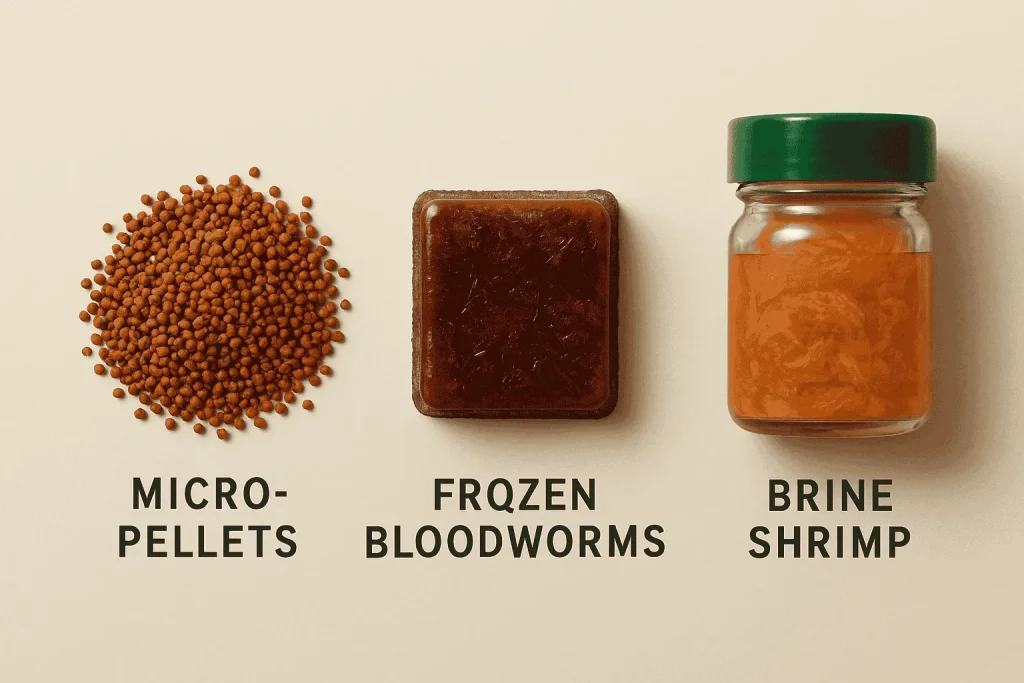
- High-quality micro pellets: Specifically formulated for small cichlids
- Hikari Cichlid Gold Baby/Mini
- New Life Spectrum Small Fish Formula
- Fluval Bug Bites Cichlid Formula
- Northfin Cichlid Formula
- Quality flake food: As supplemental feeding
- Omega One Cichlid Flakes
- New Life Spectrum Flakes
Protein-Rich Foods (3-4 times weekly):
- Live foods (BEST for coloration and conditioning):
- Baby brine shrimp (newly hatched)
- Daphnia
- Grindal worms
- Microworms
- Mosquito larvae
- Frozen foods (excellent alternative):
- Bloodworms (limit to 1-2x weekly, can cause bloating)
- Brine shrimp
- Mysis shrimp
- Cyclops
- Daphnia
- Tubifex (quality brands only)
Vegetable Matter (2-3 times weekly):
- Blanched zucchini
- Spirulina-based foods
- Algae wafers (small pieces)
- Blanched spinach (finely chopped)
Feeding Schedule & Portions
Adult Ram Cichlids:
- Frequency: 2-3 small feedings daily
- Portion size: What they can consume in 2-3 minutes
- Timing: Morning and evening (with optional midday feeding)
Juvenile Rams:
- Frequency: 3-4 times daily
- Focus: High-protein foods to support growth
- Portion: Smaller amounts, more frequently
Breeding Rams:
- Pre-spawning: Increase protein (daily live/frozen foods)
- During spawning: Reduce feeding slightly
- Fry-rearing: Frequent small portions of infusoria, then baby brine shrimp
Nutrition & Color Enhancement Tips
- Color-enhancing ingredients: Look for foods with astaxanthin, spirulina, and carotenoids
- Variety is crucial: Rotate at least 3-4 different food types
- Vitamin supplementation: Use Selcon or similar vitamin soak for frozen foods
- Garlic treatment: Soak foods in garlic extract to boost immune system
- Fasting day: Consider one fasting day per week to prevent obesity
- Avoid overfeeding: Rams have small stomachs; excess food degrades water quality
- Sinking foods preferred: Rams are bottom-feeders and prefer foods that sink
Common Feeding Mistakes
❌ Feeding only flakes: Insufficient nutrition and variety
❌ Excessive bloodworms: Can cause digestive issues and dependency
❌ Large pellets: Too big for their small mouths
❌ Feeding once daily: Not ideal for their metabolism
❌ Ignoring vegetable matter: Leads to nutritional deficiencies
❌ Overfeeding: Primary cause of water quality issues
Temperament & Tank Mates
Ram Cichlid Behavior & Personality
Despite belonging to the cichlid family, Rams display a relatively peaceful temperament, especially compared to their larger African cousins. However, they’re not completely passive fish.
Typical Behaviors:
- Territorial during breeding: Pairs defend small territories (6-12 inches radius)
- Curious and intelligent: Recognize their owners and feeding times
- Bottom-dwelling: Spend most time in lower third of aquarium
- Substrate sifting: Constantly search through sand for food
- Pair bonding: Form monogamous pairs (though bonds can break)
- Peaceful hierarchy: Minimal aggression outside breeding periods
Gender-Specific Behaviors:
- Males: More territorial, display to attract females, more vibrant coloration
- Females: Choose spawning sites, provide most parental care, slightly less colorful
Compatible Tank Mates
Upper-Level Swimmers:
- Neon Tetras (Paracheirodon innesi)
- Cardinal Tetras (Paracheirodon axelrodi)
- Rummy-Nose Tetras (Hemigrammus rhodostomus)
- Ember Tetras (Hyphessobrycon amandae)
- Hatchetfish species
- Pencilfish species
Mid-Level Swimmers:
- Dwarf Gourami (Trichogaster lalius) – with caution
- Honey Gourami (Trichogaster chuna)
- Harlequin Rasboras (Trigonostigma heteromorpha)
- Cherry Barbs (Puntius titteya)
Bottom-Dwellers:
- Corydoras Catfish (all species, especially C. sterbai for temperature)
- Kuhli Loaches (Pangio kuhlii)
- Otocinclus Catfish
- Small Bristlenose Plecos (Ancistrus species)
Other Dwarf Cichlids (with adequate space):
- Apistogramma species (40+ gallon tanks)
- Bolivian Rams (different species, compatible)
- Kribensis (Pelvicachromis pulcher) – larger tanks only
Invertebrates:
- Amano Shrimp (larger size prevents predation)
- Nerite Snails
- Mystery Snails
- Malaysian Trumpet Snails
Incompatible Tank Mates
Avoid These Species:
❌ Aggressive cichlids: African cichlids, Oscars, Jack Dempseys
❌ Large predatory fish: Angelfish (may prey on Rams), large gouramis
❌ Fin nippers: Tiger barbs, serpae tetras, some danio species
❌ Very active swimmers: Create stress with constant movement
❌ Goldfish: Completely incompatible temperature requirements
❌ Small shrimp: Cherry shrimp will likely be eaten
❌ Snails during breeding: May be harassed when Rams breed
Stocking Recommendations
20-gallon tank:
- 1 pair German Blue Rams
- 10-12 small tetras (neons or embers)
- 6 Corydoras catfish
- 2-3 Otocinclus
30-gallon tank:
- 1-2 pairs German Blue Rams
- 15-20 small tetras or rasboras
- 8-10 Corydoras catfish
- 4-6 Otocinclus
- Snails/shrimp
40-gallon tank (community):
- 2 pairs German Blue Rams (or mix with 1 pair Bolivian Rams)
- 20-25 schooling fish (mixed species)
- 10-12 Corydoras catfish
- 1 small bristlenose pleco
- Snails/Amano shrimp
Breeding Setup (20-29 gallons):
- 1 bonded pair only
- 6-8 dither fish (tetras) to reduce stress
- Bottom cleaners optional
Breeding Ram Cichlids
Sexual Dimorphism: Male vs. Female
Identifying gender becomes easier as Rams mature (5-6 months old).
Male Characteristics:
- Longer, more pointed dorsal fin
- Brighter, more intense blue coloration
- Larger overall body size
- Extended first rays of dorsal fin (longer “spikes”)
- Pink/red belly less prominent
- More elongated body shape
Female Characteristics:
- Shorter, rounded dorsal fin
- Vibrant pink/red belly, especially when breeding
- Slightly smaller size
- More rounded, fuller body shape
- Black spot on dorsal fin surrounded by gold (not always reliable)
- Rounder ventral region
Breeding Conditions
Pre-Breeding Setup:
Water Parameters for Spawning:
- Temperature: 82-84°F (28-29°C) – warmer than normal
- pH: 6.0-6.5 – slightly more acidic
- GH: 4-8 dGH – softer water
- Frequent water changes: 25% every 2-3 days
- Pristine conditions: 0 ammonia, 0 nitrite, minimal nitrate
Tank Setup:
- Minimum 20 gallons for breeding pair
- Flat rocks or slate pieces for spawning surface
- Caves for shelter and security
- Moderate lighting (not too bright)
- Gentle filtration (sponge filter ideal)
- Privacy from disturbances
Conditioning the Breeding Pair:
- Select a bonded pair: Allow fish to choose partners naturally
- High-protein diet: Feed live/frozen foods 2-3 times daily
- Daily water changes: 20-25% with temperature-matched water
- Reduce stress: Minimize tank disturbances
- Time frame: 2-3 weeks of conditioning typically triggers spawning
Spawning Behavior
Courtship Ritual:
- Color intensification: Both fish display enhanced coloration
- Territory cleaning: Pair cleans flat surface obsessively
- Dancing and circling: Elaborate courtship displays
- Test spawning: Female may practice laying eggs
- Increased aggression: Pair defends chosen territory
Spawning Process:
- Female lays eggs: In rows on cleaned surface (100-300 eggs)
- Male fertilizes: Immediately follows, fertilizing eggs
- Multiple passes: Process repeated until spawning complete
- Guarding begins: Both parents protect eggs vigilantly
Egg and Fry Care
Parental Care (Day 1-3):
- Eggs hatch in 48-60 hours (temperature dependent)
- Parents fan eggs constantly for oxygenation
- Infertile or fungused eggs removed by parents
- Both parents guard territory aggressively
Wiggler Stage (Day 3-6):
- Fry remain attached to surface
- Parents may move fry to different locations
- Yolk sac provides nutrition
- Critical period for water quality
Free-Swimming Stage (Day 6-8):
- Fry begin swimming independently
- Parents guide fry cloud when foraging
- First feeding begins
- Parental care continues for 2-4 weeks
Breeding Challenges:
- Egg eating: Common with inexperienced pairs; improves with subsequent spawns
- Failed fertilization: Poor water quality or immature males
- Parental stress: High traffic areas cause abandonment
- Fry survival: First attempts often result in low survival rates
Raising Ram Cichlid Fry
First Foods:
- Days 1-5: Infusoria or liquid fry food
- Days 5-10: Newly hatched baby brine shrimp (BBS)
- Days 10-20: Microworms, finely crushed flakes
- Week 3+: Finely ground quality pellets, continued BBS
Fry Tank Maintenance:
- Small daily water changes (10-15%)
- Temperature: 82-84°F consistently
- Gentle sponge filtration only
- Remove uneaten food promptly
- Feed 4-5 small portions daily
Growth Timeline:
- 2 weeks: 1/4 inch, free-swimming
- 4 weeks: 1/2 inch, recognizable as cichlids
- 8 weeks: 3/4 inch, coloration beginning
- 3 months: 1 inch+, juvenile coloration visible
- 5-6 months: Sexual maturity, full coloration developing
Common Diseases, Prevention & Treatment
Ram Cichlids, while beautiful, can be susceptible to various diseases, particularly when water quality declines or stress levels increase. Their warmer temperature requirements can accelerate disease progression.
Image Prompt: Healthy Ram Cichlid vs. sick Ram showing disease symptoms with labeled indicators
Alt text: Comparison of healthy and diseased Ram Cichlid showing common illness symptoms
Most Common Ram Cichlid Diseases
1. Ich (White Spot Disease)
Symptoms:
- White spots resembling salt grains on body and fins
- Flashing (rubbing against objects)
- Lethargy and loss of appetite
- Rapid breathing
Causes:
- Stress from temperature fluctuations
- Poor water quality
- Introduction of infected fish without quarantine
Treatment:
- Raise temperature gradually to 86°F (30°C)
- Add aquarium salt (1 tablespoon per 5 gallons)
- Medication: Ich-X or Kordon Rid-Ich Plus
- Continue treatment 3 days after spots disappear
- Perform 25% water changes every other day
Prevention:
- Maintain stable temperatures
- Quarantine all new fish for 2-4 weeks
- Reduce stress factors
2. Hexamita (Hole-in-the-Head Disease)
Symptoms:
- Pits or holes developing on head and lateral line
- White, stringy feces
- Loss of appetite and color
- Lethargy
Causes:
- Poor nutrition (vitamin deficiencies)
- Poor water quality (high nitrates)
- Stress and overcrowding
- Parasite Hexamita infection
Treatment:
- Improve water quality immediately (large water changes)
- Enhance diet with vitamin-enriched foods
- Medication: Metronidazole (API General Cure)
- Isolate affected fish if possible
- Treatment duration: 10-14 days
Prevention:
- Maintain pristine water conditions
- Varied, high-quality diet
- Regular vitamin supplementation
- Keep nitrates below 20 ppm
3. Bacterial Infections (Fin Rot, Body Rot)
Symptoms:
- Frayed, deteriorating fins
- Red streaks in fins or body
- Open sores or ulcers
- Cloudy eyes
- Swollen body
Causes:
- Poor water quality
- Physical injury
- Stress-weakened immune system
Treatment:
- Large water change (50%)
- Medication: Kanaplex or Furan-2
- Improve filtration and water quality
- Isolate severely affected fish
- Add aquarium salt (1 tablespoon per 5 gallons)
Prevention:
- Maintain excellent water quality
- Remove sharp decorations
- Regular water changes
- Reduce stress
4. Fungal Infections
Symptoms:
- Cotton-like growth on body, fins, or mouth
- Usually follows injury or stress
- Affected area appears fuzzy white
Causes:
- Secondary infection following injury
- Poor water conditions
- Compromised immune system
Treatment:
- Medication: Pimafix or Methylene Blue
- Improve water quality
- Add aquarium salt
- Ensure good oxygenation
Prevention:
- Maintain clean water
- Handle fish carefully
- Quarantine injured fish
5. Bloat/Dropsy
Symptoms:
- Severely swollen abdomen
- Raised scales (pinecone appearance)
- Lethargy and loss of balance
- Protruding eyes
Causes:
- Bacterial infection (often internal)
- Organ failure
- Poor diet (excessive bloodworms)
Treatment:
- Isolate affected fish immediately
- Epsom salt bath (1 tablespoon per gallon)
- Antibiotics: Kanaplex in food
- Reduce feeding
- Note: Often fatal once scales raise
Prevention:
- Varied diet, avoid excessive rich foods
- Excellent water quality
- Avoid overfeeding
Disease Prevention Strategy
Quarantine Protocol:
- 2-4 week quarantine for all new fish
- Separate equipment for quarantine tank
- Observe for symptoms before introduction
- Treat preventatively if necessary
Water Quality Maintenance:
- Weekly water changes (25-30%)
- Regular parameter testing
- Quality filtration
- Avoid overstocking
Nutrition:
- Varied, high-quality diet
- Vitamin supplementation
- Avoid overfeeding
- Include vegetable matter
Stress Reduction:
- Stable water parameters
- Appropriate tank mates
- Adequate hiding spaces
- Minimal disturbances
Hospital Tank Setup:
- 10-gallon tank with heater and sponge filter
- Bare bottom for easy cleaning
- PVC pipes for hiding
- Air stone for oxygenation
- Medications and salt on hand
Where to Buy & Price Guide
Where to Purchase Ram Cichlids
Local Fish Stores (LFS):
Pros:
- Inspect fish health before purchase
- Support local business
- Immediate availability
- No shipping stress
- Direct advice from staff
Cons:
- Limited variety of color morphs
- Potentially higher prices
- Stock depends on location
- Quality varies by store
Tips:
- Visit during weekday restocks for freshest fish
- Inspect for disease symptoms
- Ask about quarantine procedures
- Request feeding demonstration
Online Retailers:
Reputable Online Sources:
- LiveAquaria.com – Excellent quality, DOA guarantee
- AquariumCo-Op.com – Good selection, community-focused
- ImperialTropicals.com – Wide variety of morphs
- WetSpotTropicalFish.com – Specialty imports
- AquaBid.com – Breeder marketplace (quality varies)
Pros:
- Wider variety of morphs
- Competitive pricing
- Specialty/rare varieties available
- Reviews and ratings
Cons:
- Shipping stress
- Cannot inspect before purchase
- Shipping costs ($30-50+)
- Seasonal shipping restrictions
- DOA (Dead on Arrival) risk
Local Breeders:
Pros:
- Highest quality, locally adapted fish
- Often healthier than mass-produced
- Support hobbyist community
- Lower prices than stores
- Expert advice from breeders
Cons:
- Must locate through aquarium clubs/forums
- Limited availability
- May require travel
Finding Local Breeders:
- Aquarium society meetings
- Facebook aquarium groups
- Local fish club websites
- Craigslist/marketplace (proceed cautiously)
Price Guide (USD, 2024)
Standard Varieties:
| Variety | Local Store | Online | Breeder |
|---|---|---|---|
| German Blue Ram | $10-18 | $8-15 | $5-12 |
| Gold Ram | $12-20 | $10-18 | $8-15 |
| Electric Blue Ram | $18-30 | $15-25 | $12-20 |
| Balloon Ram | $15-25 | $12-20 | $10-18 |
| Long-Fin Ram | $20-35 | $18-30 | $15-25 |
| Bolivian Ram | $10-18 | $8-15 | $6-12 |
Specialty/Premium:
- Show-quality breeding pairs: $50-100+
- Albino varieties: $25-40
- Wild-caught specimens: $30-60
- Certified competition fish: $75-150+
Bulk Discounts:
- Pairs often discounted 10-20%
- Group purchases (6+) may receive discounts
- Breeder direct purchases typically cheapest
Quality Indicators When Purchasing
Signs of Healthy Rams:
✅ Vibrant, rich coloration
✅ Active, alert behavior
✅ Clear, bright eyes (red in German Blues)
✅ Full, rounded body (not emaciated)
✅ Intact fins without damage
✅ Swimming confidently, not hiding constantly
✅ Interested in food
✅ No visible parasites or spots
✅ Smooth, even scales
✅ Normal respiration rate
Red Flags to Avoid:
❌ Clamped fins
❌ Faded or washed-out colors
❌ Emaciated, sunken belly
❌ White spots or fuzzy patches
❌ Labored breathing
❌ Constant hiding or bottom-sitting
❌ Damaged or frayed fins
❌ Cloudy eyes
❌ Unusual swimming patterns
❌ Tank mates showing illness
Acclimation Process
Proper acclimation is critical for Ram Cichlids due to their sensitivity to water parameter changes.
Drip Acclimation Method (RECOMMENDED):
- Float the bag: 15-20 minutes to temperature equalize
- Transfer to bucket: Pour fish and water into clean bucket
- Set up drip line: Use airline tubing from tank to bucket
- Adjust flow: 2-4 drips per second
- Duration: 1-2 hours minimum
- Water volume: Double or triple original water
- Net and transfer: Never add store water to your tank
- Lights off: Keep lights off for first 24 hours
Quick Acclimation (Not ideal, but acceptable):
- Float bag for 20 minutes
- Add 1/4 cup tank water every 10 minutes
- Repeat for 1 hour
- Net fish and add to tank
- Discard bag water
Post-Purchase Quarantine:
- House in separate 10-gallon quarantine tank
- Observe for 2-4 weeks
- Watch for disease symptoms
- Feed quality foods
- Treat preventatively if concerned
Beginner Mistakes to Avoid
Learning from common errors can save your fish and your wallet. Here are the most frequent mistakes new Ram keepers make:
1. Inadequate Tank Cycling
The Mistake:
Adding Rams to a newly set up, uncycled tank.
Why It’s Harmful:
- Rams are highly sensitive to ammonia and nitrite
- New tank syndrome causes rapid deaths
- Beneficial bacteria aren’t established
- Parameter swings stress fish
The Solution:
- Fully cycle tank for 4-6 weeks before adding Rams
- Test for 0 ammonia, 0 nitrite, and detectable nitrates
- Consider using established filter media
- Add Rams last, not first
- Use hardy fish to cycle if necessary (not Rams)
2. Wrong Tank Mates
The Mistake:
Pairing Rams with aggressive species or incompatible temperature requirements.
Why It’s Harmful:
- Constant stress reduces lifespan
- Rams get outcompeted for food
- Fin nipping damages delicate fins
- Temperature compromise weakens immune system
The Solution:
- Research compatibility before purchasing
- Maintain 78-84°F (eliminates goldfish, white clouds)
- Choose peaceful, similar-sized fish
- Provide adequate space for territories
- Avoid known aggressive species
3. Insufficient Temperature
The Mistake:
Keeping Rams at standard tropical temperatures (74-76°F).
Why It’s Harmful:
- Compromises metabolism and immune function
- Increases disease susceptibility
- Reduces activity and appetite
- Shortens already brief lifespan
The Solution:
- Maintain 80-84°F consistently
- Use reliable, adjustable heater
- Verify with separate thermometer
- Consider temperature needs of tank mates
- Avoid heater failures with backup
4. Poor Water Quality
The Mistake:
Irregular maintenance, infrequent water changes, or overstocking.
Why It’s Harmful:
- Rams are sensitive to nitrate accumulation
- Poor conditions trigger Hexamita
- Stress-induced immune suppression
- Shortened lifespan
The Solution:
- Weekly 25-30% water changes (minimum)
- Regular parameter testing
- Appropriate filtration
- Avoid overfeeding
- Monitor nitrates (keep under 20 ppm)
5. Improper Diet
The Mistake:
Feeding only flakes or excessive bloodworms.
Why It’s Harmful:
- Nutritional deficiencies lead to disease
- Excessive bloodworms cause bloating
- Faded coloration from poor nutrition
- Reduced breeding success
The Solution:
- Varied diet with multiple food types
- Include vegetable matter
- High-quality pellets as staple
- Protein-rich treats 3-4 times weekly
- Vitamin supplementation
6. Buying Unhealthy Fish
The Mistake:
Purchasing obviously sick or weak fish at discount.
Why It’s Harmful:
- Introduces disease to established tank
- “Bargain” fish often don’t survive
- Veterinary treatment costs more than healthy fish
- Risks entire tank population
The Solution:
- Purchase only healthy, vibrant specimens
- Inspect carefully before buying
- Quarantine all new additions
- Buy from reputable sources
- Avoid “rescue” fish unless experienced
7. Skipping Quarantine
The Mistake:
Adding new Rams directly to display tank.
Why It’s Harmful:
- Introduces parasites and diseases
- Stresses existing fish
- Difficult to treat entire display tank
- May lose entire collection
The Solution:
- Maintain dedicated quarantine tank
- Observe new fish for 2-4 weeks
- Treat preventatively if necessary
- Use separate equipment
- Never mix quarantine water with display
8. Hard, Alkaline Water
The Mistake:
Keeping Rams in pH 8.0+ with high hardness without adjustment.
Why It’s Harmful:
- Contrary to natural soft, acidic habitat
- Reduces vitality and coloration
- Decreases breeding success
- Increases stress and disease susceptibility
The Solution:
- Test source water parameters
- Use RO/DI water mixed with tap for control
- Add driftwood and Indian almond leaves for tannins
- Consider peat filtration or pH buffers
- Aim for pH 6.0-7.0, GH 5-10
9. Inadequate Tank Size
The Mistake:
Keeping pair in 10-gallon tank or multiple pairs in 20-gallon.
Why It’s Harmful:
- Insufficient territory leads to aggression
- Water parameters fluctuate rapidly
- Limited swimming space
- Stressful environment
The Solution:
- Minimum 20 gallons for single pair
- 40+ gallons for multiple pairs
- Larger is always better
- Consider adult size, not juvenile
10. Breeding Without Preparation
The Mistake:
Allowing Rams to breed without fry-raising plan or resources.
Why It’s Harmful:
- Fry starve without appropriate foods
- Parents stressed from constant breeding
- Overpopulation of tank
- No homes for offspring
The Solution:
- Research fry care before allowing breeding
- Have infusoria and baby brine shrimp cultures ready
- Prepare grow-out tanks
- Plan for rehoming or selling offspring
- Consider removing eggs if unprepared
Care Level & Difficulty Rating
Overall Care Level: Intermediate ⭐⭐⭐☆☆
Ram Cichlids fall firmly in the intermediate category. While not impossible for beginners, they require more attention and knowledge than typical beginner fish.
Difficulty Breakdown:
| Aspect | Difficulty | Rating | Notes |
|---|---|---|---|
| Water Quality Requirements | Moderate-High | ⭐⭐⭐⭐☆ | Sensitive to ammonia/nitrite; prefer specific parameters |
| Temperature Needs | Moderate | ⭐⭐⭐☆☆ | Higher than average; limits tank mate options |
| Feeding | Easy-Moderate | ⭐⭐☆☆☆ | Accept varied foods but need variety |
| Temperament Management | Easy-Moderate | ⭐⭐☆☆☆ | Generally peaceful; territorial when breeding |
| Disease Susceptibility | Moderate-High | ⭐⭐⭐⭐☆ | Prone to Hexamita and ich without pristine conditions |
| Breeding Difficulty | Moderate | ⭐⭐⭐☆☆ | Will spawn readily; fry survival challenging |
| Availability | Easy | ⭐☆☆☆☆ | Widely available at stores and online |
| Lifespan Management | Moderate | ⭐⭐⭐☆☆ | Short lifespan requires accepting turnover |
Prerequisites Before Keeping Rams
Recommended Experience:
- At least 6-12 months of fishkeeping experience
- Successfully maintained a cycled aquarium
- Understanding of nitrogen cycle
- Familiarity with water testing
- Experience with regular maintenance routines
Essential Knowledge:
✅ Water chemistry basics (pH, GH, KH)
✅ Nitrogen cycle understanding
✅ Ability to test and adjust parameters
✅ Disease recognition and treatment
✅ Proper fish acclimation techniques
Equipment Proficiency:
✅ Heater operation and monitoring
✅ Filter maintenance
✅ Water change procedures
✅ Use of test kits
✅ Medication dosing
Comparison to Other Popular Fish
Easier Than Rams:
- Guppies, Platies, Mollies
- Zebra Danios
- Most Tetras
- Corydoras Catfish
- Bolivian Rams (closely related but hardier)
Similar Difficulty:
- Discus (actually more difficult)
- Apistogramma species
- Dwarf Gouramis
- Some Rainbowfish species
More Difficult Than Rams:
- Wild-caught Discus
- Many wild-caught species
- Marine/reef fish
- Delicate wild Bettas
Can Beginners Keep Rams?
Yes, with conditions:
Absolute Beginners (0-3 months): ❌ Not Recommended
- Focus on hardier species first
- Learn fundamental skills
- Establish successful cycled tank
Novice Keepers (3-6 months): ⚠️ Proceed with Caution
- Acceptable if committed to research
- Must maintain excellent water quality
- Prepared for potential losses
- Consider Bolivian Rams as alternative
Experienced Beginners (6-12 months): ✅ Good Candidate
- Proven track record with easier fish
- Understands maintenance requirements
- Has necessary equipment
- Researched species thoroughly
Intermediate+ Keepers (12+ months): ✅ Ideal
- Rams will thrive with proper care
- Can handle breeding attempts
- Recognize and treat diseases
- Provide optimal conditions
Tips for Success as Beginner/Intermediate Keeper
- Start with one pair: Don’t attempt multiple pairs initially
- Larger tank: Bigger volume = more stable parameters
- Over-filtration: Better filtration provides safety margin
- Quality over quantity: Buy healthy specimens from reputable source
- Join communities: Online forums and local clubs provide support
- Keep records: Track parameters, feeding, and observations
- Be patient: Don’t rush the learning process
- Prepare for loss: Even experienced keepers lose Rams occasionally
- Consider alternatives: Bolivian Rams are more forgiving
- Continuous learning: Stay informed about best practices
Pros, Cons & Final Verdict
Advantages of Keeping Ram Cichlids
✅ Stunning Visual Appeal
- Absolutely gorgeous coloration
- Multiple color morphs available
- Constant source of visual interest
- Show-quality specimens are breathtaking
✅ Compact Size
- Perfect for smaller aquariums
- Don’t require massive tanks like larger cichlids
- Suitable for apartments and limited spaces
✅ Engaging Personality
- Intelligent and interactive
- Recognize their owners
- Interesting behavioral displays
- Active during daylight hours
✅ Breeding Opportunities
- Readily spawn in aquariums
- Fascinating parental behavior
- Can be profitable if breeding successfully
- Educational experience
✅ Peaceful Cichlid Option
- Community-compatible (unlike many cichlids)
- Won’t destroy aquascaping
- Can coexist with smaller fish
- Manageable aggression levels
✅ Widely Available
- Easy to find locally
- Multiple online sources
- Reasonable pricing
- Established care information
Disadvantages of Keeping Ram Cichlids
❌ Short Lifespan
- Only 2-4 years maximum
- Frequent replacement necessary
- Emotionally difficult for some keepers
- Cost adds up over time
❌ Water Quality Sensitivity
- Require consistent maintenance
- Sensitive to parameter fluctuations
- Not forgiving of neglect
- Disease-prone in suboptimal conditions
❌ Temperature Requirements
- Higher than standard tropical (limits tank mates)
- Increased heating costs
- Risk during power outages
- Not compatible with many popular species
❌ Disease Susceptibility
- Prone to Hexamita (hole-in-head)
- Quick ich outbreaks
- Mass-produced specimens often weak
- May require medication/treatment
❌ Availability of Quality Specimens
- Commercial breeding produces weaker fish
- Finding healthy stock challenging
- Genetic issues from inbreeding
- Wild-caught rarely available
❌ Breeding Complications
- Egg-eating common with new pairs
- Fry require specialized foods
- Need separate tanks for success
- Finding homes for offspring difficult
❌ Initial Investment
- Require established, cycled tank
- Specialized foods for optimal color
- Potential medication needs
- Higher quality specimens cost more
Final Verdict: Should You Keep Ram Cichlids?
Rating: ⭐⭐⭐⭐☆ (4/5 Stars)
Ram Cichlids are exceptional aquarium fish that offer tremendous reward for the invested effort. Their stunning appearance, engaging behavior, and manageable size make them standout additions to appropriate aquariums.
You Should Choose Ram Cichlids If:
- You have intermediate fishkeeping experience (or dedicated beginner)
- You can maintain consistent water quality
- You appreciate colorful, interactive fish
- You have appropriate tank mates in mind
- You accept their short lifespan
- You can provide warmer temperatures
- You want a peaceful cichlid option
You Should Skip Ram Cichlids If:
- You’re a complete beginner (try Bolivian Rams instead)
- You prefer low-maintenance fish
- Your water is very hard and alkaline
- You can’t maintain higher temperatures
- You’re not willing to do regular maintenance
- You want a long-lived fish (10+ years)
- You can’t accommodate their specific needs
Best Alternative: If Rams seem too challenging, consider Bolivian Rams (Mikrogeophagus altispinosus). They’re closely related but significantly hardier, tolerate wider parameters, and live longer while retaining much of the appeal.
Bottom Line:
German Blue Rams and Gold Rams represent the pinnacle of dwarf cichlid beauty. While they demand more attention than beginner fish, they’re absolutely achievable for dedicated keepers willing to meet their needs. Their brief but brilliant lives bring joy to countless aquariums worldwide. With proper care, your Rams will reward you with years of color, personality, and perhaps even breeding success. The effort is absolutely worth it for these little gems of the aquarium world.
FAQ Section (Frequently Asked Questions)
General Care Questions
Q: How long do Ram Cichlids live?
A: German Blue and Gold Rams typically live 2-4 years with excellent care, though 2-3 years is more common. Their relatively short lifespan is partly due to intensive commercial breeding and their warm-water metabolism. Bolivian Rams (different species) live longer, typically 4-6 years.
Q: Can Ram Cichlids live alone?
A: Yes, a single Ram can live happily alone and may be less stressed than unpaired individuals. However, they’re more interesting in pairs, and bonded pairs display more natural behaviors. Avoid keeping three Rams together as one will be bullied.
Q: Are Ram Cichlids good for beginners?
A: They’re better suited for intermediate keepers with 6-12 months of experience. Dedicated beginners who research thoroughly can succeed, but easier fish like Bolivian Rams, platies, or tetras are more forgiving for learning basic skills.
Q: What size tank do Ram Cichlids need?
A: Minimum 20 gallons for a single pair, though 29 gallons is better. For multiple pairs or community tanks, aim for 40+ gallons. Larger tanks provide more stable water parameters and territory space.
Q: Do Ram Cichlids need a heater?
A: Absolutely yes. Rams require consistently warm water (80-84°F), which is warmer than room temperature in most homes. A reliable, adjustable heater is non-negotiable equipment.
Water & Tank Setup Questions
Q: What temperature do Ram Cichlids prefer?
A: 80-84°F (27-29°C) is optimal, with 82°F being the sweet spot. This is warmer than standard tropical tanks (76-78°F), which eliminates some potential tank mates and increases heating costs.
Q: Can Ram Cichlids live in hard water?
A: They can survive but won’t thrive. Rams prefer soft water (5-10 dGH) with pH 6.0-7.0. In very hard, alkaline water (pH 8.0+), they’ll show reduced coloration, increased stress, and won’t breed successfully. Consider RO/DI water for optimal results.
Q: Do Ram Cichlids need live plants?
A: Not required, but highly beneficial. Live plants help stabilize water quality, provide hiding spots, and create a natural environment that reduces stress. Artificial plants work but lack the biological benefits.
Q: Can Ram Cichlids live in a bowl?
A: Absolutely not. Rams require filtered, heated, cycled aquariums with stable parameters. Bowls cannot provide appropriate conditions and would lead to rapid death.
Compatibility Questions
Q: Can Ram Cichlids live with Angelfish?
A: Not recommended. Adult Angelfish may view small Rams as food, and both species can be territorial. If attempting, use a large tank (75+ gallons) and monitor closely, but safer alternatives exist.
Q: Can Ram Cichlids live with Bettas?
A: It’s risky. Both can be territorial, and male Bettas may attack colorful male Rams or vice versa. If attempted, use a heavily planted 30+ gallon tank, but compatibility is never guaranteed.
Q: What fish can live with Ram Cichlids?
A: Best companions include peaceful, small schooling fish like neon tetras, rummy-nose tetras, corydoras catfish, otocinclus, small rasboras, and peaceful bottom-dwellers. Avoid aggressive species, fin nippers, and very large fish.
Q: Can Ram Cichlids live with shrimp?
A: Larger Amano shrimp usually coexist well. Cherry shrimp and smaller species will likely be eaten, especially by hungry Rams. Baby shrimp definitely won’t survive.
Q: Can you keep multiple pairs of Rams together?
A: Yes, in sufficiently large tanks (40+ gallons). Provide 12-18 inches of territory per pair, plenty of sight breaks, and visual barriers with plants and decorations. Breeding pairs become more aggressive.
Feeding Questions
Q: What do Ram Cichlids eat?
A: They’re omnivores requiring varied diet: high-quality micro pellets, frozen/live foods (bloodworms, brine shrimp, daphnia), and some vegetable matter. Feed 2-3 small meals daily rather than one large feeding.
Q: Can Ram Cichlids eat tropical flakes?
A: Yes, quality flakes can be part of their diet, but shouldn’t be the only food. They need protein-rich foods and variety for optimal health and coloration. Flakes alone cause nutritional deficiencies.
Q: How often should you feed Ram Cichlids?
A: 2-3 times daily in small portions they can consume in 2-3 minutes. Juveniles benefit from 3-4 smaller feedings. Overfeeding causes water quality issues and health problems.
Q: Do Ram Cichlids need live food?
A: Not required, but live or frozen foods (bloodworms, brine shrimp, daphnia) enhance coloration, provide enrichment, and condition breeding pairs. Vary between pellets, frozen, and occasional live foods.
Breeding Questions
Q: How can you tell male from female Ram Cichlids?
A: Males have longer, more pointed dorsal fins, brighter coloration, and larger size. Females develop vibrant pink/red bellies (especially when breeding), have shorter, rounded dorsal fins, and fuller body shapes.
Q: How do Ram Cichlids breed?
A: Bonded pairs clean a flat surface, then female lays 100-300 eggs which male fertilizes. Both parents guard eggs (hatch in 2-3 days) and fry. First-time parents often eat eggs; success improves with experience.
Q: What do baby Ram Cichlids eat?
A: Newly free-swimming fry need infusoria or liquid fry food for first 5 days, then progress to newly hatched baby brine shrimp. After 2-3 weeks, they can eat finely crushed pellets and microworms.
Q: Will Ram Cichlids breed in a community tank?
A: Yes, they’ll spawn, but fry survival is nearly impossible with other fish present. For successful breeding, use dedicated breeding tank or remove tank mates during spawning period.
Health & Disease Questions
Q: Why is my Ram Cichlid not eating?
A: Common causes include stress from new environment, poor water quality, illness, incompatible tank mates, or low temperature. Check parameters, ensure proper temperature (80-84°F), and observe for disease symptoms.
Q: Why is my Ram Cichlid sitting on the bottom?
A: This can indicate stress, disease, poor water quality, or low temperature. Test water immediately, verify heater function, and check for disease symptoms like spots, damaged fins, or labored breathing.
Q: How do you treat ich in Ram Cichlids?
A: Gradually raise temperature to 86°F, add aquarium salt (1 tbsp per 5 gallons), and use ich medication (Ich-X or similar). Continue treatment 3 days after spots disappear. Perform regular water changes during treatment.
Q: What causes hole-in-the-head disease in Rams?
A: Primarily caused by Hexamita parasites, triggered by poor water quality (high nitrates), nutritional deficiencies, and stress. Treatment involves improving conditions, vitamin-enriched foods, and metronidazole medication.
Q: Why did my Ram Cichlid die suddenly?
A: Common causes include ammonia/nitrite poisoning, sudden temperature changes, introduction to uncycled tank, disease, or purchasing already-stressed fish. Rams are sensitive and require stable, pristine conditions.
Purchasing Questions
Q: How much do Ram Cichlids cost?
A: German Blue Rams: $8-18; Gold Rams: $10-20; Electric Blue Rams: $15-30. Prices vary by location, source, and quality. Breeding pairs and show-quality specimens cost $50-100+.
Q: Where can I buy Ram Cichlids?
A: Local fish stores, online retailers (LiveAquaria, Aquarium Co-Op, Imperial Tropicals), or local breeders through aquarium clubs and forums. Always quarantine new purchases for 2-4 weeks.
Q: How many Ram Cichlids should I get?
A: Start with a bonded pair (one male, one female) or a single individual. In larger tanks (40+), you can keep 2-3 pairs with adequate territory. Avoid odd numbers which creates bullying dynamics.
Q: Can you mix different Ram varieties?
A: Yes, German Blue, Gold, and Electric Blue Rams are all the same species and can interbreed. However, offspring may not display pure coloration. Keep varieties separate if breeding for specific colors.
14. Related Articles
- [The Cycle Guide: How to Nitrogen Cycle Your Aquarium]
- [Top 10 Tank Mates for German Blue Rams]
- [Cardinal Tetra Care: The Perfect Companion]
- [Discus Fish for Beginners: Are You Ready?]